

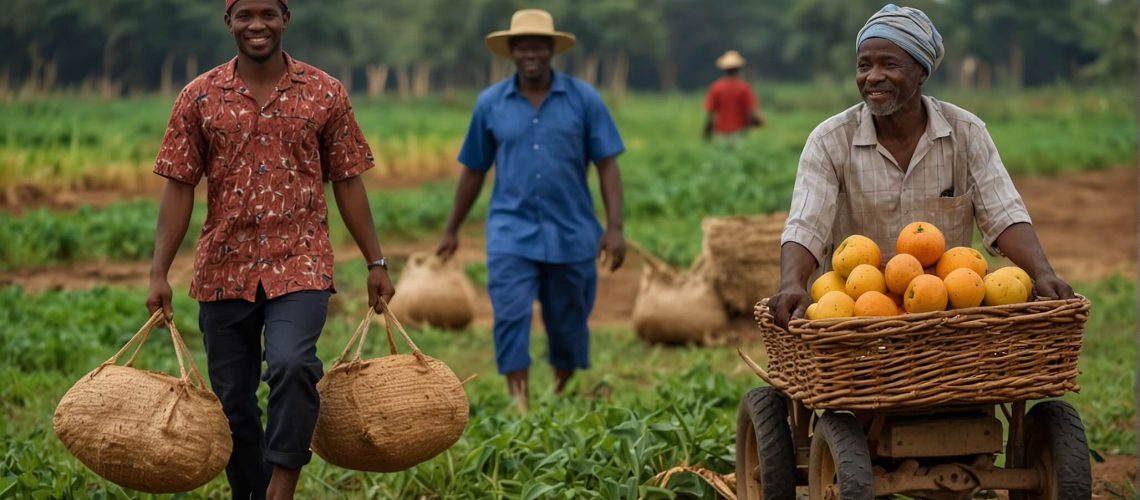
Across many African communities, people are finding creative ways to reduce household expenses, improve access to fresh food, and support local businesses.
One approach gaining attention is the neighborhood buying club. A neighborhood buying club is a group of residents who come together to purchase food and other products directly from farmers or suppliers. Instead of every household buying small quantities separately, members combine their orders and purchase larger quantities. This simple model can create benefits for both consumers and farmers.
For local farmers, neighborhood buying clubs can provide a more predictable market, reduce selling costs, and create stronger relationships with consumers. For households, they can make fresh produce more accessible while encouraging community cooperation.
What Is a Neighborhood Buying Club?
A neighborhood buying club is essentially a coordinated purchasing group. Members agree on the products they need, collect orders, and buy collectively from selected farmers or agricultural suppliers.
For example, residents in a neighborhood could combine their weekly orders for tomatoes, peppers, onions, plantains, vegetables, eggs, potatoes, or other farm products. The group then purchases directly from farmers or trusted aggregators and distributes the products among members.
Modern communication tools make this easier. A WhatsApp group, spreadsheet, or simple online form can help members submit orders and organize payments.
The model can work on a small scale with ten households or expand to include dozens or even hundreds of members.
Giving Farmers More Predictable Customers
One of the biggest challenges facing small farmers is uncertainty about where their produce will be sold.
A farmer may harvest a large quantity of vegetables but struggle to find enough buyers at the right time. This can lead to lower prices, waste, or dependence on intermediaries.
Buying clubs can provide a more predictable customer base.
When members submit orders before harvest or delivery, farmers gain a clearer idea of how much produce they need to supply. This information can help farmers plan planting, harvesting, transportation, and packaging more effectively.
Predictable demand can make small-scale farming easier to manage and potentially improve income stability.
Reducing Dependence on Middlemen
Farmers often rely on multiple intermediaries to move products from farms to consumers. Middlemen can provide valuable services, including transportation, storage, aggregation, and market access. However, each stage can also increase the final selling price.
Neighborhood buying clubs can shorten the supply chain by connecting farmers with consumers more directly.
A farmer may deliver produce to one neighborhood collection point rather than selling to several intermediaries before the food reaches households.
This arrangement can allow farmers to retain a larger share of the final value while consumers potentially benefit from competitive prices.
Helping Farmers Plan Production
Better information can be just as valuable as better prices.
When farmers know what consumers want, they can make more informed production decisions. A buying club might notice that members consistently request leafy vegetables, eggs, sweet potatoes, or seasonal fruits.
The group can communicate this demand to participating farmers.
Over time, farmers can use these purchasing patterns to decide what to plant or produce and when to bring it to market. This can reduce the risk of producing large quantities of items that are difficult to sell.
However, farmers should avoid depending entirely on one buying club. Diversifying customers remains important for protecting against changes in demand.
Creating Better Relationships Between Farmers and Consumers
Traditional food supply chains can create significant distance between the person producing food and the person eating it.
Buying clubs can reduce that distance.
Consumers may learn where their food comes from, how it is produced, and when different products are in season. Farmers, in turn, can receive direct feedback about product quality, packaging, quantity, and delivery.
This relationship can build trust.
A farmer who consistently supplies good-quality produce may develop a loyal customer base. Likewise, consumers may feel more confident purchasing from producers they know and trust.
Supporting Local Economies
Money spent on locally produced food can contribute to the economic activity of farming communities.
When neighborhood buying clubs purchase directly from local farmers, they support agricultural businesses and the workers connected to them.
Farmers may spend their income on seeds, equipment, transportation, labor, packaging, and other local services. This creates economic activity beyond the original transaction.
Buying clubs can therefore become more than food-purchasing groups. They can become small economic networks connecting households, farmers, transporters, processors, and other local businesses.
Reducing Food Waste
Food waste is another area where buying clubs can make a difference. Farmers sometimes struggle to sell produce quickly, particularly when harvests are larger than expected. Buying clubs can coordinate bulk purchases and distribute products among households while they are still fresh.
Members can also organize purchases around seasonal availability.
Instead of expecting every product to be available throughout the year, households can adjust their shopping habits according to what local farmers are producing.
This approach can help consumers appreciate seasonal foods while giving farmers a stronger market for their harvests.
Making Collective Buying More Efficient
For a buying club to succeed, organization matters. Members should establish clear rules covering ordering, payment, delivery, quality standards, refunds, and membership responsibilities.
One person or a small committee can coordinate communication with farmers, while another member can manage payments and records.
Digital tools can simplify the process. A shared spreadsheet can track orders, while mobile banking or other digital payment options can make transactions easier.
The group should also keep financial records transparent. Members need to know how much they are paying farmers, how much transportation costs, and whether the club charges any administrative fee.
Challenges Buying Clubs Must Consider
Neighborhood buying clubs also face challenges. Members may disagree about prices, product quality, delivery schedules, or which farmers to use. Some members may also place orders and fail to pay on time.
Transportation can become another issue, especially when farms are located far from urban neighborhoods.
The club should therefore start small, establish clear procedures, and work with reliable farmers. It may also help to have backup suppliers in case weather, transportation problems, or other unexpected events affect deliveries.
Building a Stronger Local Food System
The greatest potential of neighborhood buying clubs lies in their ability to connect communities with local agriculture.
They create a direct channel through which consumers can communicate their needs to farmers. Farmers gain access to organized demand, while households gain another way to obtain fresh food.
With good planning, these clubs can grow from informal neighborhood groups into organized community food networks.
They can also introduce members to other locally produced goods, including grains, honey, spices, dairy products, processed foods, and handmade agricultural products.
Conclusion
Neighborhood buying clubs offer a practical way for communities to support local farmers while improving access to food. By combining household orders, creating predictable demand, reducing unnecessary supply-chain layers, and strengthening farmer-consumer relationships, these groups can generate benefits on both sides of the transaction.
The idea does not require sophisticated technology or a large organization. It can begin with a few neighbors, a trusted farmer, a simple ordering system, and a commitment to cooperation.
As African communities look for more resilient and locally connected food systems, neighborhood buying clubs could become a valuable tool for strengthening the relationship between the people who grow food and the people who eat it.
