

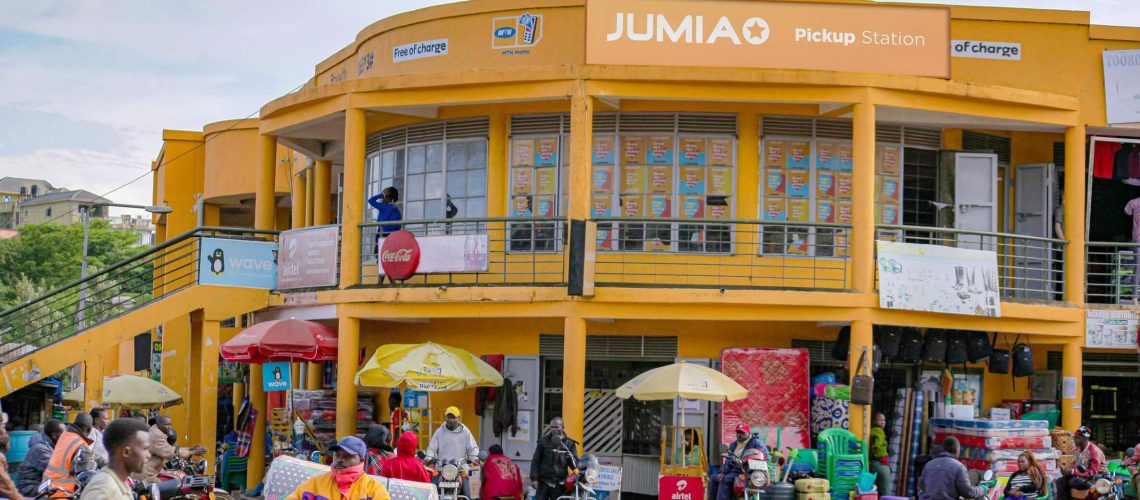
E-commerce is growing rapidly across Africa, changing how people discover, purchase, and receive products.
However, one major challenge continues to affect online shopping: delivery. In many African cities, customers live in areas where addresses can be difficult to identify, traffic can make deliveries unpredictable, and home delivery fees can increase the total cost of an order. Pickup points offer a practical alternative that could make e-commerce more accessible, affordable, and efficient.
What Are Pickup Points?
Pickup points are designated locations where customers collect online orders instead of receiving them directly at home.
They can include retail stores, convenience shops, lockers, partner businesses, collection centers, or dedicated logistics hubs. Once an order arrives, customers receive a notification and visit the location to collect it.
This simple model can solve several problems associated with traditional last-mile delivery.
Reducing Delivery Challenges
Last-mile delivery is often one of the most difficult and expensive parts of e-commerce. Traffic congestion, unclear addresses, security concerns, and failed delivery attempts can make home delivery complicated.
Pickup points allow logistics companies to deliver multiple orders to one location rather than visiting numerous individual addresses.
For example, instead of making 20 separate deliveries across a neighborhood, a courier could deliver all 20 packages to a nearby collection point. Customers then collect their orders when convenient.
This can reduce unnecessary trips and improve delivery efficiency.
Making Online Shopping More Affordable
Delivery fees can discourage customers from completing online purchases, particularly when the cost of transportation represents a significant portion of the order value.
Pickup points can reduce delivery costs by allowing logistics providers to consolidate shipments.
Lower delivery costs could encourage more consumers to shop online, especially for smaller purchases that might otherwise not seem worth the additional delivery charge.
Solving Address and Location Problems
Addressing remains a challenge in many parts of Africa. Some homes may not have clearly identifiable street numbers, while informal settlements and rapidly developing neighborhoods can be difficult for unfamiliar delivery drivers to navigate.
Pickup points provide an easier reference.
Instead of explaining exactly where a house is located, a customer can select a recognizable collection point nearby. This can reduce communication problems between customers and delivery agents.
Improving Convenience for Customers
Pickup points do not necessarily make shopping less convenient. In some situations, they can actually give customers greater control. People who are rarely at home during working hours can collect packages after work or at another convenient time.
This can also reduce failed delivery attempts, where a courier arrives when the customer is unavailable.
If pickup locations are positioned near workplaces, transport routes, markets, supermarkets, or residential areas, customers can combine package collection with other daily activities.
Supporting Small Businesses
Pickup points can also create opportunities for local businesses.
A small shop, pharmacy, convenience store, or other retail outlet could become a collection point for an e-commerce company. The business could earn additional income while attracting potential customers who visit to collect their orders.
This creates a connection between digital commerce and physical neighborhood businesses.
Strengthening Logistics Networks
A successful e-commerce system requires more than websites and mobile applications. It also needs reliable logistics infrastructure.
Pickup points can become important nodes within that infrastructure.
Instead of relying entirely on door-to-door delivery, logistics companies can build networks of strategically positioned collection locations. These networks could make it easier to move products between warehouses, cities, neighborhoods, and customers.
As the number of pickup points grows, delivery routes can become more predictable and efficient.
Building Customer Confidence
Some consumers may hesitate to order online because they worry about missed deliveries, damaged packages, or difficulties receiving goods.
A reliable pickup system can provide another layer of confidence.
Customers know where their package will be delivered and when they can collect it. Depending on the system, they may also be able to inspect the package before accepting it.
Clear pickup procedures, secure storage, and timely notifications can further improve the customer experience.
The Importance of Strategic Locations
Pickup points will only succeed if they are convenient.
A collection center located far away from customers may eliminate the advantage it is supposed to provide. Successful networks therefore need to consider population density, transportation routes, shopping patterns, security, and operating hours.
Locations near busy neighborhoods, transport hubs, offices, campuses, and residential communities may be particularly useful.
Technology Can Make Pickup Points Smarter
Technology can make the system even more efficient. Customers could receive digital pickup codes, real-time delivery notifications, estimated arrival times, and directions to collection points. Automated lockers could also allow customers to retrieve packages without interacting directly with staff.
For logistics companies, digital tracking can help monitor inventory and reduce misplaced packages.
These tools could make pickup points a natural extension of Africa’s increasingly digital shopping environment.
Pickup Points Are Not a Complete Solution
Despite their potential, pickup points also have limitations.
Customers still need to travel to the collection location, which may be inconvenient for people with mobility challenges or those living far from established commercial areas. Pickup centers also require secure storage, reliable staff, effective inventory management, and good customer service.
For this reason, pickup points are unlikely to completely replace home delivery.
Instead, they can become another option within a flexible delivery system.
A Hybrid Future for African E-Commerce
The future of African e-commerce may involve several delivery models working together. Customers could choose home delivery when convenience is the priority, pickup points when affordability or flexibility matters, and automated lockers where available.
Giving customers these options could help e-commerce platforms serve a much wider range of consumers.
As African cities grow and online shopping becomes more common, solving the last-mile delivery challenge will become increasingly important. Pickup points offer a relatively simple model that could reduce delivery costs, improve logistics efficiency, support local businesses, and make online shopping more accessible.
Ultimately, their biggest advantage may be flexibility. Instead of forcing every customer into the same delivery system, pickup points give shoppers another way to participate in the digital economy.
