

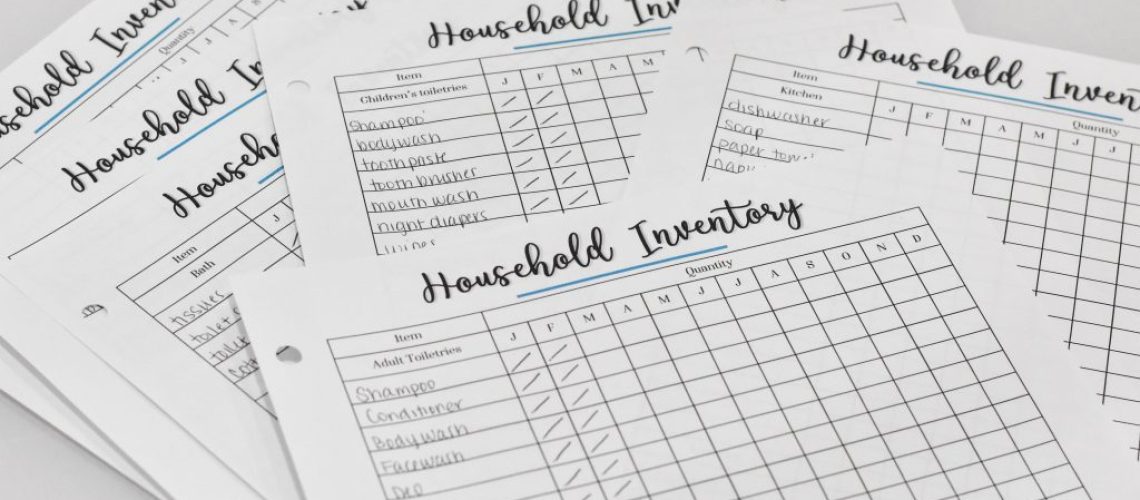
A household inventory is a simple record of the items you own, use, or regularly purchase.
For busy households, especially those managing rising living costs, a practical inventory can reduce unnecessary purchases and prevent essential items from running out unexpectedly.
1. Decide What to Track
Start by identifying the household items that are worth monitoring. You do not need to record every spoon or piece of clothing.
Focus on items that:
- Need regular replacement
- Have significant costs
- Run out frequently
- Are easy to forget when shopping
- Have expiration dates
- Are shared by several family members
Common categories include:
- Food and groceries
- Cleaning products
- Toiletries
- Kitchen supplies
- Medicines and first-aid items
- Household appliances
- School supplies
- Personal-care products
Keeping categories separate makes the inventory easier to understand.
2. Choose a Simple Recording Method
Your inventory does not need complicated software. A notebook can work well for a small household. However, a spreadsheet or mobile note can make updates faster.
Create columns for:
| Item | Quantity | Minimum Level | Purchase Date | Expiry Date | Notes |
|---|---|---|---|---|---|
| Rice | 10 kg | 5 kg | Sept. 5 | — | Stored in container |
| Detergent | 2 packs | 1 pack | Sept. 2 | — | Laundry |
| Cooking oil | 2 bottles | 1 bottle | Sept. 7 | — | Kitchen |
The goal is not to create paperwork. Instead, the system should give you useful information at a glance.
3. Set Minimum Stock Levels
One of the most useful parts of a household inventory is establishing a minimum quantity.
For example, a family may decide to keep at least one extra bottle of cooking oil, two packs of detergent, or several rolls of toilet paper available.
When an item reaches its minimum level, add it to the shopping list.
This approach prevents two common problems: buying too much and discovering too late that something important has finished.
4. Check Storage Areas
Walk through the home systematically rather than trying to remember everything.
Check the:
- Kitchen cabinets
- Pantry
- Refrigerator
- Freezer
- Bathroom
- Laundry area
- Cleaning cupboard
- Storage room
- Garage or outdoor storage areas
As you go, record quantities and remove duplicate items from your mental shopping list.
This can be particularly useful before a monthly grocery trip. You may discover that a product you planned to buy is already sitting at the back of a cupboard.
5. Record Expiry Dates
Expiry dates deserve special attention for food, medications, cosmetics, and other products with limited shelf lives.
Arrange products so that items with earlier expiry dates are used first. This principle, often called first in, first out, can help reduce household waste.
For example, if you have two cartons of milk and one expires sooner, place the earlier-expiring carton where it will be used first.
6. Review the Inventory Regularly
An inventory only works when it stays reasonably current.
Choose a convenient review schedule. A quick weekly check can cover frequently used items, while a more detailed monthly review can cover the entire household.
During the review:
- Check current quantities.
- Remove items that have been used up.
- Add newly purchased products.
- Check approaching expiry dates.
- Update the shopping list.
- Identify items that are being purchased unnecessarily.
Keeping the process short makes it easier to maintain.
7. Connect the Inventory to Your Budget
A household inventory becomes even more useful when combined with budgeting.
Look at the products you regularly purchase and identify patterns. You might discover that certain items are bought every week while others last several months.
This information can help you decide where bulk purchasing makes sense and where it does not.
For example, buying rice, tissue, or cleaning supplies in larger quantities may be practical if you have adequate storage and the price per unit is lower. Perishable products, however, may require more careful planning.
8. Avoid Overbuying
An inventory should not encourage unnecessary stockpiling.
Before buying an item, check:
- How much do we already have?
- How quickly do we use it?
- When will we need more?
- Do we have enough storage space?
- Is the bulk price actually cheaper?
These questions can prevent attractive discounts from turning into wasted spending.
9. Make Everyone Responsible
If several people live in the household, one person does not necessarily need to manage everything.
Family members can report when essential products are running low. Older children, for example, can be responsible for noting when toiletries or school supplies need replacement.
A shared system reduces the chance of someone assuming that another person has already added an item to the shopping list.
10. Keep It Practical
The best household inventory is one you will actually use.
Avoid recording unnecessary details or creating a system that takes an hour to update. Start with essential household categories and expand only when you see a genuine need.
A practical inventory should ultimately help you save money, reduce waste, plan shopping trips, and keep your home organized.
Final Thoughts
Creating a household inventory does not require expensive software or complicated planning. A simple list of important household items, their quantities, and their replacement needs can make everyday management much easier.
When combined with regular reviews and a realistic household budget, an inventory gives families better control over what they buy and what they already have. Over time, this small organizational habit can contribute to less waste, fewer emergency purchases, and more efficient household spending.
