

How Digital Parking Systems Could Improve African Cities
As African cities continue to grow, parking is becoming an increasingly important urban-management challenge. More vehicles, limited parking spaces, informal parking arrangements and congested roads can make daily travel slower and less predictable. In cities such as Lagos, Nairobi and Dar es Salaam, better parking management could contribute to smoother traffic and more efficient use of urban space.
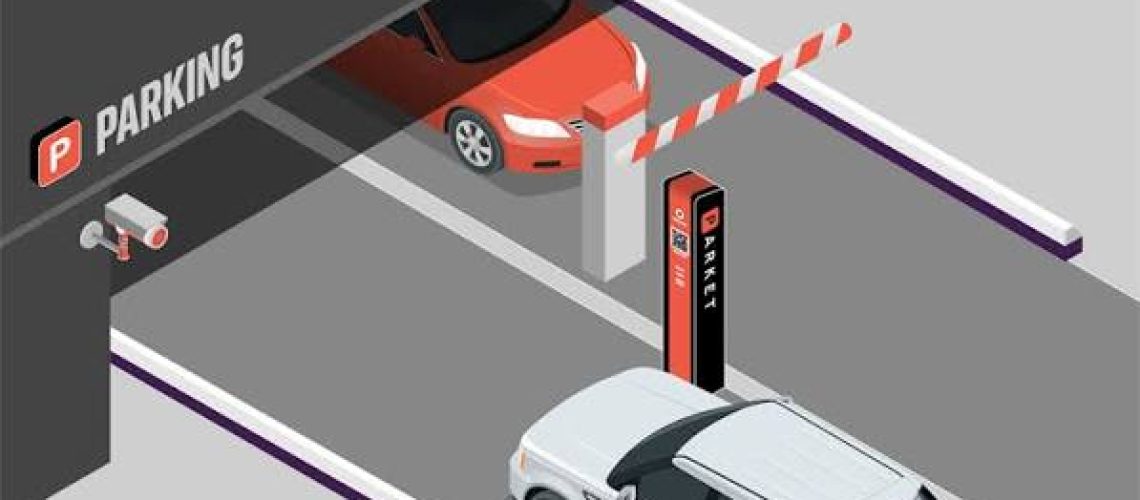
Digital parking systems offer one possible solution. These systems can combine mobile payments, parking apps, sensors, cameras, digital enforcement and real-time data to help drivers and city authorities manage parking more efficiently. Research on African urban mobility has specifically identified smart parking as a potential tool for providing drivers with real-time information about available spaces and improving traffic coordination.
What Are Digital Parking Systems?
A digital parking system uses technology to manage how vehicles access, pay for and use parking spaces.
Depending on the city, such a system could allow drivers to:
- Find available parking spaces through a mobile application.
- Pay parking fees digitally.
- Receive digital receipts.
- Extend parking sessions remotely.
- Receive notifications when parking time is about to expire.
- Check parking fees before arriving.
- Report parking problems.
For city authorities, the same system can provide information about parking demand, payments, violations and space utilization.
Some African parking initiatives are already demonstrating these possibilities. In Mwanza, Tanzania, for example, a smart parking system uses vehicle-plate information to identify parked vehicles and supports mobile payments through a government payment gateway. ITDP reports that the system has improved collections and helped authorities trace and penalize defaulters.
Reducing Traffic Caused by Parking Searches
One of the biggest advantages of digital parking could be reducing the amount of time drivers spend looking for spaces.
In busy commercial districts, drivers may circle several streets before finding somewhere to park. This adds unnecessary vehicles to already crowded roads.
A digital system could show available spaces before drivers reach a destination. Sensors, cameras or regularly updated parking databases could provide information about occupancy.
Instead of searching randomly, a driver could identify a suitable parking area and travel directly to it.
This could be particularly useful in busy business districts, shopping areas, airports, hospitals and entertainment centers.
Making Parking Payments Easier
Cash-based parking payments can create several challenges. Drivers may not always have the correct amount of cash, while authorities can find it difficult to accurately track collections.
Digital payments could provide a more convenient alternative.
Drivers could pay using mobile money, bank transfers, cards or other locally appropriate payment methods. Africa’s widespread adoption of mobile payments provides a strong foundation for digital transport services.
Importantly, digital parking should not depend entirely on expensive smartphones. Systems could also support USSD, SMS or other low-bandwidth options so that people using basic phones are not excluded.
Improving City Revenue
Parking can also become an important source of municipal revenue when properly managed.
Digital systems create electronic records of transactions, making it easier for authorities to monitor how much money is collected from different parking zones.
They can potentially identify:
- Underperforming parking areas.
- Unpaid parking sessions.
- Revenue discrepancies.
- Peak parking periods.
- Areas experiencing high demand.
- Frequent parking violations.
This information could help municipalities make better financial and infrastructure decisions.
ITDP has noted that digital enforcement and IT-based parking management can improve payment collection, real-time tracking, documentation and citation accuracy.
Supporting Better Urban Planning
Parking data can provide valuable information beyond parking itself.
If authorities know where vehicles are concentrated at different times, they can better understand movement patterns across the city.
For example, data might reveal that a particular business district experiences extremely high demand between 8 a.m. and 10 a.m., while another area becomes busy in the evening.
Urban planners could use such information when considering:
- Public transport connections.
- Road design.
- Pedestrian infrastructure.
- Commercial development.
- Parking facilities.
- Traffic-management strategies.
However, data must be collected, stored and used responsibly. Researchers studying African smart cities emphasize the importance of data quality, local data-sharing systems, validation and capacity-building.
Creating More Transparent Enforcement
Informal parking enforcement can sometimes create confusion for drivers and authorities.
Digital enforcement can establish clearer records. A parking officer could use a mobile device to record a violation, capture evidence and issue a digital citation.
This creates an electronic trail that can make disputes easier to investigate.
It can also reduce the dependence on physical paperwork and make enforcement more consistent.
Supporting Local Businesses
Better parking management could also benefit businesses.
Customers may avoid commercial areas when finding parking is difficult or unpredictable. If digital systems make parking easier to locate and pay for, shopping districts could become more accessible.
Businesses could potentially integrate parking information into their own customer platforms or offer parking-related promotions.
Shopping centers, hotels, restaurants and offices could also use occupancy information to manage their parking facilities more efficiently.
The Importance of African-Centered Solutions
Digital parking systems should not simply copy models developed for cities in Europe or North America.
African cities have unique mobility patterns. Informal transport, motorcycles, minibuses, limited infrastructure and different payment habits all influence how people move around cities.
Recent research on African urban mobility argues for approaches that combine physical infrastructure, digital technology and inclusive governance rather than treating technology as a standalone solution.
Therefore, successful parking systems should be designed around local realities.
A system in Lagos, for example, may need different features from one in Kigali or Cape Town.
Challenges Cities Must Address
Digital parking is not a perfect solution.
African cities may face challenges involving unreliable connectivity, limited infrastructure, funding, cybersecurity, data protection and digital exclusion. Research on smart-city development across Africa identifies infrastructure gaps, limited funding, policy weaknesses and inequality as significant barriers.
Authorities must also ensure that parking technology does not make urban services inaccessible to people without smartphones, bank cards or reliable internet access.
Privacy is another important issue. Systems using cameras, vehicle registration numbers or location information should operate under appropriate data-protection rules.
A Practical Path Forward
African cities could begin with small pilot projects rather than attempting to digitize every parking space immediately.
A practical approach could involve:
- Identifying high-demand parking zones.
- Mapping existing parking spaces.
- Introducing digital payment options.
- Testing real-time occupancy information.
- Training parking officers.
- Establishing clear enforcement procedures.
- Measuring traffic and revenue improvements.
- Expanding successful systems gradually.
This approach allows authorities to learn from local conditions before making larger investments.
Conclusion
Digital parking systems could help African cities make better use of limited urban space, reduce unnecessary driving, improve parking payments, strengthen enforcement and increase municipal revenue.
The technology alone, however, will not solve parking problems. Successful implementation will require reliable infrastructure, appropriate policies, transparent governance and inclusive access.
As African cities become more digitally connected, parking can become part of a broader smart-mobility strategy, one that uses technology not simply to collect fees, but to make urban movement more organized, efficient and convenient.
