

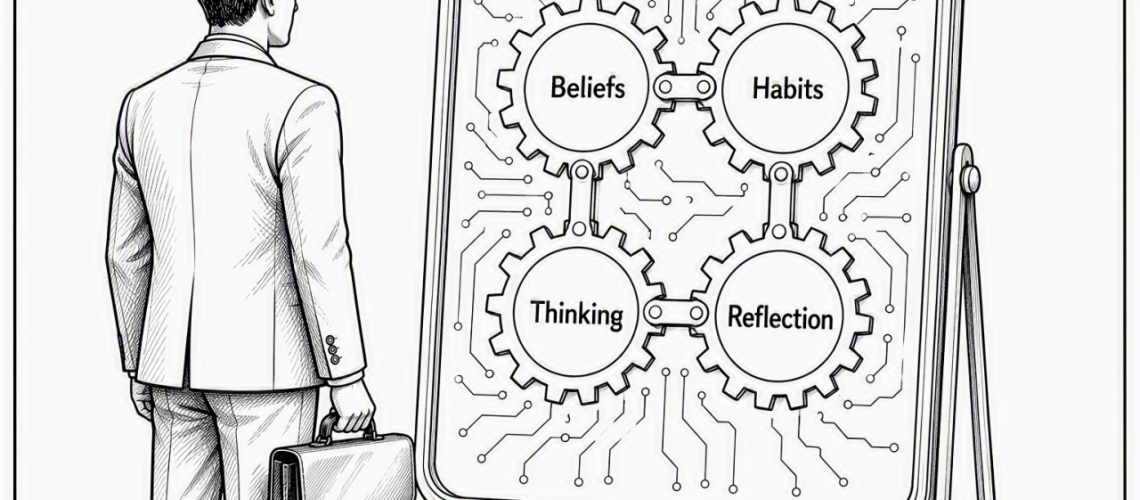
How to Build a Personal Operating System for Everyday Life
Modern life can feel like a constant stream of tasks, messages, responsibilities, decisions, and unexpected problems. Without a clear system, it is easy to move from one urgent task to another without making meaningful progress on what matters most.
A personal operating system can help change that.
In simple terms, a personal operating system (POS) is a collection of habits, routines, tools, rules, and decision-making methods that help you manage everyday life. Just as a computer operating system helps different programs work together, your personal system helps you organize your time, energy, responsibilities, goals, and priorities.
Most importantly, the goal is not to make every minute of your day rigid. Instead, you want enough structure to reduce unnecessary stress and make better decisions consistently.
What Is a Personal Operating System?
A personal operating system is the framework you use to run your life intentionally.
It can include:
- Daily and weekly routines
- Goal-setting methods
- Personal schedules
- Financial habits
- Health and wellness routines
- Task-management systems
- Decision-making rules
- Progress-tracking methods
- Information-management systems
- Ways to manage relationships and responsibilities
Everyone already has some form of personal operating system. However, some people build theirs deliberately, while others develop theirs through habits, circumstances, and trial and error.
Therefore, a good personal operating system should make life simpler, not more complicated.
Start With Your Priorities
Before choosing productivity apps, planners, calendars, or other tools, determine what actually matters to you.
First, think about the major areas of your life. These may include career, family, finances, health, relationships, learning, creativity, spirituality, or personal growth.
Then ask yourself:
What do I want my life to prioritize at this stage?
You do not need ten major priorities. Instead, choosing three to five important areas can provide enough direction.
For example, someone might decide that their current priorities are:
- Building their career
- Improving financial stability
- Maintaining good health
- Developing meaningful relationships
- Learning new skills
These priorities then become the foundation of the operating system.
Create a Simple Planning Structure
A useful personal operating system should work at different levels. Consequently, your planning system can move from broad goals to specific daily actions.
Yearly Planning
Start by considering the bigger direction of your life.
What would you like to accomplish over the next year? Which skills would you like to develop? What financial, career, or personal milestones matter most?
Rather than creating an enormous list, choose a few meaningful goals. As a result, you will have clearer priorities throughout the year.
Monthly Planning
Next, break larger goals into smaller objectives.
For instance, if your annual goal is to improve your professional skills, a monthly objective might involve completing a course, building a portfolio project, or practicing a particular skill.
This approach makes large goals feel more manageable.
Weekly Planning
Weekly planning connects your goals with your actual schedule.
At the beginning or end of each week, identify:
- Important appointments
- Major deadlines
- Three to five important tasks
- Personal commitments
- Exercise or wellness activities
- Time for rest
- Progress toward major goals
By doing this consistently, you can begin each week with a clearer sense of direction.
Daily Planning
Your daily plan should remain simple.
Choose the tasks that genuinely need your attention that day. Although a long task list can look productive, it can also make it harder to focus.
Instead, ask:
What are the most important things I need to accomplish today?
Once you identify those priorities, give them your attention before less important tasks take over your schedule.
Build a Reliable Task Management System
One of the biggest benefits of a personal operating system is reducing the number of things you have to remember.
Instead of keeping every task in your head, create one reliable place to capture them. This could be a notebook, calendar, task-management application, or simple digital document.
Whenever something comes to mind, capture it.
For example:
- Pay a bill
- Call someone
- Research a course
- Buy household supplies
- Submit a work assignment
- Schedule an appointment
Later, organize these tasks according to their urgency and importance.
The important principle is capture first, organize later. In this way, your brain does not have to constantly remember unfinished responsibilities.
Use Rules to Reduce Decision Fatigue
Everyday life involves hundreds of small decisions. Over time, making those decisions can consume considerable mental energy.
Simple personal rules can reduce that burden.
For example, you might decide to:
- Check messages at specific times rather than constantly.
- Plan tomorrow before going to bed.
- Review your finances once a week.
- Keep important documents in one location.
- Avoid accepting commitments immediately when you need time to think.
- Complete genuinely quick tasks as soon as practical.
These rules act as shortcuts. Therefore, they can reduce unnecessary decision-making while making useful behaviors easier to repeat.
Design Your Environment for Success
Your environment can either support or undermine your system.
If you want to read more, for example, keep a book where you normally relax. Similarly, if you want to exercise in the morning, prepare your clothes the night before.
The same principle applies to work.
Keep frequently used files organized and reduce unnecessary notifications. Meanwhile, create a workspace that makes it easier to concentrate.
Good systems should not depend entirely on willpower. Instead, they should make desirable behaviors easier to perform.
Create a Personal Information System
Information can quickly become difficult to manage.
Important emails, documents, ideas, passwords, notes, receipts, appointments, and reference materials can become scattered across devices and applications.
For this reason, create simple categories for important information.
For example:
Work: projects, documents, clients, and professional notes
Personal: important records, plans, and household information
Finance: budgets, receipts, savings goals, and financial records
Learning: courses, books, notes, and research
Ideas: creative concepts, future projects, and things to explore
The exact categories do not matter as much as consistency. Once you know where information belongs, finding it later becomes much easier.
Build a Financial Routine
Money management should also have a place in your personal operating system.
Fortunately, you do not need an extremely complicated financial spreadsheet. Start with a few basic habits instead.
Track your income and major expenses. Know your recurring bills and set savings targets when possible. In addition, review your spending regularly.
You can also establish simple financial rules, such as:
- Save before spending discretionary income.
- Review subscriptions periodically.
- Plan for major expenses in advance.
- Avoid making significant purchases impulsively.
- Maintain an emergency fund when financially possible.
As a result, you gain greater visibility over your finances. That visibility can help you make more informed decisions.
Protect Your Energy, Not Just Your Time
Productivity is often presented as a time-management problem. However, energy matters just as much.
Two hours of focused work can sometimes be more valuable than five hours of distracted effort.
Pay attention to when you naturally have the most energy. Some people concentrate better in the morning, while others become more productive later in the day.
Whenever possible, use your stronger periods for demanding tasks.
At the same time, include recovery in your system. Sleep, breaks, recreation, exercise, and social connection can support sustainable performance.
Therefore, effective planning should account for both time and energy.
Establish a Weekly Review
A weekly review is one of the most useful parts of a personal operating system.
Set aside 20 to 30 minutes once a week to evaluate your progress and responsibilities.
Ask yourself:
- What did I accomplish?
- What remains unfinished?
- What problems appeared?
- What commitments are coming next?
- What should I stop doing?
- What should I continue doing?
- What deserves more attention next week?
This creates a valuable feedback loop.
Instead of repeating the same patterns every week, you can identify what works and adjust what does not. Over time, those small adjustments can make your personal system more effective.
Create a System That Can Survive Difficult Days
A personal operating system should not collapse whenever life becomes unpredictable.
Busy days, emergencies, unexpected expenses, and low-energy periods will happen. Sometimes, your carefully planned schedule simply will not work.
For that reason, create a minimum version of your routine.
For example, your normal morning routine might include exercise, reading, planning, and focused work. On a difficult day, the minimum version might simply involve getting ready, reviewing your priorities, and completing one important task.
This approach prevents one difficult day from becoming an abandoned routine.
Avoid Building an Overcomplicated System
There is often a temptation to create an elaborate productivity system with multiple applications, complicated categories, color-coded calendars, and dozens of routines.
However, more complexity does not necessarily mean better organization.
If your system requires constant maintenance, you may eventually stop using it. Instead, start with the basics:
Capture → Plan → Prioritize → Execute → Review.
Once these habits become natural, you can add more structure where necessary.
Review and Improve Your Operating System
Your personal operating system should evolve as your life changes.
A system that worked when you were a student may not work when you begin working full-time. Likewise, a routine designed for living alone may need to change when you take on new family responsibilities.
Career changes, financial changes, relocation, and new responsibilities can all require adjustments.
Every few months, ask yourself:
Is my current system helping me live the life I actually want?
If something consistently creates unnecessary work, simplify it. If an important area keeps being neglected, create a better process for it. Likewise, if a routine no longer serves its purpose, replace it.
The objective is continuous improvement rather than perfection.
The Goal Is a Better Life, Not a Perfect Schedule
The purpose of a personal operating system is not to turn you into a productivity machine.
Instead, it should help you spend less mental energy remembering, organizing, and worrying about everyday responsibilities. Consequently, you can focus more on meaningful work, relationships, growth, and rest.
A good system provides structure while leaving room for flexibility.
You do not need to control every hour of your day. What matters is having reliable ways to decide what deserves your attention, organize your responsibilities, and recover when things do not go according to plan.
Final Thoughts
Building a personal operating system is ultimately an exercise in intentional living; start by identifying your priorities. Then create simple routines for planning, tasks, finances, information, and personal well-being. At the same time, use your environment to support good habits and review your system regularly.
Most importantly, keep it simple enough to use consistently.
Your personal operating system does not have to be impressive. It simply has to work for you.
