

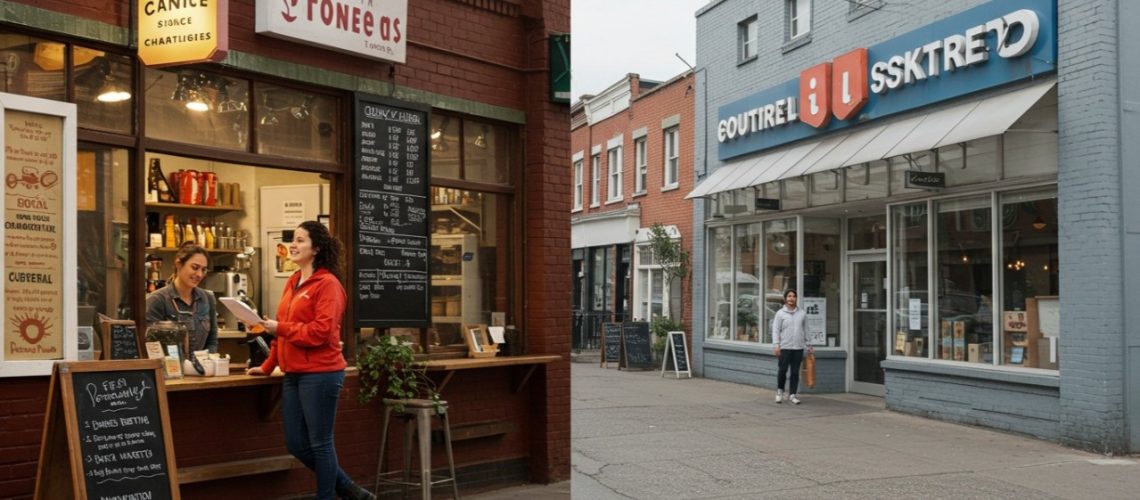
Across African cities, street retailers remain an important part of everyday commerce.
From roadside kiosks and market stalls to mobile vendors and small neighborhood shops, these businesses serve millions of consumers every day.
They operate alongside supermarkets, shopping malls, convenience stores, and large retail chains. Although larger stores often have greater purchasing power and more resources, street retailers have developed practical ways to remain competitive.
Their strength is not always based on size. Instead, they often compete through convenience, personal relationships, flexibility, local knowledge, and quick service.
1. They Operate Close to Customers
Location is one of the biggest advantages of street retailers.
A small shop may operate beside a residential building, bus stop, school, office, or busy road. Customers can therefore purchase everyday items without travelling to a large shopping centre.
For someone who needs bread, bottled water, snacks, toiletries, or other basic products quickly, convenience can matter more than having hundreds of products to choose from.
2. They Understand Local Demand
Street retailers often have a close relationship with the communities they serve.
Because they interact with customers regularly, they can identify which products sell quickly and which ones do not. A retailer in a university area, for example, may stock products that appeal to students, while a shop in a residential neighborhood may focus more heavily on household essentials.
This local knowledge can help small retailers make faster decisions than larger businesses with more formal purchasing systems.
3. Flexible Pricing Can Attract Buyers
Large stores generally operate with structured pricing systems. Street retailers may have greater flexibility in how they package or sell certain products.
Customers may purchase individual units or smaller quantities when they cannot afford a larger pack. In some markets, retailers can also negotiate prices depending on the product and circumstances.
This flexibility is particularly useful for consumers managing limited or irregular incomes.
4. Personal Relationships Build Loyalty
Shopping at a neighborhood store can feel different from shopping at a large retail chain.
A street retailer may know regular customers by name, understand their preferences, and provide a more personal experience. Some customers return because they trust the seller or appreciate the relationship they have developed over time.
In competitive markets, this personal connection can become a valuable business advantage.
5. They Adapt Quickly
Small retailers can often change their product selection quickly.
If customers suddenly begin demanding a particular snack, beverage, beauty product, phone accessory, or household item, a retailer may adjust their stock without going through complicated corporate procedures.
This flexibility allows street businesses to respond to changing trends and local demand.
6. They Use Informal Distribution Networks
Street retailers often obtain products through wholesalers, distributors, local producers, and other traders.
These networks can help small businesses access products without maintaining large warehouses. Some retailers also work together informally, sharing information about suppliers, prices, and products.
In major African markets, these relationships form an important part of the wider retail ecosystem.
7. Digital Payments Are Creating New Opportunities
Technology is also changing how street retailers compete. Mobile money, bank transfers, point-of-sale terminals, QR payments, and social media can make small businesses easier to access and more convenient for customers.
A retailer who accepts digital payments can serve customers who do not carry cash. Social media can also help small sellers advertise products, communicate with customers, and accept orders.
Digital tools therefore allow some street businesses to operate beyond their physical location.
8. They Offer Fast Service
A large store may provide a wider range of products, but customers sometimes want speed.
A neighborhood retailer can often serve a customer within minutes. There may be no need to walk through multiple aisles, wait in a long checkout line, or travel across town.
For everyday purchases, this speed can be a major reason customers continue using small retailers.
9. They Can Serve Underserved Areas
Large retailers typically concentrate in locations where there is enough demand to justify significant investment. Street retailers, however, can operate in smaller communities and neighborhoods that may not attract major retail chains.
They help bring essential products closer to consumers and can become important commercial points within communities.
10. They Combine Retail With Other Services
Many small retailers do more than sell products. Depending on their location, a neighborhood business might offer mobile phone services, bill payments, food sales, delivery, airtime, printing, or other services.
This approach gives customers additional reasons to visit the business and can create multiple sources of revenue for the retailer.
Challenges Street Retailers Face
Despite their advantages, street retailers face significant challenges.
They may have limited access to affordable financing, inconsistent electricity, storage problems, changing supplier prices, competition from other informal sellers, and difficulties maintaining sufficient stock.
Large retailers can also benefit from stronger branding, formal supply chains, loyalty programmes, advertising budgets, and economies of scale.
Street retailers therefore need to continually improve their operations to remain competitive.
The Importance of Better Business Practices
Small retailers can strengthen their position by keeping accurate sales records, monitoring expenses, reducing unnecessary stock losses, and understanding which products generate the highest returns.
Better inventory management can prevent both overstocking and shortages. Simple digital tools can also help retailers track sales and communicate with customers.
Professional presentation matters as well. Clean shelves, clear pricing, good customer service, and reliable opening hours can improve the shopping experience.
The Future of Street Retail
Street retail is unlikely to disappear simply because large stores continue to expand.
Instead, the two models may increasingly exist alongside each other. Large retailers can provide scale and variety, while smaller businesses can offer proximity, flexibility, and personalized service.
Technology may further narrow the gap. Mobile ordering, digital payments, social commerce, delivery services, and online marketplaces can give small retailers access to customers and tools that were previously available mainly to larger businesses.
Conclusion
Street retailers compete with large stores by playing to their strengths. They stay close to customers, understand local preferences, respond quickly to changes, provide flexible purchasing options, and build personal relationships. Many are also adopting digital payments and other technologies to improve how they operate.
Their success demonstrates that retail competition is not determined by size alone. For many consumers, convenience, trust, affordability, and accessibility remain powerful reasons to choose a neighborhood retailer.
As African cities continue to grow, street retailers will remain an important part of the continent’s evolving retail landscape.
