

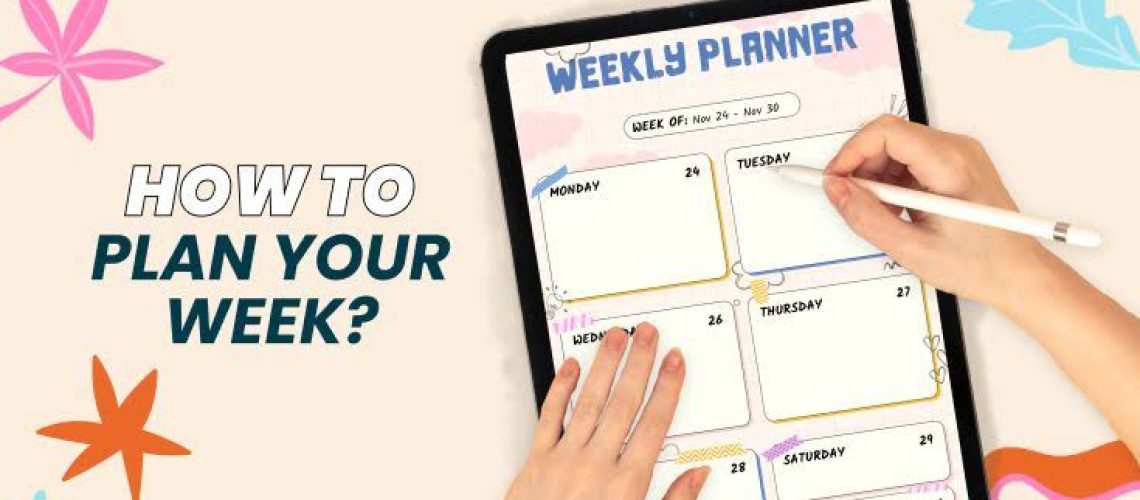
A busy week can easily become a collection of unfinished tasks, unexpected responsibilities, and last-minute decisions.
Without a clear plan, it is easy to spend hours being busy without making meaningful progress on important goals. Weekly planning offers a simple solution. Instead of reacting to every task as it appears, you take time to decide what deserves your attention before the week begins.
More importantly, building a planning habit that lasts can help you manage your time without making your routine feel unnecessarily complicated.
Why Weekly Planning Is Important
Weekly planning gives you a broader view of your responsibilities. A daily to-do list may tell you what needs to happen today, but a weekly plan helps you understand how today’s actions connect with your larger priorities.
It can help you:
- Identify important deadlines early.
- Balance work, family, errands, and personal activities.
- Reduce forgotten tasks.
- Create realistic priorities.
- Protect time for important projects.
- Review your progress regularly.
- Reduce the stress of making constant decisions.
The goal is not to control every minute. Instead, weekly planning creates enough structure to help you respond better when unexpected situations arise.
Choose a Consistent Planning Time
A planning habit becomes easier when it has a predictable time and place.
Some people prefer Sunday evening because it gives them time to prepare before Monday. Others may prefer Friday afternoon or Saturday morning.
Choose a period when you can focus without rushing. Even 20 to 30 minutes can be enough.
The important thing is consistency. Planning at the same time each week gradually turns the activity into a routine rather than another task you have to remember.
Review the Previous Week First
Before creating a new plan, take a few minutes to look back.
Ask yourself:
- What did I complete?
- What remains unfinished?
- What caused delays?
- Which activities took more time than expected?
- What worked well?
- What should I change next week?
This review prevents you from repeatedly making the same planning mistakes.
For example, if you consistently schedule ten major tasks but complete only five, the problem may not be your motivation. Your plan may simply contain too much.
Identify Your Top Priorities
A weekly plan should not become a long list of everything you want to accomplish.
Instead, identify the activities that matter most.
Choose perhaps three to five major priorities for the week. These could include completing a work project, studying for an examination, attending an important meeting, handling a household responsibility, or making progress on a personal goal.
Once the priorities are clear, smaller tasks can be arranged around them.
Break Large Goals Into Smaller Actions
Large goals can feel overwhelming when they remain vague.
Instead of writing:
“Work on my project.”
Break the goal into specific actions:
- Research the topic.
- Create an outline.
- Complete the first section.
- Review the work.
- Prepare the final version.
Smaller actions make progress easier to see. They also help you estimate how much time a task actually requires.
Use Time Blocks Carefully
Time blocking involves assigning specific periods to particular activities.
For example:
8:00–10:00: Deep work
10:00–10:30: Break
10:30–12:00: Administrative tasks
1:00–2:00: Meetings
4:00–5:00: Personal errands
However, avoid filling every available minute.
Unexpected calls, transportation delays, urgent requests, and household responsibilities can disrupt even a well-designed schedule. Leaving some flexible time makes your plan more realistic.
Plan Around Your Energy
Not every hour of the day provides the same level of concentration.
If you tend to think clearly in the morning, consider scheduling demanding work during that period. Save simpler administrative tasks for times when your energy naturally decreases.
Planning around your energy can be more effective than simply counting available hours.
For example, two hours of focused work during your most productive period may accomplish more than four distracted hours later in the day.
Include Personal Responsibilities
A useful weekly plan should cover more than work.
Include household chores, shopping, appointments, exercise, rest, family commitments, social activities, and other responsibilities.
This approach creates a more realistic picture of your week.
It also prevents personal responsibilities from constantly competing with work because they were never included in the original plan.
Create a “Must Do” and “Could Do” List
Not every task deserves the same level of urgency.
Separate your tasks into categories such as:
Must Do:
Tasks with important deadlines or significant consequences.
Should Do:
Important tasks that should be completed if possible.
Could Do:
Useful activities that can move to another week without serious consequences.
This simple distinction helps you stay calm when the week becomes unexpectedly busy.
Keep Your Planning System Simple
You do not need an expensive productivity system.
A notebook, calendar, spreadsheet, or digital planning application can work effectively. What matters most is whether the system is easy for you to use consistently.
Avoid switching between too many planning tools. When tasks are spread across notebooks, phone applications, messages, sticky notes, and separate calendars, important information can become difficult to track.
Choose one primary system and use it regularly.
Expect Plans to Change
A strong weekly planning habit does not mean following your schedule perfectly.
Unexpected responsibilities will appear. Meetings may move. Projects may take longer than expected. Some tasks may become irrelevant.
When this happens, adjust the plan rather than abandoning it.
A flexible plan is more sustainable than a rigid one.
Think of your weekly plan as a guide, not a contract.
Start Small
Trying to completely redesign your life in one planning session can make the habit difficult to maintain.
Start with a simple routine:
- Review the previous week.
- Check your calendar.
- Identify your top priorities.
- List important tasks.
- Assign realistic time periods.
- Leave space for unexpected events.
- Review the plan during the week.
Once this becomes comfortable, you can add more advanced techniques.
Review Your Plan During the Week
Weekly planning should not disappear after Monday morning.
Take a few minutes each day to check your priorities. If something changes, move tasks around accordingly.
A short midweek review can also help you determine whether you are falling behind.
Instead of waiting until Sunday to discover that an important task was forgotten, you can correct the situation while there is still time.
Reward Consistency, Not Perfection
One of the biggest reasons planning habits fail is the expectation of perfection.
Missing a planning session does not mean the habit has failed. Having an unproductive day does not erase your progress.
Simply return to the routine.
The real objective is to develop a reliable process that helps you organize your responsibilities over time.
Conclusion
Building a weekly planning habit that lasts requires simplicity, consistency, and flexibility. Start by choosing a regular planning time, reviewing the previous week, identifying your priorities, and creating realistic tasks for the days ahead.
Remember that a good plan should support your life rather than make it more stressful. Leave room for unexpected events, protect time for important activities, and adjust your schedule when circumstances change.
With regular practice, weekly planning can become a natural part of your routine. Instead of beginning each week wondering what needs to be done, you can start with a clearer understanding of where your time and attention should go.
