

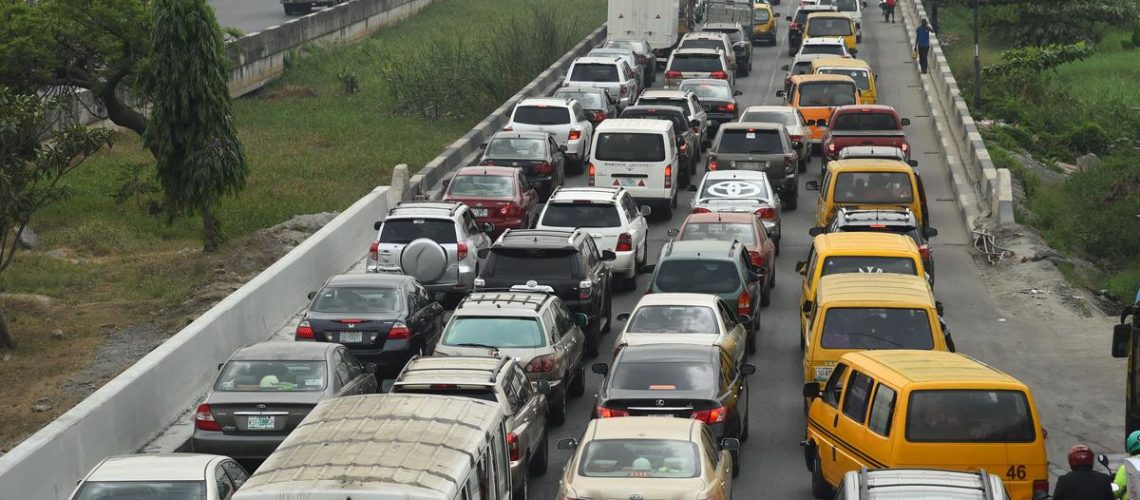
Lagos traffic has a way of stealing time without asking for permission.
A journey that should take 30 minutes can stretch beyond two hours. A quick trip to the market can consume half a day. Add school runs, office commutes, errands, meetings, deliveries and unexpected road delays, and it becomes easy to lose 10 or more hours every week sitting in traffic.
For many Lagos residents, traffic is unavoidable. However, spending every available hour behind the wheel or inside a bus does not have to be the norm.
The goal is not to eliminate traffic. You cannot control what happens on the Third Mainland Bridge, Lekki-Epe Expressway, Ikorodu Road or Lagos-Ibadan Expressway. Instead, you can reduce how much of your personal time traffic consumes.
Here are practical ways to reclaim those hours.
1. Combine Your Errands
One of the biggest time-wasters is making separate trips for tasks that could have been handled together.
You may drive to the supermarket on Monday, visit the pharmacy on Tuesday, pick up documents on Wednesday and go to the bank on Thursday.
Each trip creates another journey through traffic.
Instead, create an errand day.
Write down everything you need to do outside your home during the week. Group tasks by location. If you need to visit a pharmacy, supermarket and bank in the same area, handle them during one trip.
This simple change can eliminate several unnecessary journeys.
2. Stop Making Every Errand Yourself
Your time has value. If you spend two hours travelling to pick up an item that someone else can deliver, you may be paying for the errand with your most valuable resource: your time.
For groceries, documents, parcels, food and other everyday items, consider using reliable delivery or errand services when the cost makes sense.
This is especially useful for people with demanding jobs, parents, business owners and professionals who already spend significant time commuting.
Sometimes, the smartest way to beat Lagos traffic is simply not to enter it.
3. Change When You Travel
Timing matters enormously in Lagos. The difference between travelling during peak hours and moving slightly earlier or later can be significant.
If your work schedule allows it, experiment with your departure time. Leaving home 30–60 minutes earlier may help you avoid the worst part of the morning rush.
Likewise, if you have flexibility in the evening, consider delaying your journey until traffic reduces.
The key is to identify your personal traffic pattern.
Track your usual routes for a week. Note when journeys take the longest and when they move faster. Then adjust your schedule where possible.
You may discover that changing your departure time by 30 minutes saves several hours over the course of a week.
4. Work From Home When Possible
Not every task requires physical presence in an office.
If your employer permits remote or hybrid work, use that flexibility strategically.
Working from home even one or two days a week can remove multiple hours of commuting.
For example, if your daily round trip takes two hours, avoiding that journey twice a week gives you four hours back.
Those hours can be used for sleep, exercise, family, learning or simply resting.
Remote work is not just a workplace benefit. In a city like Lagos, it can also be a time-management strategy.
5. Move Meetings Online
Some meetings still require physical presence. Others do not.
If a 45-minute meeting requires one hour of travel each way, the actual time commitment becomes nearly three hours.
Before travelling, ask whether the meeting can happen virtually.
A video call may accomplish the same objective without forcing everyone onto the road.
Businesses can also reduce wasted time by creating clear policies for virtual meetings, remote consultations and digital document sharing.
The fewer unnecessary physical meetings you attend, the fewer traffic hours you accumulate.
6. Shop With a List
Unplanned shopping creates unnecessary journeys. You remember you need detergent. Then you realise you are almost out of rice. Later, someone asks you to buy toothpaste. Suddenly, you are making another trip.
Create a weekly shopping list instead.
Separate the list into categories such as groceries, household items, pharmacy needs and personal items.
Then buy what you need in one organised trip.
For households, monthly bulk purchases can also reduce how often someone needs to travel for basic supplies.
The idea is simple: fewer trips mean fewer traffic hours.
7. Use Your Travel Time Intentionally
Sometimes you cannot avoid traffic.
When that happens, stop treating every traffic jam as completely wasted time.
If you are a passenger, use the journey to listen to an audiobook, podcast, online course or industry discussion.
You could also respond to non-urgent messages, review your schedule or make plans for the day.
However, safety should always come first. Drivers should never use their phones while driving.
The objective is not to pretend traffic is productive. It is to make unavoidable travel less mentally draining.
8. Choose Locations Strategically
Where you live, work, shop and socialise can dramatically affect how much time you spend travelling.
If possible, choose services that are closer to your regular routes.
For example, instead of travelling across the city for a particular service, look for a reliable alternative closer to home or work.
Businesses can also reduce employee commuting by considering locations that are accessible to their workforce.
In Lagos, convenience is not only about distance. Travel time matters more than kilometres.
A five-kilometre journey can sometimes take longer than a 15-kilometre trip.
9. Plan Your Week Around Traffic
Do not plan your week as though Lagos roads operate on a predictable timetable.
They do not.
Accidents, road construction, rain, flooding, breakdowns and unexpected congestion can change journey times quickly.
Build your schedule with traffic realities in mind.
If you have two appointments in different parts of Lagos, check whether they can be arranged on the same day or grouped by location.
Avoid creating schedules that require you to repeatedly cross the city.
A little planning on Sunday evening can prevent hours of unnecessary movement during the week.
10. Protect the Time You Reclaim
Saving 10 hours is only useful if you actually use those hours well.
Do not reclaim five hours from traffic and immediately fill them with five more obligations.
Decide what those hours are for.
Maybe you want to sleep more. Perhaps you want to learn a new skill, exercise, spend time with your family or build a side business.
You could dedicate two hours to personal development, three hours to family and relationships, two hours to exercise and the remaining time to rest.
The purpose of reclaiming time is not to become busier.
It is to have more control over your life.
Lagos Traffic May Be Unavoidable. Wasting Time Is Not.
Nobody can completely escape Lagos traffic. At some point, you will probably find yourself stuck behind hundreds of vehicles while a journey that should take 40 minutes stretches into two hours.
But you can control how often you put yourself in that situation.
Combine errands. Use delivery services. Adjust travel times. Work remotely when possible. Move suitable meetings online. Shop strategically. Plan your week around traffic patterns.
Even small changes can produce significant results.
If you save just 30 minutes from four journeys each week, that is already two hours reclaimed. Add remote work, fewer errands and better scheduling, and reaching 10 reclaimed hours per week becomes realistic for many Lagos residents.
In a city where time disappears quickly, learning to protect yours is more than a convenience.
It is a life skill.
