

Rice by the Bag: How to Store 50kg Without Spoilage
Buying rice by the bag is a smart way to reduce grocery expenses, especially for Nigerian households, restaurants, food vendors and families that cook regularly. A 50kg bag can last for weeks or even months, depending on the number of people eating from it. However, poor storage can turn this money-saving purchase into a costly mistake.
Rice may develop a musty smell, attract weevils, absorb moisture or become contaminated by rodents and other pests. In humid environments, careless storage can also increase the risk of mould growth. Fortunately, you can protect your rice with a few practical steps.
Whether you buy rice from a local market, a wholesale distributor or a supermarket, the goal is simple: keep it dry, clean, protected and easy to inspect. Here is how to store a 50kg bag of rice without spoilage.
1. Choose the Right Storage Location
Where you keep your rice matters just as much as how you package it. A dry, well-ventilated area provides a better environment than a damp corner or an enclosed space with poor airflow.
In many Nigerian homes, the kitchen may seem like the most convenient storage location. However, heat from cooking, steam from boiling pots and water splashes can expose rice to unnecessary moisture.
Instead, choose a cool, dry area away from the cooker, sink, bathroom and direct sunlight. A pantry, storeroom or clean utility area can work well.
Also, inspect the room for signs of leaking pipes, damp walls and insect activity. Even a tightly sealed container cannot fully protect rice if the surrounding area encourages pests or moisture problems.
2. Keep Rice Off the Floor
One common mistake is placing a 50kg bag directly on the floor. Although this may seem harmless, floors can collect moisture, especially during the rainy season. They can also provide easy access for ants, cockroaches and rodents.
Place your rice on a sturdy shelf, wooden pallet or raised platform. Ensure the support is dry, clean and strong enough to carry the full weight.
Leave some space between the bag and the wall. This allows you to inspect the area for pests and makes cleaning easier. It also reduces the risk of moisture transferring from a damp wall to the packaging.
If you store several bags, avoid stacking them carelessly. Arrange them securely, with heavier bags at the bottom, and leave enough room to reach each one without tearing the packaging.
3. Transfer the Rice Into Suitable Containers
The original rice sack may be useful for transportation, but it may not provide enough protection for long-term storage after opening. Once the bag is exposed, insects can enter through small openings, and the contents may absorb moisture from the environment.
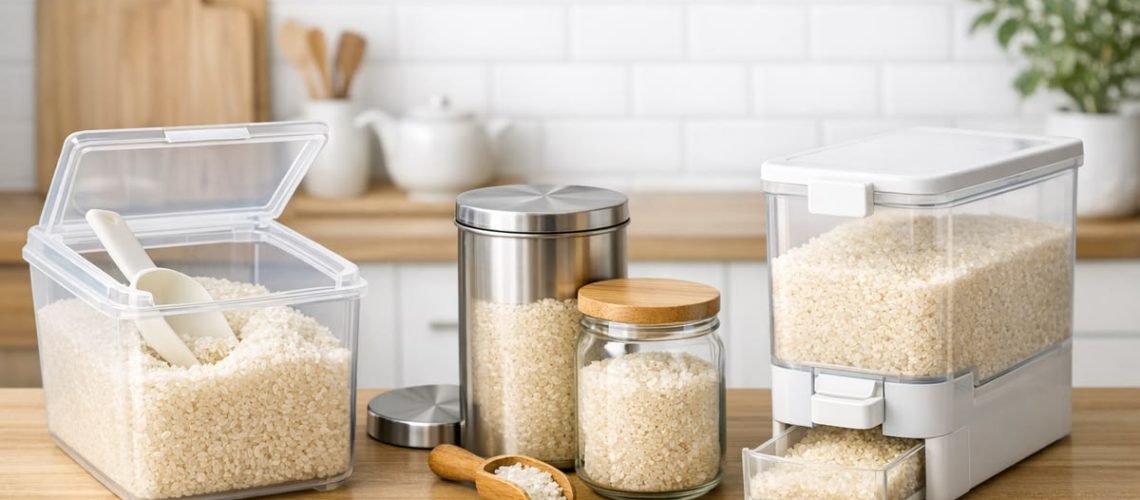
For better protection, transfer the rice into clean, dry, food-grade containers with tight-fitting lids.
Large food-safe plastic bins with secure covers are practical options. You can also use several smaller containers instead of one oversized bin. This arrangement makes it easier to access the rice without exposing the entire quantity whenever you cook.
Before transferring the rice, ensure the containers are completely dry. Even a small amount of trapped water can cause problems.
If you prefer to retain the original bag, place it inside a clean, food-safe storage bin with a secure lid. Keep the opening closed between uses.
Avoid storing rice in containers that previously held detergents, chemicals or other non-food substances. Residues and strong odours can contaminate the food.
4. Inspect the Rice Before Storing It
Do not assume that every newly purchased bag is free from pests or contamination. Rice can become infested during harvesting, processing, transportation or storage.
Before putting your purchase away, examine the grains carefully. Look for live insects, small holes in the grains, unusual webbing, damp patches and discolouration.
Smell the rice as well. Fresh, dry rice should not have a musty, sour or mouldy odour.
If you notice signs of moisture, mould or significant insect contamination, separate the affected rice from other food supplies. Do not mix questionable rice with clean stock.
When buying rice, inspect the seller’s storage conditions whenever possible. Choose bags that appear dry, intact and properly handled. A slightly cheaper bag may become expensive if you must discard a large portion later.
5. Protect Your Rice From Weevils
Rice weevils are small insects that can damage stored grains. Their presence may become noticeable when tiny beetles appear among the rice or when grains develop small holes.
To reduce the risk of infestation, keep storage containers tightly closed and clean the surrounding shelves regularly. Avoid leaving spilled grains in corners because they can attract pests.
Buy rice from reliable suppliers and check new purchases before combining them with existing supplies. If you suspect that a new bag contains insects, keep it separate until you can assess the problem.
For longer storage, freezing rice in suitable sealed portions can help control insects and their eggs. A common approach is to freeze dry rice for several days, then allow the sealed package to return to room temperature before opening it. This helps prevent condensation from forming on cold grains.
However, freezing is not a substitute for dry storage and clean containers. Never return rice to storage while it remains damp.
Avoid using insecticide sprays, mothballs or chemicals intended for non-food areas inside rice containers. These substances can contaminate your food and create health risks.
6. Control Moisture During the Rainy Season
Humidity is a major storage challenge in many parts of Nigeria. During the rainy season, damp rooms and poorly ventilated cupboards can expose dry foods to moisture.
Keep the storeroom clean and address leaks immediately. If the room regularly becomes damp, consider using a suitable dehumidifier where practical.
Always use a dry cup or scoop when measuring rice. Wet hands, damp utensils and water dripping from nearby surfaces can introduce moisture into the container.
Also, close the lid immediately after removing the quantity you need. Leaving rice uncovered for long periods increases its exposure to insects, dust and humid air.
If rice becomes wet or develops visible mould, do not simply dry it and assume it is safe. Discard mouldy rice, as some moulds can produce harmful toxins that ordinary cooking may not destroy.
7. Practise First-In, First-Out Storage
Buying 50kg at once can save money, but only if you use the rice properly. A simple stock rotation system prevents older supplies from remaining forgotten at the back of the cupboard.
If you purchase another bag before finishing the previous one, label each container with its purchase date. Use the older stock first, provided it remains in good condition.
For households that consume rice slowly, dividing the bag into smaller sealed portions can reduce repeated exposure to air and humidity. Keep the portions you use frequently within easy reach and leave the remaining stock sealed.
Dry white rice generally keeps longer than brown rice because brown rice contains more natural oils that can become rancid. Even so, storage conditions, packaging and the condition of the grains influence how long either type remains suitable for use.
Always check the manufacturer’s storage guidance where available.
8. Keep the Storage Area Clean and Pest-Free
Good storage does not end with closing the container. Sweep or vacuum the surrounding area regularly, remove spilled grains and inspect the shelves for insects.
Keep rubbish bins away from your rice supply. Store other food items in sealed containers and repair gaps around doors or windows where rodents might enter.
If you notice droppings, gnawed packaging or repeated insect activity, investigate the source rather than treating only the rice container. Persistent infestations may require professional pest control.
Conclusion
Storing a 50kg bag of rice without spoilage does not require an expensive pantry or complicated equipment. It requires consistency, cleanliness and protection from moisture and pests.
Choose a dry storage location, raise the rice off the floor, use food-safe containers and inspect every new purchase. Furthermore, practise proper stock rotation and keep the surrounding area clean.
For Nigerian families, restaurants and food vendors, these simple habits can reduce food waste and protect the money invested in bulk purchases. Buying rice by the bag makes financial sense when you can preserve its quality until the last serving.
Ultimately, the best storage system is one that keeps rice dry, sealed, clean and easy to monitor. With the right approach, your 50kg purchase can remain a dependable part of your household food supply for months, depending on the rice type and storage conditions.
