

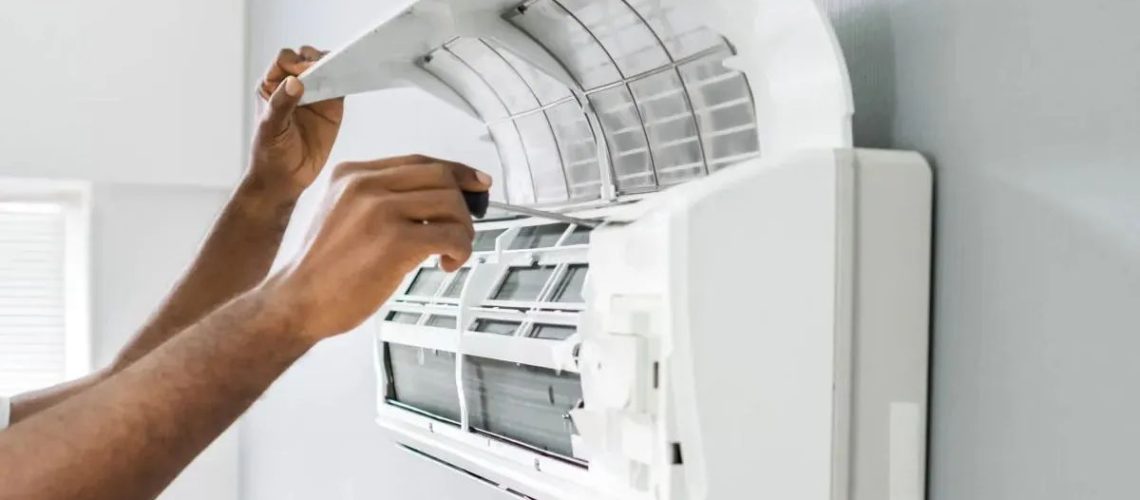
Cleaning air conditioners and fans helps remove accumulated dust, maintain airflow and keep household appliances in better condition.
Start by switching off and disconnecting the power, then clean accessible filters, covers and fan blades according to the manufacturer’s instructions. Avoid spraying water into electrical components or opening sealed air-conditioning systems yourself. Regular cleaning can reduce dust circulating around your home, but it does not replace proper ventilation or professional servicing when needed.
In Nigeria, where dust can accumulate quickly during harmattan, a simple maintenance routine can make a difference in homes, offices and small apartments.
Before you start: what you need
Gather the supplies before you begin:
- A soft microfibre cloth.
- A soft brush or vacuum with a suitable attachment.
- Mild detergent, if the appliance manual permits it.
- A stable step stool or ladder for safely reaching accessible areas.
- A screwdriver only if the manufacturer permits removal of the relevant cover.
- A dry cloth for wiping surfaces.
- The appliance manual for model-specific instructions.
Do not use harsh chemicals, abrasive powders or excessive water unless the manufacturer specifically permits the product and method. If the appliance is mounted too high to reach safely, arrange professional assistance rather than balancing on a chair or unstable surface.
1. Switch off the power first
Before cleaning any fan or air conditioner, switch it off and disconnect it from the power supply where the manufacturer instructs you to do so. For a hard-wired unit, follow the manual’s safety procedure or contact a qualified technician.
Never clean a running fan, reach into moving blades or spray liquid into an electrical appliance. Wait until the fan has stopped completely and the equipment is safe to handle.
This step matters even when you intend to wipe only the outside. Accidental activation or moisture entering electrical components can cause injury or damage.
2. Clean the air conditioner filter
For many split air conditioners, the accessible air filters sit behind the front panel of the indoor unit. The precise removal method varies by model, so check the manual before opening the unit.
If the filter is washable, remove it carefully and clean it as directed. Some manufacturers recommend gentle rinsing with water, while other filters require a different method. Do not force a filter out of its frame.
Allow washable filters to dry completely in the manner specified by the manufacturer before reinstalling them. Never run the air conditioner with a wet filter unless the manufacturer explicitly says that the filter type and method permit it.
A dirty filter can restrict airflow and allow dust to accumulate. Checking it regularly is particularly useful during dusty periods or when the appliance operates frequently.
3. Wipe the air conditioner’s outer surfaces
Use a soft, dry or lightly damp cloth, depending on the manufacturer’s instructions, to wipe the front panel and accessible exterior surfaces. Remove dust from the vents without pushing dirt deeper into the appliance.
Avoid spraying cleaning solution directly onto the unit. Instead, apply an appropriate amount to the cloth if the manual permits it, and keep moisture away from electrical openings and controls.
Do not bend delicate fins or attempt to clean internal coils with household tools. Some components have sharp edges, and incorrect handling can damage the equipment. Arrange professional servicing when dust buildup is deep inside the unit.
4. Clean standing and table fans
For a standing or table fan, follow the manufacturer’s instructions for removing the front grille and blades. Some models allow straightforward removal, while others require specific tools or should only be opened by a technician.
Once the power is disconnected and the parts can be safely removed, wipe dust from the grille and blades. If the parts are washable, use the recommended method and let them dry completely before reassembly.
Pay attention to the rear grille, where dust can collect and restrict airflow. Use a soft brush or vacuum attachment for areas that cannot be removed safely.
Before reconnecting the fan, check that every part is properly fitted and that the blades turn freely without touching the grille. Do not operate the fan with missing guards or loose components.
5. Clean ceiling fans without spreading dust
Ceiling fans can collect a thick layer of dust, particularly in rooms with open windows or frequent airflow from outside. Switch off the power and wait for the blades to stop.
Use a suitable long-handled duster or a stable step stool, depending on the height and manufacturer’s guidance. A cloth that captures dust can help prevent particles from falling onto beds, sofas and floors.
Avoid standing on furniture or stretching beyond a safe reach. If the fan is too high or the mounting appears loose, ask a qualified person to clean and inspect it.
After cleaning, wipe nearby surfaces and the floor to collect any dust that has fallen. This prevents you from immediately redistributing the same dust around the room.
6. Keep dust from building up again
Cleaning the appliance is only part of the task. The amount of dust that reaches your air conditioner and fans also depends on the room and how it is used.
Keep windows and doors closed during periods of heavy outdoor dust where practical, while maintaining appropriate ventilation. Wipe surfaces with a suitable dust-catching cloth and clean floors regularly. If you use a vacuum, ensure it is suitable for the task and maintained according to its instructions.
Pay attention to curtains, bedding, rugs and other materials that can hold dust. A consistent cleaning schedule is usually easier to maintain than waiting until every surface has a visible layer.
For additional advice on managing dust and keeping a compact home clean, read Easer’s guide to cleaning tips for small Lagos apartments.
How often should you clean air conditioners and fans?
The appropriate frequency depends on the appliance, usage, environment and manufacturer’s guidance. A filter in a heavily used air conditioner in a dusty area may need attention more often than one in a rarely used room.
As a practical starting point, inspect accessible AC filters regularly and check fan blades whenever you notice visible dust. Increase checks during harmattan or when windows are often open. Follow the appliance manual for the recommended filter-cleaning interval and professional servicing schedule.
Do not assume that cleaning the filter alone means the entire air conditioner is clean. Drainage systems, coils, fans and other internal components may require inspection or maintenance by a trained technician.
When to call a professional
Arrange professional servicing if the air conditioner develops persistent unusual smells, leaks, abnormal noises, poor cooling or repeated performance problems after basic maintenance. A qualified technician can inspect internal components and identify issues that ordinary cleaning will not solve.
If you suspect mould inside the appliance, avoid disturbing extensive growth yourself. The appropriate response depends on the location and severity of the problem, and professional assessment may be necessary.
Never open refrigerant lines or attempt to handle refrigerant yourself. These systems require suitable equipment and technical knowledge.
Cleaner appliances, a more comfortable home
Air conditioners and fans are easy to overlook because they operate above eye level or run quietly in the background. However, regular maintenance helps prevent heavy dust buildup and supports effective airflow.
Start with safe, simple tasks: disconnect the power, clean accessible parts according to the manual, dry washable components fully and keep the surrounding room clean. Leave internal repairs and complex servicing to qualified professionals.
A consistent routine is safer and more effective than waiting until the appliance becomes heavily clogged. It also helps you notice small problems before they develop into larger maintenance issues.
Frequently Asked Questions
1. How often should I clean my air conditioner filter?
Follow the manufacturer’s instructions and inspect the filter regularly. Dusty environments and frequent use may require more frequent cleaning than occasional use in a cleaner room.
2. Can I wash an air conditioner filter with water?
Some filters are washable, but others are not. Check the manual first, use the recommended method and allow washable filters to dry completely before reinstalling them.
3. Can I spray water directly into a fan or air conditioner?
No. Do not spray water into electrical components or internal openings. Clean only accessible parts using the method approved by the manufacturer.
4. Does cleaning a fan improve indoor air quality?
Removing accumulated dust can reduce the amount of dust disturbed by the fan. However, cleaning the fan does not remove every indoor pollutant or replace appropriate ventilation and wider household cleaning.
5. When should I call an air conditioner technician?
Seek professional help for persistent smells, leaks, unusual noises, poor cooling, suspected internal mould or any repair involving electrical components or refrigerant systems.
