

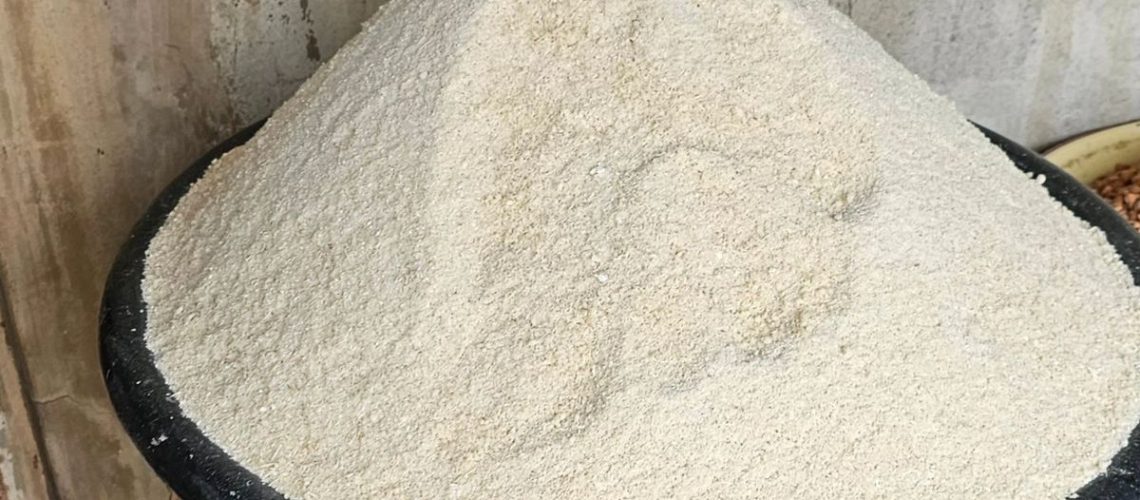
Proper storage helps preserve the quality of garri, fufu and lafun while reducing the risk of moisture damage, mould, pests and food waste.
Although these cassava products are common in Nigerian kitchens, they do not all require exactly the same storage method.
Dry garri and lafun generally need protection from moisture, insects and contamination. Fresh or wet fufu, on the other hand, requires more careful temperature control because it contains moisture and can spoil more quickly.
Understanding these differences helps households buy in suitable quantities, store food correctly and avoid throwing away products that could have lasted longer.
Why cassava products need proper storage
Cassava is processed into different foods through methods such as fermentation, drying, sieving and cooking. These processes affect the moisture content, texture and shelf life of the final product.
Dry products may keep for longer when manufacturers process and package them properly. However, exposure to moisture can encourage mould growth. Poor handling can also introduce dirt, insects and other contaminants.
Research from Nigeria’s Federal University of Agriculture, Abeokuta, has examined microbiological changes in gari, fufu and lafun during storage, highlighting the importance of proper handling. The Nigerian Stored Products Research Institute also identifies these foods as products requiring attention to quality and storability.
How to store garri properly
Garri is a dry, granular cassava product that households use to prepare eba or soak with water and other accompaniments. Its dry texture makes it suitable for longer storage when it remains protected from moisture.
Follow these steps:
- Inspect the garri: Check for unusual smells, visible mould, insects, foreign materials or signs of dampness before storage.
- Use a clean container: Choose a dry, food-safe container with a tight-fitting lid.
- Keep moisture out: Never use a wet spoon or scoop. Water entering the container can affect the product.
- Store it off the floor: Place the container on a clean shelf or raised platform rather than directly on a damp floor.
- Protect it from pests: Keep the storage area clean and check regularly for insects.
- Label the container: Record the purchase or packaging date so you can use older stock first.
If you buy garri in large quantities, divide it into smaller containers. This reduces the number of times you expose the entire supply to air and handling.
How to store fufu
Fufu requires a little more attention because the product may be sold in fresh, wet, fermented or dried forms.
Fresh or wet fufu
Fresh fufu should not be treated like dry garri. Its moisture content makes it more vulnerable to spoilage, particularly in hot conditions.
Keep it refrigerated when appropriate and follow the supplier’s storage instructions. If you buy a large quantity, divide it into meal-sized portions so you only open what you need.
For longer storage, freezing may be suitable depending on the product and packaging. Use clean, food-safe containers and label each portion with the date.
Before use, check for unusual changes in smell, colour, texture or visible mould. When in doubt, discard it rather than trying to rescue spoiled food.
Dried fufu
Dried fufu flour should be stored in an airtight, moisture-free container. Keep it in a cool, dry cupboard away from direct sunlight, cooking steam and leaking pipes.
Always use a dry scoop. If the flour develops damp clumps, mould or an unusual odour, do not consume it.
How to store lafun
Lafun is a fermented and dried cassava product commonly used to prepare a swallow. It is often sold as flour or in dried pieces that require further processing.
Because lafun is usually dry, moisture control is essential.
- Store it in a clean, airtight container.
- Keep the container away from damp walls and floors.
- Use a dry scoop when removing portions.
- Keep it away from insects and rodents.
- Avoid storing it beside strong-smelling chemicals.
- Check the product regularly for changes in appearance or smell.
If you purchase lafun in a woven sack or other packaging that does not provide adequate protection, transfer it into suitable food-safe storage containers.
Storage comparison: Garri, fufu and lafun
| Product | Storage approach | Main concern |
|---|---|---|
| Dry garri | Airtight container in a cool, dry place | Moisture and pests |
| Wet fufu | Refrigeration or freezing as appropriate | Rapid spoilage |
| Dried fufu flour | Sealed, moisture-free container | Dampness and mould |
| Lafun flour | Airtight container in a dry cupboard | Moisture and insects |
| Dried lafun pieces | Clean, dry, protected storage | Contamination and humidity |
Always follow the supplier’s instructions and the product’s packaging guidance. Shelf life varies with processing, moisture content, packaging and storage conditions.
Common mistakes to avoid
Using wet containers: Even a small amount of water can affect dry cassava products. Make sure containers are completely dry before filling them.
Leaving food uncovered: Open bowls and sacks make it easier for insects, dust and other contaminants to enter.
Mixing old and new supplies: Adding fresh stock to an older container can make it harder to track storage dates and identify spoiled portions.
Ignoring unusual smells: Changes in aroma, colour or texture may indicate spoilage or poor storage.
Buying more than you can store: Bulk buying is not economical when food becomes damp, contaminated or unusable before you finish it.
How to buy cassava products in bulk without waste
Before buying garri, fufu or lafun in bulk, consider how often your household eats each product. A family that prepares eba several times a week may use garri quickly, while another household may prefer smaller quantities.
Compare prices, inspect product quality and check the packaging before payment. Ask the seller how the product was processed and how it should be stored.
If you do not have enough money or storage space to buy large quantities alone, organised group purchasing may be an option. Easer Lifestyle’s Bulk Food Sharing service can help you explore arrangements for shared food purchases.
Keep your cassava products fresh for longer
Garri, fufu and lafun are useful household staples, but their storage needs differ. Keep dry products sealed and protected from moisture, while fresh or wet fufu needs suitable refrigeration or freezing.
Inspect food regularly, use clean utensils and buy quantities your household can store safely. These simple habits can reduce food waste and help preserve the quality of your kitchen supplies.
Frequently Asked Questions
1. How long can garri last in storage?
Its shelf life depends on processing, packaging and storage conditions. Properly dried garri kept in a clean, airtight, moisture-free container generally lasts longer than garri exposed to humidity or contamination. Follow the supplier’s guidance.
2. Should I refrigerate garri?
Dry garri does not usually require refrigeration when properly processed and stored. A clean, dry, airtight container in a suitable cupboard is generally sufficient.
3. Can I freeze fresh fufu?
Freezing may be suitable for some fresh fufu products. Divide it into portions, use food-safe packaging and follow the supplier’s instructions for freezing and thawing.
4. Why does garri develop mould?
Moisture, poor drying, contaminated storage containers and humid conditions can encourage mould growth. Discard visibly mouldy food rather than consuming it.
5. Can I store garri, fufu and lafun in the same cupboard?
Yes, provided the cupboard is clean, dry and protected from pests. Store each product in its own sealed container and follow the specific storage requirements for wet or fresh fufu.
