

Logistics can become complicated as a business grows.
What starts as a few deliveries can quickly turn into multiple suppliers, warehouses, transport providers, inventory systems, and customer orders.
At some point, many businesses face an important question: Should we work with a 3PL or a 4PL provider?
Both third-party logistics (3PL) and fourth-party logistics (4PL) providers can help businesses manage their supply chains. However, they solve different problems.
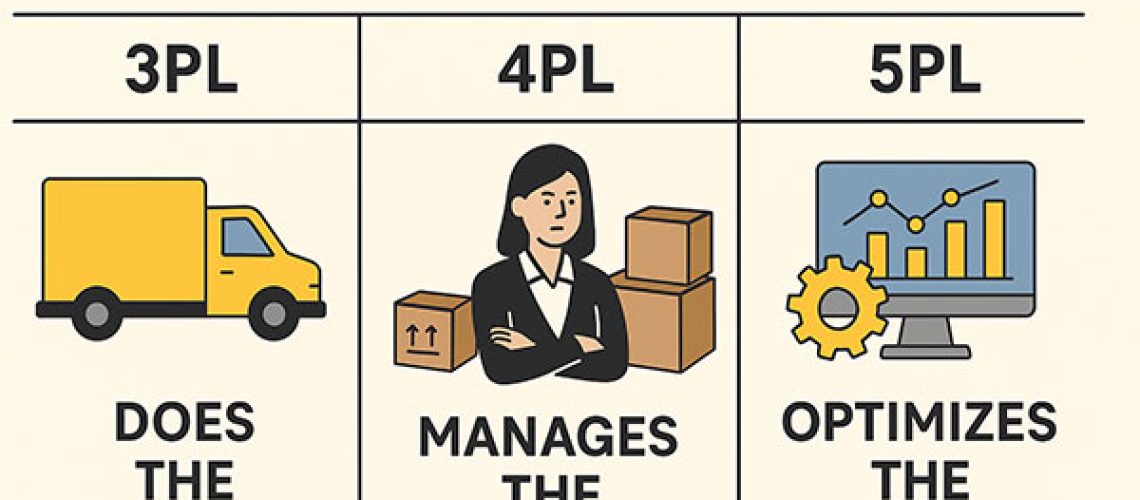
A 3PL usually handles specific logistics activities such as transportation, warehousing, order fulfilment, and distribution. A 4PL takes a broader approach. It manages the entire supply chain and coordinates multiple logistics providers on behalf of the business.
So, which one does your business actually need?
What Is a 3PL?
A third-party logistics provider (3PL) is an external company that handles specific logistics functions for a business.
Instead of buying delivery vehicles, renting warehouses, hiring large logistics teams, and managing every shipment internally, a company can outsource some or all of these activities to a 3PL.
Common 3PL services include:
- Warehousing
- Transportation
- Delivery and distribution
- Inventory management
- Order fulfilment
- Packaging
- Freight management
- Returns management
For example, an online retailer in Lagos may receive hundreds of orders each week. Rather than storing products in its office and organising individual deliveries, it could use a 3PL provider to store inventory, process orders, package products, and arrange delivery.
The business remains responsible for its overall supply chain strategy, while the 3PL handles the agreed logistics activities.
What Is a 4PL?
A fourth-party logistics provider (4PL) operates at a more strategic level.
Instead of simply performing logistics services, a 4PL can manage and coordinate the entire supply chain. It may work with several 3PLs, transport companies, warehouses, technology providers, and other partners.
Think of a 4PL as a supply chain manager or orchestrator.
For example, a growing manufacturer might have one company transporting raw materials, another managing its warehouse, another handling international freight, and several delivery companies serving customers.
Managing all these providers can become difficult.
A 4PL can coordinate these relationships, monitor performance, manage technology, identify inefficiencies, and help create a more integrated supply chain.
The major difference is therefore scope.
A 3PL performs logistics activities. A 4PL manages and coordinates the broader logistics ecosystem.
3PL vs 4PL: The Key Differences
The simplest way to understand the difference is to look at what each provider is responsible for.
1. Level of involvement
A 3PL is usually involved in specific operational activities.
A 4PL takes a higher-level management role and can oversee the entire supply chain.
2. Number of providers
A business working with a 3PL may have one main logistics partner.
A 4PL may coordinate several logistics providers and make sure they work together efficiently.
3. Technology
3PL providers often use technology to manage their own operations, including warehouse systems, delivery tracking, and inventory platforms.
A 4PL may integrate different systems into a single supply chain management structure.
4. Strategic responsibility
3PLs focus heavily on execution.
4PLs focus more heavily on optimisation, coordination, performance, and long-term supply chain strategy.
5. Cost structure
A 3PL can be more straightforward because businesses pay for specific logistics services.
A 4PL may involve higher management or consulting costs. However, the broader coordination can potentially reduce waste and improve efficiency across the entire supply chain.
When Should Your Business Choose a 3PL?
A 3PL is often the better choice when your logistics needs are relatively straightforward.
Consider a 3PL if your business:
Needs warehouse space.
You may not have enough room to store growing inventory.
Needs reliable deliveries.
If arranging deliveries internally is becoming time-consuming, a 3PL can take over the process.
Is expanding into new locations.
A logistics provider may already have transportation networks and facilities in the areas you want to serve.
Has a growing number of orders.
Outsourcing fulfilment can help you process orders without building a large internal logistics department.
Wants to reduce logistics infrastructure costs.
Instead of purchasing vehicles or operating warehouses yourself, you can pay for the services you actually need.
For many small and medium-sized businesses, a 3PL is the logical starting point.
When Does a 4PL Make More Sense?
A 4PL becomes more attractive when logistics have become too complex to manage effectively.
Your business may need a 4PL if you:
Work with multiple logistics providers.
Managing different contracts, delivery companies, warehouses, and service providers can become overwhelming.
Operate across multiple markets.
International or regional operations often involve customs, freight, warehousing, transportation, and regulatory requirements.
Have a complex supply chain.
Manufacturers, large retailers, distributors, and multinational businesses may have supply chains that require continuous coordination.
Need better visibility.
If you cannot easily determine where inventory is, how suppliers are performing, or where delays are occurring, a centralised management approach may help.
Want to focus on your core business.
A 4PL can take much of the supply chain management burden away from internal teams.
A Simple Example
Imagine a Nigerian fashion company selling products in Lagos, Abuja, Accra, and Nairobi.
At first, it may only need a 3PL to store products and deliver customer orders.
As the company grows, things become more complicated. It now has different warehouses, international freight providers, local delivery companies, customs requirements, and technology systems.
The company could continue managing all these relationships internally. However, doing so may require a large logistics management team.
A 4PL could coordinate these different providers, monitor their performance, integrate information, and help the company improve its overall supply chain.
The business therefore moves from outsourcing logistics tasks to outsourcing supply chain management.
You May Not Need a 4PL Yet
One common mistake is assuming that a more advanced logistics solution is automatically better.
It is not.
A 4PL can be valuable, but it may be unnecessary for a small business that only needs warehousing and delivery support.
If your supply chain is simple, using a 4PL could add unnecessary complexity and cost.
Start by identifying your actual problem.
If your problem is, “We need somewhere to store our products and someone to deliver them,” a 3PL may be enough.
If your problem is, “We have five logistics partners, three warehouses, international shipments, multiple technology systems, and no clear view of what’s happening,” you may need a 4PL.
Questions to Ask Before Choosing
Before signing a logistics contract, ask:
- How complex is our supply chain?
- How many logistics providers do we currently use?
- Do we need transportation, warehousing, or both?
- Are our logistics costs increasing?
- Do we have enough internal logistics expertise?
- Do we need better supply chain visibility?
- Are we expanding into new cities or countries?
- Do we need someone to coordinate multiple logistics partners?
Your answers will help determine which model makes sense.
The Bottom Line
The choice between a 3PL and a 4PL is ultimately about how much of your logistics operation you need to outsource.
A 3PL is primarily focused on executing logistics services. It is often ideal for businesses that need help with warehousing, transportation, fulfilment, or distribution.
A 4PL goes further. It coordinates the wider supply chain and can manage multiple logistics partners, systems, and processes.
For a small or growing business, a 3PL may provide the right balance of flexibility and affordability. For a larger business with a complex, multi-provider supply chain, a 4PL may offer the strategic coordination needed to improve efficiency.
The best choice is not necessarily the provider offering the most services. It is the provider that solves the logistics problem your business actually has.
Before choosing, assess your current operations, future growth plans, costs, and supply chain complexity. The right logistics partner should not only move your goods. It should help your business move forward.
