

How Innovation Is Transforming Neighborhood Living Across Africa
Technology is changing the way people live, work, and interact with their surroundings. While smartphones and high-speed internet have become common in many households, another transformation is quietly reshaping neighborhoods: the rise of smart technology in residential communities. Across Africa and around the world, developers, local governments, and homeowners are embracing innovative solutions that improve safety, convenience, sustainability, and quality of life.
Although fully connected smart communities are still emerging in many African countries, the adoption of digital technologies is accelerating. Consequently, residential estates, apartment complexes, and even traditional neighborhoods are beginning to benefit from solutions that make everyday living easier and more efficient.
What Is a Smart Residential Community?
A smart residential community uses digital technologies, connected devices, and intelligent systems to improve how a neighborhood operates. Instead of relying solely on manual processes, smart communities leverage sensors, automation, and internet-connected devices to manage security, lighting, energy consumption, waste collection, and communication among residents.
Rather than replacing people, these technologies support residents by making services more responsive and reducing unnecessary delays.
Key Features of Smart Residential Communities
1. Enhanced Security Systems
Security remains one of the biggest concerns for many residential areas. Fortunately, smart technology offers several solutions that strengthen neighborhood safety.
Examples include:
- Smart CCTV cameras with real-time monitoring
- Facial recognition or biometric access systems
- Automated visitor management
- Motion detection sensors
- Emergency alert systems
- Smart gates controlled remotely
As a result, residents enjoy faster emergency responses and better protection for their families and property.
2. Smart Street Lighting
Traditional streetlights often consume electricity continuously, even when no one is nearby. Smart lighting systems solve this problem by using motion sensors and automated controls.
These systems can:
- Adjust brightness automatically
- Turn on only when necessary
- Report maintenance issues instantly
- Reduce electricity costs
- Improve nighttime visibility
Consequently, communities become both safer and more energy-efficient.
3. Intelligent Waste Management
Waste collection is a challenge in many growing cities. Smart waste bins equipped with sensors can notify collection teams when they are nearly full.
This approach helps:
- Reduce overflowing bins
- Improve sanitation
- Lower collection costs
- Optimize collection routes
- Keep neighborhoods cleaner
As urban populations continue to grow, efficient waste management becomes increasingly important.
4. Smart Water Management
Water shortages affect many communities across Africa. Fortunately, smart water systems help conserve this valuable resource.
These technologies include:
- Leak detection sensors
- Smart water meters
- Automated irrigation systems
- Water consumption monitoring
- Rainwater management systems
By identifying leaks early, communities can prevent significant water losses and reduce utility expenses.
5. Energy-Efficient Homes
Modern residential communities increasingly integrate smart energy technologies into homes.
Examples include:
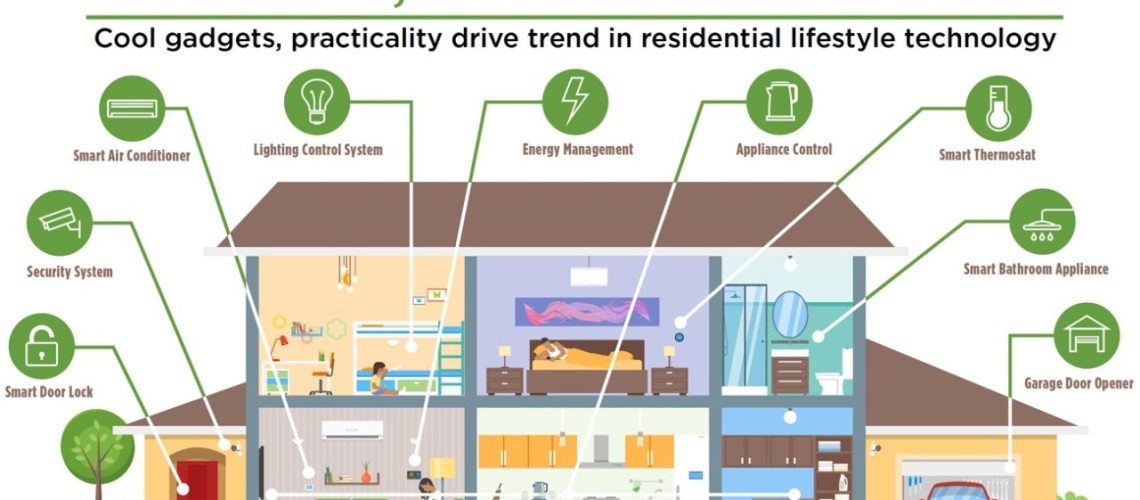
- Smart thermostats
- Energy monitoring applications
- Solar energy integration
- Smart plugs
- Automated lighting
- Battery storage systems
As a result, households can reduce electricity consumption while lowering monthly utility bills.
Digital Communication Between Residents
Community management is becoming more efficient through dedicated mobile applications and online platforms.
Residents can now:
- Report maintenance issues
- Receive emergency notifications
- Pay service charges online
- Book community facilities
- Join neighborhood discussions
- Receive updates from estate management
Consequently, communication becomes faster, more transparent, and more convenient.
Smart Parking Solutions
Finding parking can be frustrating in densely populated residential areas. Smart parking systems simplify this process.
These systems may include:
- Parking space sensors
- Mobile parking reservations
- Digital visitor parking permits
- Automatic vehicle recognition
- Real-time parking availability
Therefore, residents spend less time searching for parking spaces.
Sustainable Environmental Monitoring
Smart communities also monitor environmental conditions to create healthier neighborhoods.
Sensors can measure:
- Air quality
- Noise levels
- Weather conditions
- Temperature
- Humidity
With this information, community managers can make informed decisions that improve residents’ well-being.
Benefits of Smart Residential Communities
Improved Quality of Life
Smart technology reduces everyday inconveniences and allows residents to spend more time on meaningful activities instead of dealing with avoidable problems.
Greater Safety
Automated security systems help detect unusual activity more quickly than traditional methods, providing an extra layer of protection.
Lower Operating Costs
Although installation may require an initial investment, smart systems often reduce long-term maintenance, energy, and operational expenses.
Better Resource Management
Electricity, water, and waste collection become more efficient, reducing unnecessary consumption and promoting sustainability.
Increased Property Value
Properties located in technologically advanced communities often become more attractive to buyers and investors because of the convenience and modern amenities they offer.
The Growth of Smart Communities in Africa
Several African cities are investing in smarter infrastructure as urban populations expand. Countries including Nigeria, Kenya, Rwanda, South Africa, Egypt, and Morocco are exploring digital solutions for housing developments and urban planning.
Private estate developers are increasingly incorporating:
- Fiber internet connectivity
- Solar-powered infrastructure
- Smart access control
- Digital payment systems
- Security automation
- Energy-efficient designs
As technology becomes more affordable, these innovations are expected to spread beyond luxury estates into middle-income communities.
Challenges Facing Smart Communities
Despite their advantages, smart residential communities still face several obstacles.
High Initial Costs
Installing advanced technology requires significant investment. However, costs continue to decrease as technology becomes more accessible.
Reliable Internet Access
Many smart systems depend on stable internet connections. Therefore, expanding broadband infrastructure remains essential.
Data Privacy
Connected devices collect valuable information. Community managers must protect residents’ personal data through strong cybersecurity measures.
Technical Maintenance
Smart systems require regular maintenance and occasional software updates to remain reliable.
How Residents Can Prepare for Smarter Living
Even if you do not live in a fully smart community, you can begin adopting smart technologies at home.
Simple upgrades include:
- Installing smart bulbs
- Using video doorbells
- Adding smart security cameras
- Monitoring electricity usage
- Using smart locks
- Installing water leak detectors
Small improvements can significantly enhance comfort, safety, and efficiency over time.
The Future of Residential Living
The future of residential communities is becoming increasingly connected. Artificial intelligence, renewable energy, automation, and the Internet of Things (IoT) will continue transforming how neighborhoods function. Moreover, as governments and private developers invest in digital infrastructure, smart communities are likely to become more common across Africa.
Rather than being a luxury reserved for a few, smart technology has the potential to improve daily life for millions of people. By embracing innovation responsibly, communities can become safer, cleaner, more sustainable, and better prepared for the future.
Conclusion
Smart technology is reshaping residential communities by making them more secure, efficient, and environmentally friendly. From intelligent security systems to smart energy management and digital communication, these innovations are improving how neighborhoods operate and how residents experience daily life.
Although challenges remain, the long-term benefits are substantial. As technology becomes more affordable and accessible, more African communities will have the opportunity to enjoy the advantages of smarter living. The journey toward connected neighborhoods has already begun, and those who embrace innovation today will be better positioned to thrive in tomorrow’s cities.
