

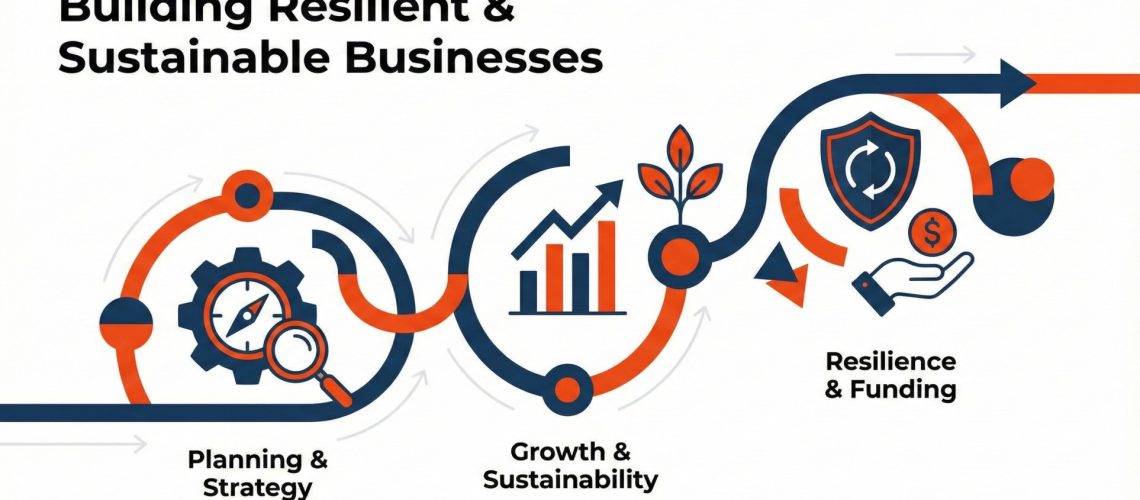
Economic change is inevitable.
Whether it’s rising inflation, currency fluctuations, supply chain disruptions, technological advancements, or shifting consumer preferences, businesses across the world, and particularly in Africa, must constantly adapt to survive and thrive.
While economic uncertainty can create significant challenges, it also presents opportunities for businesses that are prepared to innovate, remain flexible, and respond strategically. Resilient businesses are not necessarily the largest or the wealthiest; they are the ones that can withstand shocks, recover quickly, and continue creating value despite changing conditions.
This article explores practical strategies that entrepreneurs and business owners can use to build resilient businesses capable of navigating economic change.
Understanding Business Resilience
Business resilience refers to an organization’s ability to prepare for, respond to, and recover from unexpected disruptions while maintaining essential operations. A resilient business doesn’t merely survive difficult times—it learns, adapts, and often emerges stronger.
Resilience is built through careful planning, financial discipline, innovation, and strong relationships with customers, employees, and partners.
Why Economic Change Matters
Economic shifts can affect businesses in numerous ways, including:
- Reduced consumer spending
- Rising operational costs
- Inflation affecting purchasing power
- Exchange rate volatility
- Changes in government regulations
- New technologies disrupting traditional industries
- Supply chain interruptions
For businesses that depend on imported goods, international trade, or seasonal demand, these changes can have an immediate impact on profitability.
Recognizing these risks early allows businesses to prepare instead of reacting in panic.
Build a Strong Financial Foundation
Financial stability is one of the greatest defenses against economic uncertainty.
Businesses should prioritize:
- Maintaining healthy cash flow
- Creating emergency reserves
- Reducing unnecessary debt
- Monitoring expenses regularly
- Diversifying income streams
Cash flow is especially important because profitable businesses can still fail if they cannot meet short-term financial obligations.
Regular financial reviews help business owners identify problems before they become crises.
Diversify Revenue Sources
Depending on a single product, customer, or market increases business risk.
Resilient companies often expand by:
- Introducing complementary products
- Offering digital services
- Serving different customer segments
- Exploring regional or international markets
- Creating subscription or recurring revenue models
Diversification spreads risk and creates additional opportunities for growth when one market experiences a slowdown.
Invest in Customer Relationships
During uncertain times, loyal customers become even more valuable.
Businesses should focus on:
- Providing excellent customer service
- Listening to customer feedback
- Communicating honestly
- Delivering consistent quality
- Rewarding repeat customers
People are more likely to continue supporting businesses they trust, even when they reduce overall spending.
Strong customer relationships also generate referrals, positive reviews, and long-term brand loyalty.
Embrace Digital Transformation
Technology has become an essential part of business resilience.
Businesses can improve efficiency by using:
- Digital payment systems
- E-commerce platforms
- Customer relationship management (CRM) software
- Cloud storage
- Accounting software
- Social media marketing
- Data analytics
Digital tools help businesses reach wider audiences, reduce operating costs, and continue serving customers even during disruptions.
Across Africa, mobile technology and digital payments have made it easier for small businesses to compete in both local and global markets.
Strengthen Supply Chains
Supply chain disruptions have shown how vulnerable businesses can be when relying on a single supplier.
Businesses can reduce this risk by:
- Working with multiple suppliers
- Sourcing locally where possible
- Maintaining safety stock for essential items
- Building strong supplier relationships
- Monitoring supply chain performance regularly
A flexible supply chain allows businesses to continue operating when unexpected shortages occur.
Encourage Innovation
Economic challenges often force businesses to rethink traditional approaches.
Innovation doesn’t always require expensive technology. Sometimes it simply means finding better ways to serve customers.
Businesses can innovate by:
- Improving products
- Simplifying services
- Automating repetitive tasks
- Adopting new business models
- Identifying emerging customer needs
Many successful businesses were created or transformed during periods of economic uncertainty because they solved new problems in creative ways.
Develop a Flexible Workforce
Employees are one of a company’s greatest assets.
Resilient organizations invest in:
- Staff training
- Cross-functional skills
- Leadership development
- Open communication
- Employee well-being
A workforce that can adapt to changing responsibilities helps businesses respond quickly to unexpected challenges.
Employees who feel valued are also more likely to contribute ideas that improve operations and customer satisfaction.
Make Data-Driven Decisions
Guesswork becomes increasingly risky during uncertain economic conditions.
Business owners should monitor key performance indicators such as:
- Sales trends
- Customer acquisition costs
- Profit margins
- Inventory turnover
- Cash flow
- Customer satisfaction
Reliable data helps leaders make informed decisions instead of emotional ones.
Even small businesses can use affordable digital tools to track performance and identify opportunities.
Stay Close to Market Trends
Consumer behavior changes rapidly during economic shifts.
Successful businesses continuously monitor:
- Customer preferences
- Industry developments
- Competitor activities
- New technologies
- Government policies
Businesses that recognize trends early can adjust pricing, introduce new products, or reposition their services before competitors.
Continuous learning is a major advantage in a changing economy.
Build Strong Partnerships
Collaboration often creates resilience.
Businesses can strengthen their position by partnering with:
- Local suppliers
- Industry associations
- Financial institutions
- Technology providers
- Logistics companies
- Other small businesses
Strategic partnerships provide access to expertise, resources, and new markets while reducing operational risks.
Prepare for Future Uncertainty
Every business should have a contingency plan. This includes identifying potential risks, assigning responsibilities, maintaining backup systems, and reviewing emergency procedures regularly.
Scenario planning helps businesses prepare for different possibilities instead of being caught off guard. Prepared businesses recover faster because they have already considered possible responses.
The African Opportunity
Despite economic fluctuations, Africa remains one of the world’s most promising business environments. Rapid urbanization, growing digital adoption, expanding entrepreneurship, and a youthful population continue to create new opportunities across sectors such as agriculture, technology, healthcare, manufacturing, logistics, and financial services.
Businesses that invest in resilience today will be better positioned to take advantage of tomorrow’s growth.
Conclusion
Economic change is not something businesses can avoid, but it is something they can prepare for. Resilience comes from thoughtful planning, financial discipline, innovation, adaptability, and a commitment to serving customers effectively.
Rather than viewing uncertainty as a barrier, resilient businesses see it as an opportunity to evolve. By embracing technology, diversifying revenue, strengthening relationships, and remaining flexible, organizations can weather economic challenges and emerge stronger than before. In an ever-changing business landscape, resilience is no longer just a competitive advantage, it is an essential ingredient for long-term success.
