

Long before airplanes, highways, and container ships connected the world, vast networks of trade routes linked civilizations across continents.
These routes were more than pathways for the exchange of goods, they served as channels for ideas, cultures, religions, technologies, and political influence. Historic trade routes shaped economies, fueled the rise and fall of empires, and laid the foundations of today’s interconnected global society.
From the bustling caravan trails of the Sahara to the maritime networks of the Indian Ocean, these ancient routes demonstrate humanity’s enduring desire to explore, trade, and collaborate. Understanding their history offers valuable insight into how commerce has influenced cultural development and international relations over thousands of years.
The Origins of Long-Distance Trade
Trade began as a local exchange of essential goods between neighboring communities. As populations grew and societies became more specialized, demand increased for resources unavailable in certain regions. Salt, metals, textiles, spices, precious stones, and agricultural products became valuable commodities transported across increasingly long distances.
Technological innovations such as domesticated pack animals, sailing vessels, and improved road construction enabled merchants to travel farther than ever before. These advances transformed isolated communities into participants in regional and eventually intercontinental trade networks.
The Silk Road: Bridging East and West
Perhaps the most famous historic trade network is the Silk Road, a series of interconnected overland routes stretching from China through Central Asia to the Middle East and Europe. Although silk gave the route its name, merchants transported a remarkable variety of products, including porcelain, tea, paper, spices, horses, glassware, gemstones, and precious metals.
The Silk Road’s significance extended beyond commerce. Buddhist teachings spread from India into China, while scientific knowledge, artistic styles, languages, and technological innovations traveled alongside merchants. Paper-making, gunpowder, and printing techniques gradually reached the West, profoundly influencing global development.
Despite challenging deserts, towering mountains, and political instability, the Silk Road remained an essential artery of international exchange for centuries.
The Trans-Saharan Trade Routes
Across Africa, the Trans-Saharan trade routes connected North Africa with the kingdoms of West Africa. Merchants crossed the vast Sahara Desert using camel caravans capable of enduring harsh environmental conditions. Gold, one of West Africa’s most valuable resources, moved northward, while salt, essential for food preservation and human health, traveled south. Ivory, leather goods, textiles, and enslaved people also formed part of this extensive commercial network.
These routes contributed significantly to the prosperity of influential African empires such as Ghana, Mali, and Songhai. Cities like Timbuktu emerged as thriving commercial and intellectual centers, attracting traders, scholars, and religious leaders from across the Islamic world. The wealth generated through trade supported impressive architectural achievements and institutions of higher learning.
The Indian Ocean Trade Network
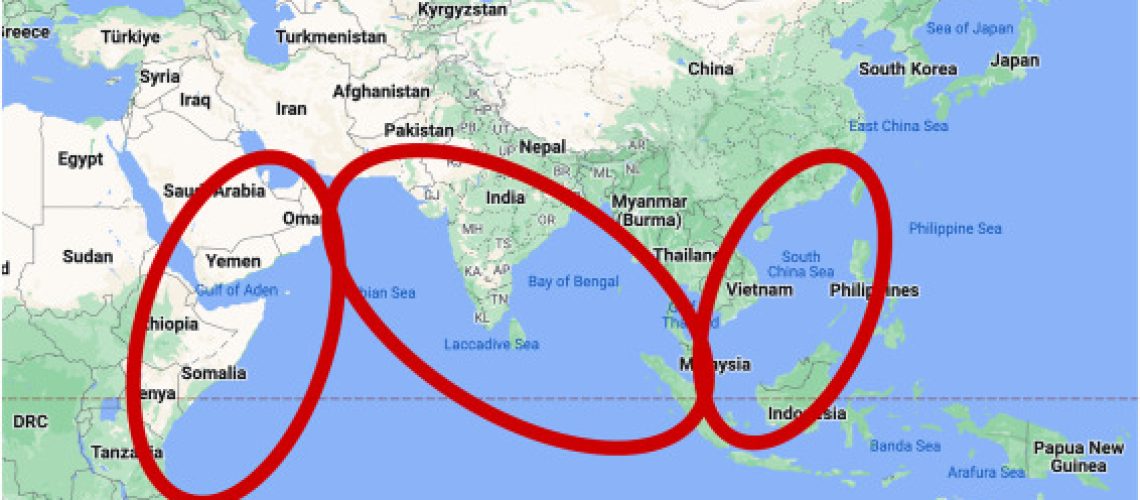
Unlike overland routes, the Indian Ocean trade network relied on seasonal monsoon winds that allowed ships to travel efficiently between East Africa, the Arabian Peninsula, India, Southeast Asia, and China. This maritime system became one of history’s most extensive commercial networks. Merchants exchanged spices, cotton textiles, porcelain, gold, ivory, timber, incense, and exotic animals.
Coastal cities flourished as multicultural trading hubs where African, Arab, Persian, Indian, and Asian merchants interacted regularly. These exchanges encouraged the spread of languages, religious beliefs, artistic traditions, and architectural styles that continue to influence many regions today.
Mediterranean Trade and Ancient Civilizations
The Mediterranean Sea functioned as a commercial highway connecting ancient civilizations including Egypt, Greece, Rome, and Phoenicia. Skilled sailors transported grain, olive oil, wine, ceramics, metals, and luxury goods between ports that became centers of economic and political power.
The Phoenicians, renowned for their maritime expertise, established trading colonies across the Mediterranean, facilitating cultural interaction between diverse societies. Later, the Roman Empire developed an extensive road network that complemented maritime commerce, making the movement of goods more efficient across Europe, North Africa, and parts of Asia.
These integrated transport systems strengthened imperial administration while promoting economic growth throughout the ancient world.
Cultural Exchange Beyond Commerce
Historic trade routes demonstrate that commerce and culture are deeply interconnected. Merchants rarely transported goods alone; they carried languages, religious beliefs, scientific discoveries, artistic techniques, and social customs.
Religions such as Buddhism, Christianity, and Islam expanded through commercial interactions. Medical knowledge, mathematical concepts, agricultural practices, and engineering innovations spread across continents through networks of traders and travelers.
Food also reflects these historical exchanges. Ingredients such as spices, citrus fruits, rice varieties, and sugar reached new regions through centuries of commercial activity, permanently influencing local cuisines.
Challenges Faced by Ancient Traders
Trading across continents required extraordinary resilience. Merchants encountered numerous obstacles, including extreme weather, dangerous terrain, disease, piracy, political conflict, and bandit attacks. Crossing deserts demanded careful planning, while long sea voyages depended heavily on favorable winds and navigational expertise.
Political instability often disrupted commercial activity. Wars, changing borders, and shifting alliances could render established routes unsafe or economically unviable. Nevertheless, traders continually adapted by developing alternative pathways and forging new partnerships.
The Lasting Legacy of Historic Trade Routes
Although modern transportation has transformed global commerce, many contemporary trade corridors follow paths established centuries ago. Major ports, commercial cities, and transportation hubs often owe their origins to ancient trading networks.
Historic trade routes also contributed to globalization long before the modern era. They fostered international cooperation, economic interdependence, and cultural understanding among societies separated by vast geographical distances.
In Africa, Asia, Europe, and the Middle East, archaeological discoveries continue to reveal the sophistication of these commercial systems. Artifacts, manuscripts, coins, and architectural remains provide valuable evidence of extensive interaction between civilizations once believed to have developed independently.
Lessons for the Modern World
Studying historic trade routes offers important lessons about the value of connectivity, cooperation, and cultural exchange. Economic prosperity has often depended on openness to trade, innovation, and cross-cultural collaboration rather than isolation.
These historical networks also highlight the importance of infrastructure. Roads, ports, caravan stations, and marketplaces enabled commerce to flourish, much as modern highways, airports, rail systems, and digital communication networks support today’s global economy.
Finally, historic trade routes remind us that globalization is not a recent phenomenon. For thousands of years, people have sought opportunities beyond their immediate surroundings, building relationships that transcended political, linguistic, and cultural boundaries.
Conclusion
Historic trade routes were the lifelines of ancient civilizations, connecting distant regions through commerce, diplomacy, and cultural exchange. Networks such as the Silk Road, the Trans-Saharan routes, the Indian Ocean trade system, and Mediterranean maritime corridors reshaped societies by facilitating the movement of goods, ideas, technologies, and beliefs.
Their influence remains evident in modern cities, cultural traditions, and international trade systems. By exploring these remarkable networks, we gain a deeper appreciation of humanity’s shared history and the enduring role that exchange and cooperation have played in shaping the world. As global commerce continues to evolve, the lessons of historic trade routes remain highly relevant, reminding us that meaningful connections have always been at the heart of human progress.
