

How Regional Distribution Centers Could Support African Commerce
Africa’s commerce landscape is changing rapidly. E-commerce is expanding, small businesses are reaching customers beyond their immediate communities, and consumers increasingly expect products to arrive quickly and reliably. Yet, one major challenge continues to affect the growth of trade across the continent: moving goods efficiently from producers and suppliers to customers.
Regional distribution centers could play an important role in solving this challenge.
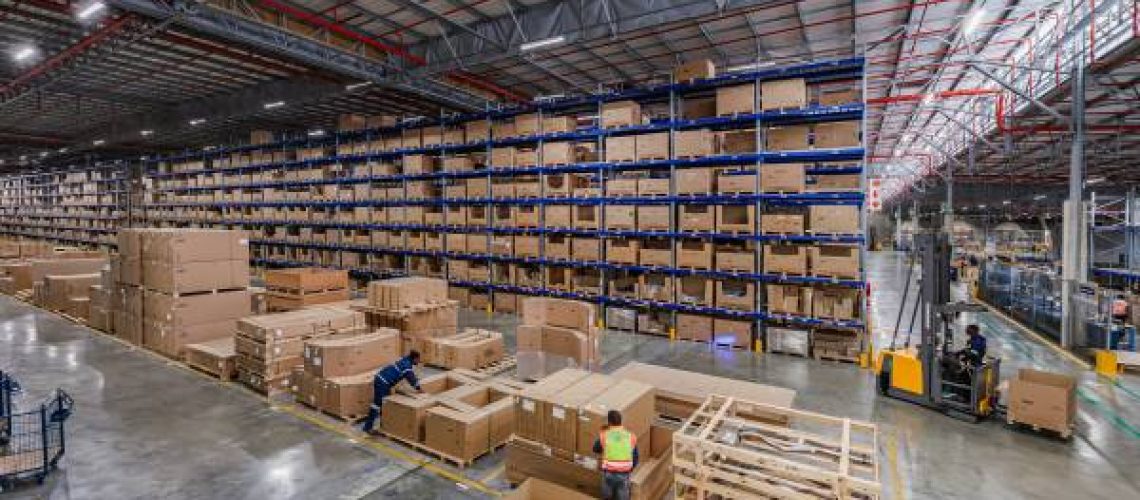
A regional distribution center is a strategically located facility where products can be received, stored, sorted, consolidated, and redistributed to different markets within a particular geographic area. Instead of every business moving products individually from one city or country to another, companies could use shared distribution networks to make the process faster and more efficient.
For Africa, where long distances, infrastructure gaps, border procedures, and fragmented markets can increase logistics costs, regional distribution centers could become an important part of modern commerce.
What Are Regional Distribution Centers?
Regional distribution centers are large logistics facilities positioned close to major markets, transportation routes, ports, or commercial hubs.
They typically perform several functions, including:
- Receiving products from manufacturers and suppliers
- Storing inventory closer to customers
- Sorting and consolidating shipments
- Preparing orders for delivery
- Supporting last-mile delivery
- Managing returns and exchanges
- Connecting businesses to different markets
For example, instead of a manufacturer shipping individual orders to customers across several African countries, products could be sent in bulk to a distribution center. From there, smaller shipments could move to retailers, businesses, or consumers in surrounding markets.
This approach could reduce unnecessary transportation and create a more organized flow of goods.
Reducing the Cost of Moving Goods
Transportation remains a significant consideration for businesses operating across Africa. When products travel long distances through fragmented supply chains, businesses can face higher fuel, handling, warehousing, and delivery expenses.
Regional distribution centers could help reduce some of these costs by positioning inventory closer to major consumer markets.
Consider a business selling products across West Africa. Rather than sending every order from its manufacturing location to individual customers, the company could stock products at a distribution center serving several nearby markets.
Bulk transportation to the center could lower the cost per unit. Local or regional delivery could then complete the journey.
Lower logistics costs could make products more competitive and allow businesses to serve customers in markets that previously seemed too expensive to reach.
Making Cross-Border Commerce Easier
One of the biggest opportunities for regional distribution centers is supporting cross-border trade. African businesses increasingly want to sell beyond their home countries. However, crossing borders can involve customs documentation, inspections, taxes, transportation coordination, and other administrative requirements.
Strategically located distribution centers could help businesses organize these processes more effectively.
A center near a major regional trade corridor could receive products, organize documentation, consolidate shipments, and coordinate onward transportation. With appropriate customs and regulatory arrangements, this could make regional commerce more predictable.
The development of the African Continental Free Trade Area (AfCFTA) also creates an important context for improving intra-African trade. Better logistics infrastructure could help businesses take greater advantage of opportunities created by a more integrated continental market.
Supporting Small and Medium-Sized Businesses
Large corporations often have the resources to establish warehouses and logistics networks across multiple countries. Smaller businesses usually do not.
This creates an opportunity for shared regional distribution centers.
Instead of investing heavily in warehouses, delivery vehicles, inventory systems, and specialized logistics staff, small businesses could potentially use third-party distribution facilities.
A small fashion brand in Lagos, for instance, could store selected products at a regional facility and use that inventory to serve customers in other West African markets.
This could allow smaller companies to expand without immediately taking on the cost of building their own logistics infrastructure.
Improving Delivery Speed
Customers increasingly value convenience. Whether they are buying groceries, clothing, electronics, beauty products, or household goods, they generally want reliable delivery.
Warehousing products closer to customers can shorten delivery distances.
Regional distribution centers could therefore help businesses move from extremely long-distance fulfillment toward more localized delivery networks.
A customer in Nairobi should not necessarily have to wait for an item to travel thousands of kilometres from another continent when the same product can be stocked at a regional facility nearby.
Faster fulfillment could improve customer satisfaction while also encouraging more consumers to trust online commerce.
Reducing Pressure on Major Ports
Many African countries depend heavily on major ports for imported goods. When products remain concentrated around ports for too long, congestion can affect businesses and consumers.
Regional distribution centers could help redistribute goods more efficiently after they enter a country or region.
Products could move from ports into strategically positioned facilities near major commercial cities. From there, businesses could distribute them to retailers and consumers.
This could create a more balanced logistics network rather than forcing businesses to rely heavily on a small number of storage and distribution locations.
Creating Regional Logistics Hubs
Some African cities are naturally positioned to become major logistics hubs because of their population, infrastructure, trade connections, airports, ports, highways, and proximity to neighboring countries.
Cities such as Lagos, Nairobi, Johannesburg, Accra, Addis Ababa, Casablanca, and others could potentially play important roles in regional distribution networks.
However, successful logistics hubs require more than warehouses.
They also need:
- Reliable roads and transport connections
- Efficient customs processes
- Digital inventory systems
- Secure storage facilities
- Reliable electricity
- Skilled logistics workers
- Strong communication networks
- Efficient delivery services
Investment in these areas could strengthen the wider commerce ecosystem.
Using Technology to Improve Distribution
Technology could make regional distribution centers significantly more effective. Modern facilities can use inventory management software, barcode scanning, warehouse management systems, automated sorting, route optimization, and real-time shipment tracking.
Businesses could see where products are stored, how much inventory remains, and when shipments are expected to arrive.
Digital systems could also help identify popular products and predict demand.
For African businesses operating across multiple markets, better information could reduce both overstocking and stock shortages.
Supporting E-Commerce Growth
The growth of African e-commerce depends partly on reliable fulfillment. An online marketplace can attract customers with competitive prices and a wide product selection, but poor delivery experiences can quickly damage consumer trust.
Regional distribution centers could provide the infrastructure needed to connect online sellers with customers more efficiently.
Instead of every seller managing individual deliveries, several businesses could use a shared fulfillment facility.
This model could be particularly valuable for growing e-commerce platforms and independent online retailers.
Creating New Jobs
The development of regional distribution centers could also create employment opportunities.
Modern logistics facilities require workers in areas such as:
- Warehouse management
- Inventory control
- Transportation
- Packaging
- Customer service
- Technology support
- Security
- Procurement
- Data analysis
- Fleet management
Beyond direct employment, distribution centers could generate opportunities for transport companies, delivery businesses, packaging suppliers, maintenance providers, and other service businesses.
This could make logistics investment an important contributor to local economic development.
Supporting African Manufacturers
Regional distribution centers would not only benefit retailers and e-commerce companies. They could also support African manufacturers.
A manufacturer that can distribute products efficiently across several markets has greater opportunities to increase production.
For example, a furniture producer, food processor, clothing manufacturer, or cosmetics company could manufacture in one location while using regional facilities to reach customers in several countries.
Better distribution could therefore help African manufacturers move beyond local markets and compete more effectively within the continent.
The Importance of Strategic Locations
Not every location is suitable for a regional distribution center. The best locations should consider factors such as population density, consumer demand, transportation networks, proximity to ports, border crossings, airports, industrial zones, and access to major highways.
A distribution center positioned poorly could increase rather than reduce logistics costs.
Regional planning is therefore essential.
Governments and private companies could work together to identify strategic logistics corridors and develop facilities around them.
Public-Private Partnerships Could Accelerate Development
Building large distribution facilities requires significant investment. Governments may provide land, infrastructure, regulatory support, or tax incentives, while private companies could provide capital, technology, and operational expertise.
Public-private partnerships could therefore help accelerate the development of regional logistics infrastructure.
Governments could also improve the business environment by simplifying customs procedures, digitizing documentation, improving roads, and strengthening cross-border trade systems.
The goal should not simply be to build more warehouses. It should be to create an integrated logistics ecosystem.
Challenges That Must Be Addressed
Regional distribution centers are not a complete solution to Africa’s logistics challenges.
Several obstacles must still be considered.
Poor road infrastructure can make it difficult to move products from distribution centers to smaller cities and rural communities. Electricity challenges can increase operating costs. Security concerns can affect transportation and warehousing. Complex regulations between countries can also slow cross-border shipments.
There is also the question of investment.
Large logistics facilities require substantial capital, and businesses need enough demand to justify their development.
These challenges mean that distribution centers should be introduced as part of broader infrastructure and trade strategies rather than as isolated projects.
A More Connected African Marketplace
Africa’s economic potential is closely connected to its ability to move goods efficiently. Regional distribution centers could help create stronger links between manufacturers, wholesalers, retailers, online sellers, and consumers.
They could reduce delivery distances, support cross-border commerce, improve inventory availability, strengthen e-commerce, and give smaller businesses access to logistics infrastructure that would otherwise be difficult to afford.
Most importantly, they could help transform African commerce from a collection of fragmented markets into a more connected regional marketplace.
As intra-African trade continues to develop, logistics infrastructure will become increasingly important. Regional distribution centers could become one of the practical building blocks of that future.
The opportunity is not simply about storing products. It is about creating a faster, smarter, and more connected system through which African businesses can reach African consumers.
