

Africa is often celebrated for its vibrant cities, ancient history, wildlife, and beautiful coastlines.
Yet some of the continent’s most remarkable experiences can be found far from busy urban centres. Across Africa, rural landscapes offer dramatic mountains, endless savannahs, fertile valleys, quiet villages, deserts, forests, and wetlands that reveal a different side of the continent.
These landscapes are not simply beautiful places to visit. They are also home to communities, traditional livelihoods, unique ecosystems, and cultural practices that have developed over generations. Exploring them can provide travellers with opportunities to experience Africa at a slower and more meaningful pace.
The Beauty of Africa’s Rural Landscapes
Africa’s rural environments are incredibly diverse. In some regions, travellers encounter dry deserts stretching towards the horizon. In others, green hills, forests, rivers, and farmland dominate the scenery.

The landscapes also change dramatically with the seasons. Rain can transform dry plains into green fields, while the dry season can reveal paths, rock formations, and distant mountain ranges that are less visible during wetter months.
The Ethiopian Highlands
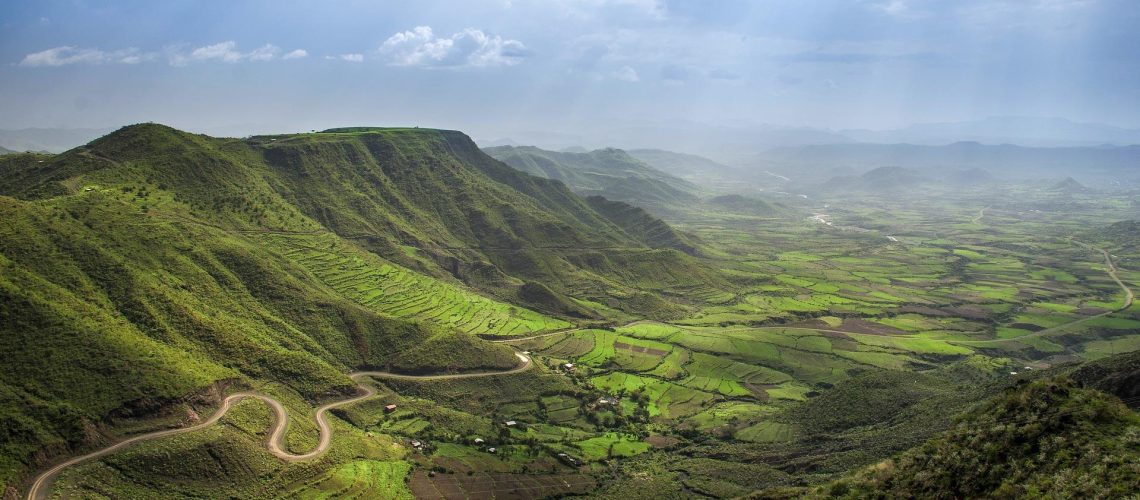
The Ethiopian Highlands are among Africa’s most distinctive rural environments. Rising dramatically above surrounding lowlands, the region features rugged mountains, deep valleys, plateaus, and cultivated slopes.

The region also demonstrates how people can adapt their agricultural practices to challenging terrain. Travellers interested in culture, hiking, history, and traditional rural life can find plenty to explore.
The Great Rift Valley
The Great Rift Valley stretches across parts of eastern Africa and contains some of the continent’s most spectacular scenery. Lakes, volcanic mountains, grasslands, escarpments, and farming communities form a constantly changing landscape.

This mixture of agriculture, traditional lifestyles, geology, and wildlife makes the Rift Valley particularly interesting for travellers who want more than conventional sightseeing.
The Drakensberg Countryside
South Africa’s Drakensberg region combines dramatic mountains with peaceful rural surroundings. The mountains rise above valleys, grasslands, rivers, and small communities.

The changing light across the mountains also makes the landscape particularly impressive during sunrise and sunset.
The Namibian Desert and Rural Communities
Namibia presents a very different vision of rural Africa. Its landscapes include vast desert plains, rocky mountains, sand dunes, and sparse vegetation.

Travelling through Namibia can therefore provide insight into both environmental adaptation and the relationship between people and extremely dry landscapes.
Uganda’s Green Countryside
Uganda offers some of the continent’s lushest rural scenery. Rolling hills, banana plantations, forests, lakes, wetlands, and small farms create a landscape filled with colour and vegetation.

The country’s green landscapes also demonstrate how climate and fertile soil can shape settlement patterns and agricultural traditions.
The Sahel’s Changing Landscapes
The Sahel stretches across a large part of Africa south of the Sahara. Although often associated with dryness, its landscapes are more varied than they first appear.

Exploring Sahelian landscapes also encourages travellers to look beyond stereotypes about Africa. Rural Africa is not one environment; it is a collection of ecosystems shaped by climate, geography, history, and human adaptation.
Ghana’s Rural Forest and Farming Regions
Ghana’s countryside offers a combination of forests, farmland, rolling hills, rivers, and traditional settlements.

Visitors can gain a deeper understanding of Ghana by exploring these areas rather than limiting their trips to major cities and well-known attractions. Local food, farming traditions, crafts, and community life can make rural journeys especially memorable.
Madagascar’s Unique Rural Landscapes
Madagascar stands apart from mainland Africa because of its distinctive wildlife and ecosystems. Its rural landscapes range from highland rice fields to dry forests, coastal environments, grasslands, and dramatic rock formations.

Rural Madagascar is particularly interesting for travellers interested in biodiversity, agriculture, traditional communities, and landscapes that have evolved in relative isolation.
Why Rural Landscapes Matter
Rural landscapes are more than tourist attractions. They support food production, preserve cultural traditions, protect biodiversity, and provide livelihoods for millions of people.
Responsible tourism can contribute positively when travellers support locally owned businesses, hire local guides, purchase crafts directly from producers, and respect community customs.
It is equally important to remember that rural communities are not simply attractions. Travellers should seek permission before photographing people, respect private property, avoid damaging farms or natural areas, and follow local guidance.
Exploring Rural Africa Responsibly
A rural journey requires a different mindset from a conventional city break. Roads may be rough, mobile connectivity may be limited, and services may be less predictable. Planning ahead is therefore essential.
Travellers should research local conditions, use reputable guides where appropriate, carry sufficient essentials, and remain flexible. More importantly, they should approach rural communities with curiosity and respect rather than expecting them to perform a particular version of “traditional Africa.”
The best rural experiences often come from slowing down: sharing a meal, visiting a local market, walking through farmland, learning about traditional crafts, or simply observing the landscape.
A Different Way to Experience Africa
Africa’s rural landscapes reveal the continent through a different lens. They show how geography influences culture, how communities adapt to their environments, and how traditional livelihoods continue alongside modern life.
From the Ethiopian Highlands and Great Rift Valley to Namibia’s deserts, Uganda’s green countryside, Ghana’s farming regions, and Madagascar’s distinctive landscapes, rural Africa offers extraordinary variety.
For travellers willing to move beyond the usual tourist routes, these landscapes can provide some of the continent’s most rewarding experiences. They offer not only beautiful scenery, but also a closer connection to the people, traditions, and environments that make Africa so diverse.
