

Commerce depends on one basic requirement: people and businesses need to find one another.
A customer needs to receive an order, a courier needs to locate a delivery point, and a business needs to communicate its physical location to suppliers and customers. Yet across many African cities and communities, traditional addressing systems do not always make this process easy.
Rapid urban growth, informal settlements, newly developed neighborhoods, changing street names, and incomplete address records can make location identification difficult. For businesses that depend on deliveries, this can increase costs and create delays.
Digital addressing offers a practical way to improve how businesses identify, share, and verify locations. By combining digital maps, geographic coordinates, location codes, and mobile technology, digital addressing can make commerce more efficient and accessible.
What Is Digital Addressing?
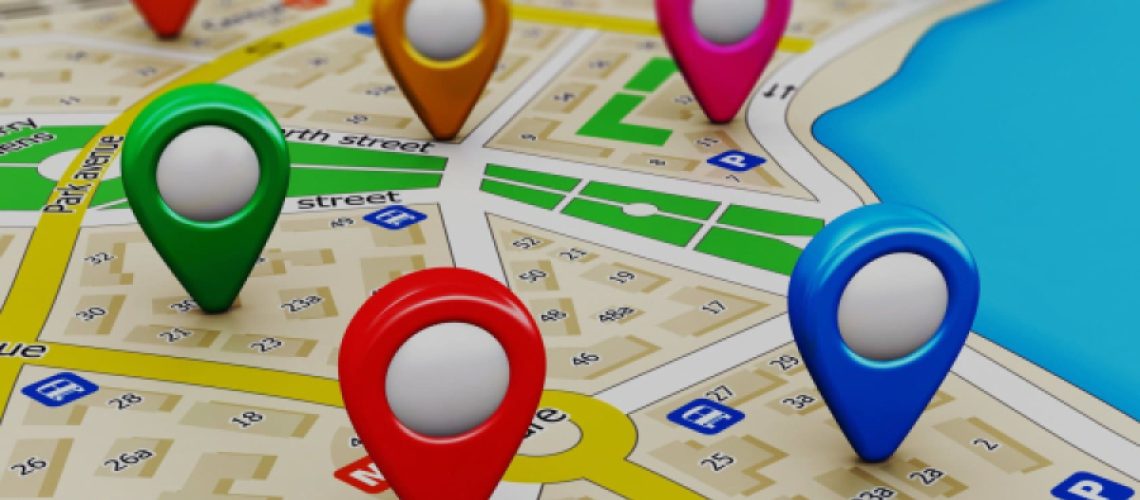
Digital addressing refers to systems that use technology to identify and communicate specific locations electronically.
Instead of relying entirely on descriptions such as “the blue house after the filling station,” a digital address can provide a precise location through coordinates, a location code, a digital map pin, or another standardized identifier.
These systems can be particularly useful in places where conventional street addresses are incomplete or difficult to interpret.
For African businesses, digital addressing can connect physical locations with digital commerce platforms, delivery services, financial services, and customer communication tools.
Making Deliveries More Efficient
Delivery is one of the areas where digital addressing can have an immediate commercial impact. Online shopping continues to create demand for reliable last-mile delivery. However, locating customers can become difficult when addresses are unclear or when roads and buildings are not properly mapped.
A customer can share a digital location with a retailer or courier before delivery. The courier can then use navigation technology to reach the correct area more efficiently.
This can reduce unnecessary phone calls, repeated directions, failed delivery attempts, and wasted travel time.
For businesses handling hundreds of deliveries, even small improvements in delivery accuracy can contribute to better operational efficiency.
Supporting E-Commerce Growth
E-commerce depends on more than websites and digital payments. Businesses must also be able to move physical products from sellers to buyers.
Digital addressing can strengthen this connection between online transactions and physical delivery.
A customer shopping from an online store can provide a digital address during checkout. The retailer can pass the information to a logistics provider, which can use it to identify the delivery location.
This creates a smoother process from online purchase to physical delivery.
As more African consumers shop through websites, social media platforms, and mobile applications, reliable location information can become increasingly important.
Helping Small Businesses Reach Customers
Small businesses often operate from locations that may not have conventional street addresses. This includes home-based businesses, independent vendors, artisans, food businesses, repair services, and small retailers.
Digital addressing can give these businesses a simple way to establish a recognizable location online.
A business owner can share a digital location through social media, messaging applications, websites, or business directories. Customers can then use the information to visit the business or arrange delivery.
This can help small businesses participate more effectively in the digital economy without requiring expensive physical infrastructure.
Improving Logistics and Supply Chains
Large businesses and logistics companies also need accurate location information.
Manufacturers, wholesalers, distributors, retailers, and transport operators often coordinate multiple movements every day. Poor location information can create delays throughout the supply chain.
Digital addressing can help businesses identify warehouses, stores, distribution centers, pickup points, farms, factories, and customer locations.
When businesses maintain accurate location data, they can plan routes more effectively and coordinate deliveries with greater precision.
This becomes particularly important as African businesses expand across cities and national borders.
Supporting Informal Commerce
Africa’s informal economy plays an important role in employment, household income, and local commerce.
Many informal businesses operate in markets, streets, homes, kiosks, roadside locations, and temporary trading spaces.
Digital addressing can help bring some of these locations into digital commerce systems.
For example, a food vendor could share a digital location with a customer who wants to place an order. A market trader could provide a location for a courier collecting merchandise. A service provider could send a map location instead of giving lengthy verbal directions.
This does not eliminate the importance of physical markets. Instead, it can create a stronger connection between traditional commerce and digital platforms.
Supporting Emergency and Essential Services
Accurate location information can also benefit services that indirectly support commerce.
Emergency responders, utility providers, financial institutions, healthcare services, and government agencies all depend on reliable location data.
When businesses and residential areas are easier to locate, service providers can respond more efficiently.
For businesses, this can improve access to utilities, maintenance services, security support, deliveries, and other essential services.
Making Customer Communication Easier
Digital addressing can simplify communication between businesses and customers.
Instead of repeatedly explaining how to find a shop, office, home, or event venue, a customer can receive a digital location through a messaging platform.
Businesses can include digital location information in:
- Online store checkout pages
- Social media profiles
- Digital advertisements
- Customer invoices
- Delivery instructions
- Business directories
- Event invitations
- Messaging platforms
This creates a more convenient customer experience.
Creating Better Business Data
Digital addresses can also contribute to better business intelligence.
Businesses can analyze where customers live, where orders originate, which neighborhoods generate demand, and where delivery activity is concentrated.
Such information can support decisions about inventory, distribution, marketing, store locations, and delivery networks.
However, businesses should handle location data responsibly. Customers should understand how their information is collected and used, while organizations should protect sensitive data from unauthorized access.
Supporting Financial and Digital Services
Reliable location information can also support financial and commercial services.
Banks, insurers, payment providers, lenders, and other businesses sometimes need to verify where customers or businesses operate.
Digital addressing can provide another layer of location information for verification and service delivery.
For small businesses seeking to formalize their operations, having a recognizable digital location may also make it easier to present consistent business information across different platforms.
Challenges That Must Be Addressed
Digital addressing is promising, but implementation requires careful planning. Internet access and smartphone availability vary across African communities. Some users may also lack the digital skills needed to use location technologies confidently.
Data accuracy presents another challenge. A digital address becomes less useful if maps are outdated or businesses move without updating their information.
Different platforms can also use different addressing systems, creating compatibility problems.
Governments, technology companies, logistics providers, financial institutions, and businesses therefore need to work toward systems that are accessible, accurate, interoperable, and easy to use.
The Future of African Commerce
As African cities grow and digital commerce expands, location information will become increasingly important.
Digital addressing can connect physical spaces to digital platforms, helping businesses manage deliveries, communicate with customers, organize logistics, and participate in e-commerce.
Its value goes beyond simply finding an address. A reliable digital location can become part of a business’s digital identity.
For Africa’s growing commercial ecosystem, combining digital payments, online marketplaces, logistics technology, and accurate location systems could create stronger connections between businesses and customers.
Conclusion
Digital addressing can play an important role in improving African commerce. By making businesses, homes, markets, warehouses, and delivery points easier to locate, it can reduce some of the friction associated with moving goods and services.
The technology will not solve every logistical challenge, but it can provide an important foundation for more connected commerce.
For retailers, entrepreneurs, logistics companies, and digital platforms, understanding and adopting reliable digital addressing systems could become an important step toward building faster, more accessible, and more efficient commercial networks across Africa.
