

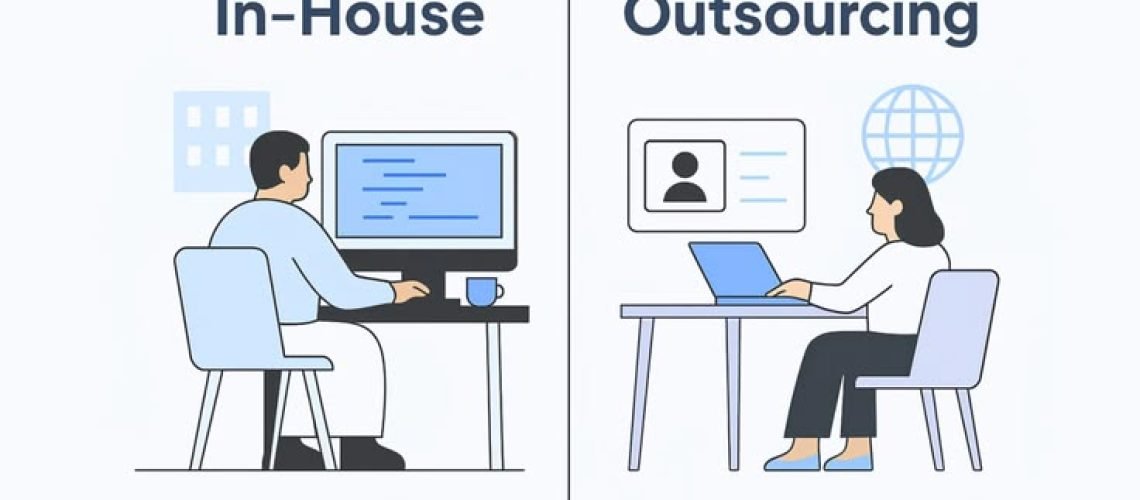
A business can manage deliveries with its own riders and vehicles or outsource the work to an external logistics provider.
In-house delivery gives you greater control over staff, customer communication and delivery standards, while outsourcing can reduce the cost and responsibility of managing a fleet. The right choice depends on your order volume, delivery locations, budget and service expectations.
For a small online store in Lagos, hiring a full-time dispatch rider may not make financial sense if orders are irregular. However, a food business delivering dozens of orders every day may benefit from having dedicated riders. Before choosing, understand what each model involves and what it will demand from your business.
At a glance: In-house delivery versus outsourcing
| Factor | In-house delivery | Outsourced delivery |
|---|---|---|
| Management | Your business manages riders and operations | Provider manages the delivery operation |
| Control | Greater direct control | Control depends on your service agreement |
| Initial investment | Usually higher | Usually lower |
| Staff responsibility | You recruit and supervise riders | Provider manages its delivery personnel |
| Flexibility | Easier to customise internal procedures | Depends on provider capacity and terms |
| Cost structure | Salaries, vehicles, fuel, maintenance and insurance | Delivery charges and agreed service fees |
| Best suited to | Regular, predictable delivery demand | Variable demand or businesses avoiding fleet ownership |
What is in-house delivery?
In-house delivery means your business manages the process of transporting orders to customers using its own delivery staff, vehicles or directly controlled arrangements.
For example, a restaurant in Yaba may employ two dispatch riders to deliver meals within nearby areas. The business assigns orders, monitors delivery progress, handles customer complaints and maintains the motorcycles.
This arrangement gives the business more direct control over how deliveries happen. It can also create a consistent customer experience because the riders follow internal procedures and understand the products.
However, control comes with responsibility. The business must recruit reliable staff, manage schedules, maintain vehicles, arrange insurance where required and handle operational problems.
What is outsourced delivery?
Outsourced delivery means your business contracts an external logistics company or independent delivery provider to move products to customers.
The provider may supply riders, vehicles, tracking systems, dispatch coordination and proof of delivery. Depending on the agreement, it may also handle failed delivery attempts, returns and customer communication.
For instance, a fashion retailer in Lekki may receive orders from customers across Lagos. Instead of employing riders, it books deliveries through a third-party logistics company whenever customers place orders.
This model allows the retailer to focus more on sourcing products, marketing and customer service. Nevertheless, it has less direct control over the rider’s daily activities and must depend on the provider’s performance.
The advantages of in-house delivery
1. You have more control over customer experience
Your riders represent your business. You can train them to handle products carefully, communicate politely and follow specific delivery instructions.
This matters when you sell fragile goods, prepared meals, premium products or items that require special handling.
2. You can customise delivery procedures
An in-house team can follow your preferred packaging checks, customer verification process and delivery communication standards.
For example, a bakery may require riders to keep cakes level and avoid placing heavy items on top of them. A pharmacy may need additional procedures for handling specific products in line with applicable regulations.
3. You can build a direct feedback system
When a customer complains about a late delivery, your team can investigate the issue directly. You can speak with the rider, review the dispatch record and make changes to the process.
4. Frequent deliveries may become more economical
If your business receives enough orders every day, a dedicated team may cost less per delivery than repeatedly paying external providers.
However, this depends on utilisation. Salaries, fuel, maintenance and downtime continue even when orders decline.
The disadvantages of in-house delivery
1. It requires more capital
You may need to purchase or lease motorcycles, provide safety equipment, maintain vehicles and pay salaries. These expenses can become difficult for a small business with inconsistent orders.
2. You become responsible for staff management
Recruiting, training, supervising and retaining riders takes time. You also need clear policies for attendance, customer conduct, accidents and performance.
3. Vehicle maintenance can disrupt operations
A broken-down motorcycle can delay several orders. Your business needs a maintenance plan and backup arrangements to prevent one vehicle problem from stopping deliveries.
4. Expansion can become complicated
Serving new locations may require more riders, vehicles and supervision. As order volumes grow, you may need a dispatch manager or additional technology.
The advantages of outsourcing delivery
1. Lower operational responsibility
An external provider manages many delivery-related tasks, including rider recruitment, vehicle management and dispatch coordination.
Your business still needs to supervise service quality, but it does not have to manage every operational detail.
2. Easier access to a wider delivery network
A logistics provider may already serve multiple areas and have access to riders in different locations. This can help a business expand without building a new fleet immediately.
However, confirm the provider’s actual coverage. Do not assume that a company serving Lagos Island also offers reliable delivery to every part of the mainland or neighbouring Ogun State.
3. More flexibility when demand changes
A business with seasonal or irregular orders can use external delivery services when needed. This reduces the need to maintain a large team during quieter periods.
4. Access to established delivery systems
Some providers offer booking portals, tracking, delivery notifications and electronic proof of delivery. These tools can improve visibility without requiring your business to develop its own technology.
The disadvantages of outsourcing delivery
1. Less direct control
Your provider manages the riders, but customers still associate the delivery experience with your brand. A rude rider, damaged package or unexplained delay can damage your reputation.
2. Costs may become unpredictable
Delivery charges can vary by distance, urgency, parcel size and service level. Additional fees may apply to waiting time, failed delivery attempts or returns.
You need a clear pricing structure before accepting customer orders.
3. You depend on another company’s capacity
A provider may struggle during festive periods, bad weather or sudden demand increases. If it cannot fulfil your orders, your business may have limited alternatives.
4. Customer information requires careful handling
Your provider may receive names, phone numbers and delivery addresses. You should establish how it protects this information and what happens if a security incident occurs.
How should you choose?
Do not make the decision based only on the number of deliveries you receive. Examine the nature of your orders and the level of service your customers expect.
Step 1: Calculate your delivery volume
Review at least three months of order records. Identify your average daily deliveries, busiest days, quiet periods and locations.
A business with five deliveries a week may not need dedicated riders. One with 50 deliveries a day may have a stronger case for an in-house team or a hybrid arrangement.
Step 2: Calculate the full cost of each model
For in-house delivery, include:
- Rider salaries and allowances.
- Vehicle purchase or lease costs.
- Fuel and maintenance.
- Insurance and safety equipment.
- Dispatch management.
- Replacement vehicles and staff cover.
For outsourcing, include:
- Per-delivery fees.
- Waiting or return charges.
- Special handling fees.
- Subscription or platform charges, where applicable.
- Costs associated with failed deliveries.
Compare the total monthly cost and the average cost per successful delivery.
Step 3: Define your service requirements
List the delivery standards your customers expect. These might include delivery windows, temperature control, parcel tracking, cash collection or proof of delivery.
Ask potential providers whether they can meet those standards consistently.
Step 4: Test before committing
If you are considering outsourcing, run a small pilot with a limited number of orders. Measure punctuality, communication, order accuracy, damage rates and customer complaints.
Likewise, if you plan to build an in-house team, start with a manageable number of riders and review performance before expanding.
When does a hybrid model make sense?
Some businesses do not need to choose one model exclusively.
A hybrid model combines internal and outsourced delivery. For example, a restaurant may use its own riders for nearby orders and outsource deliveries to distant locations. An online retailer may keep an in-house team for urgent or high-value orders while using external providers for routine deliveries.
This approach can balance control and flexibility. However, it requires clear rules about which orders go to each provider and how customers receive updates.
How to manage an outsourced delivery provider effectively
Outsourcing does not mean handing over your reputation and hoping for the best. You need a structured working arrangement.
Start with a written agreement that defines delivery areas, pricing, service levels, collection procedures, responsibilities and complaint handling.
Then establish a simple performance review. Track:
| Measure | What to monitor |
|---|---|
| On-time delivery | Percentage delivered within the agreed window |
| Successful delivery | Orders completed on the first attempt |
| Parcel condition | Damaged or missing items |
| Customer complaints | Number and type of delivery-related complaints |
| Cost per order | Total delivery expense divided by completed deliveries |
| Response time | How quickly the provider handles problems |
Share feedback regularly and agree on corrective actions. If a provider repeatedly misses targets, investigate the cause and consider a backup arrangement.
How Easer fits into the delivery decision
Businesses considering external logistics support can review Easer Lifestyle’s 3PL and 4PL logistics services.
Before engaging any provider, including Easer, confirm the service scope, operating areas, available capacity, delivery terms and charges. A good outsourcing arrangement begins with clear expectations rather than assumptions.
Need to review your logistics options? Explore Easer’s logistics services and discuss the requirements of your business before making a decision.
Frequently asked questions
1. Is in-house delivery cheaper than outsourcing?
It can be cheaper when a business has a high and consistent delivery volume. However, the calculation must include salaries, vehicles, fuel, maintenance, insurance and management.
2. What type of business should outsource delivery?
Businesses with irregular orders, limited resources or customers spread across several locations may benefit from outsourcing. The provider must still meet the business’s service and delivery requirements.
3. Can a small business use both in-house and outsourced delivery?
Yes. A hybrid model can work well when a business handles nearby or specialised orders internally and outsources other deliveries.
4. What should I check before hiring a delivery company?
Check its coverage, pricing, delivery process, insurance arrangements, customer support, data protection practices and ability to provide proof of delivery.
5. How can I know if my delivery provider is performing well?
Track on-time delivery, successful delivery rates, parcel condition, customer complaints, response time and cost per completed order. Review the results regularly.
Choose the model that supports your customers
In-house delivery offers control but requires investment and management. Outsourcing reduces operational responsibility but creates dependence on an external provider. A hybrid arrangement may provide the balance your business needs.
Explore your options: Visit Easer’s 3PL and 4PL logistics page to review its logistics offering and confirm whether it matches your delivery requirements.
Sources: Lagos Metropolitan Area Transport Authority; NIPOST logistics and e-commerce services.
