

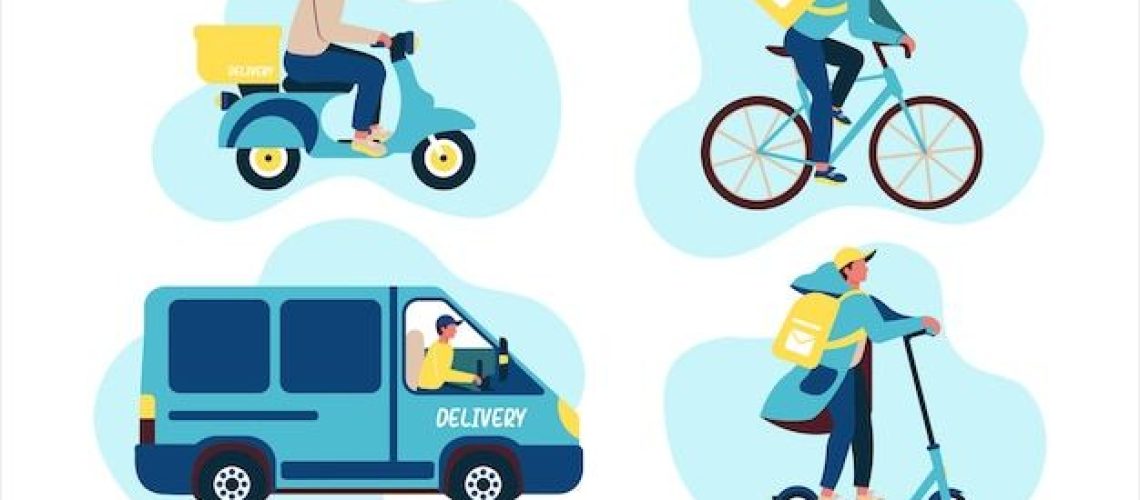
Choosing the right delivery vehicle can make a significant difference in how quickly, safely, and affordably a business serves its customers.
For businesses in busy African cities like Lagos, Accra, and Nairobi, the decision often comes down to two options: a motorcycle delivery bike or a truck. Both vehicles play important roles in logistics, but each serves different needs. Understanding their strengths can help businesses reduce delivery costs, improve customer satisfaction, and manage daily operations more effectively.
Understanding Bike Delivery Services
Motorcycle delivery bikes are popular in cities because they offer speed and flexibility. They can navigate narrow streets, avoid some traffic congestion, and reach customers in areas where larger vehicles may struggle. For businesses that handle frequent, small deliveries, bikes can be a practical choice.
Restaurants, pharmacies, online stores, supermarkets, and document delivery services often rely on motorcycles. A restaurant, for example, can use a bike to deliver meals to nearby customers while maintaining food quality and reasonable delivery times. Similarly, an online vendor can send clothing, accessories, or small electronics to customers without hiring a large vehicle.
Another advantage is affordability. Motorcycles generally cost less to purchase, maintain, and operate than trucks. They also consume less fuel and require less parking space. These benefits make them attractive to startups and small businesses working with limited budgets.
However, bikes have limitations. Their carrying capacity is relatively small, making them unsuitable for bulky or heavy goods. Weather conditions can also affect delivery operations. Rain, poor road conditions, and safety risks require careful planning, protective equipment, and responsible riding practices.
Understanding Truck Delivery Services
Trucks are better suited to transporting large quantities of goods over longer distances. They offer greater carrying capacity and can accommodate bulky items that motorcycles cannot handle. Businesses transporting furniture, building materials, appliances, packaged food, or wholesale supplies often depend on trucks.
For example, a supermarket receiving several cartons of beverages or a restaurant purchasing food supplies in bulk may need a truck to move everything in one trip. Instead of making multiple journeys with smaller vehicles, a truck can transport a larger load at once.
Trucks also provide better protection for certain goods. Enclosed vehicles can shield products from rain, dust, and other environmental conditions. This makes them useful for transporting delicate equipment, packaged goods, and valuable merchandise.
Despite these advantages, trucks usually involve higher operating costs. Fuel consumption, maintenance, insurance, parking, and driver expenses can increase delivery costs. Trucks may also struggle with traffic congestion, limited parking, and narrow roads in densely populated neighbourhoods.
For small deliveries, using a truck may be unnecessarily expensive. Businesses must therefore consider whether the size of the shipment justifies the cost.
Key Factors to Consider When Choosing
The best delivery vehicle depends on several factors. First, consider the size and weight of the goods. Small parcels and meals are generally suitable for bikes, while heavy or bulky shipments require trucks.
Second, examine the delivery distance. Motorcycles are particularly useful for short urban trips, although they can serve longer routes when conditions and regulations permit. Trucks are often more practical for bulk deliveries across cities or between locations.
Third, consider your budget. Businesses should calculate fuel, maintenance, driver wages, insurance, and other operating expenses. A cheaper vehicle is not always the most economical option if it requires several trips to complete the same delivery.
Delivery urgency also matters. Motorcycles may reach nearby customers faster during heavy traffic. However, trucks may be more efficient when transporting many orders to a distribution centre or delivering bulk goods to multiple business locations.
Finally, think about safety and the nature of the cargo. Fragile, temperature-sensitive, or high-value products may require specialised handling or vehicles with appropriate protective features.
Can a Business Use Both Bikes and Trucks?
Absolutely. Many businesses can benefit from combining both options. A truck can transport goods from a warehouse to a central distribution point, while motorcycles handle smaller deliveries to individual customers. This approach allows businesses to manage bulk transportation and last-mile delivery efficiently.
For instance, an online grocery business can use a truck to move stock to a local hub. Delivery riders can then distribute individual orders to homes and offices. This reduces unnecessary truck trips and helps the business serve more customers within a shorter period.
Businesses should monitor delivery volumes, customer locations, operating expenses, and service times to determine the right balance. They can also work with reliable third-party logistics providers when purchasing and maintaining their own vehicles is not financially practical.
Conclusion
Choosing between a bike and a truck is not simply about deciding which vehicle is faster or cheaper. It is about matching the vehicle to the delivery requirements of the business. Bikes offer flexibility and affordability for smaller shipments, while trucks provide capacity and efficiency for bulk transportation.
Before making a decision, assess your cargo, delivery distance, budget, customer expectations, and road conditions. For some businesses, one vehicle type will be enough. For others, combining both will deliver the best results. The right choice can reduce operating costs, improve delivery reliability, and help a business build lasting customer trust.
