

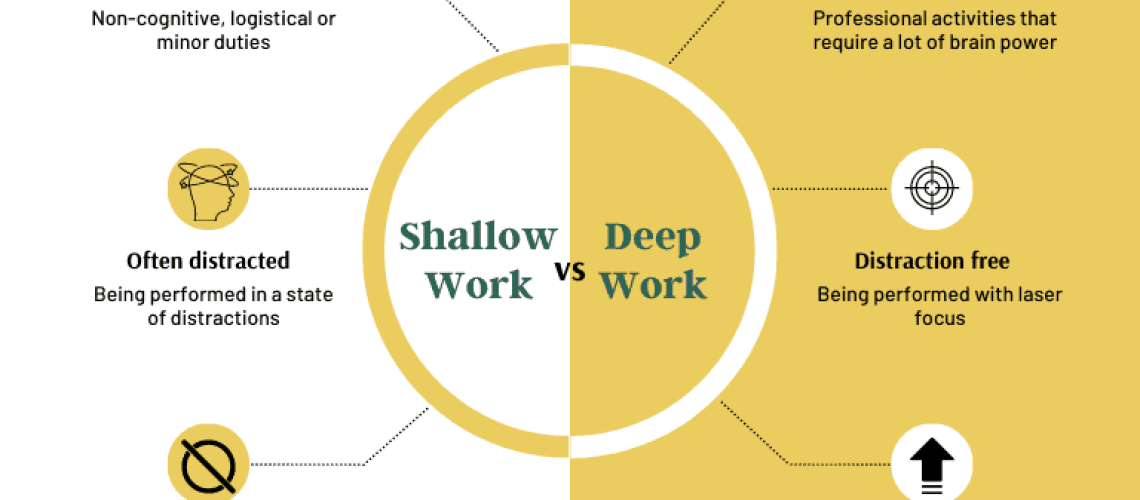
In today’s hyperconnected world, maintaining focus has become one of the greatest challenges for students, professionals, entrepreneurs, and creatives alike.
Smartphones buzz with notifications, emails demand immediate attention, and social media competes for every spare moment. As a result, many people spend hours working without accomplishing meaningful progress. This is where deep work becomes invaluable. Coined by productivity expert Cal Newport, deep work refers to the ability to concentrate without distraction on cognitively demanding tasks. Whether you’re writing a report, designing a product, studying for exams, coding software, or developing a business strategy, deep work enables you to produce higher-quality results in less time.
Developing the ability to focus deeply is not a talent reserved for a select few, it is a skill that anyone can learn with the right strategies. Here are practical techniques to help you strengthen your concentration and maximize your productivity.
Understand What Distracts You
Before improving focus, identify what interrupts it. Common distractions include:
- Constant phone notifications
- Social media browsing
- Email checking
- Noisy environments
- Multitasking
- Mental fatigue
Spend a few days observing when and why your attention drifts. Once you recognize your biggest distractions, you’ll find it easier to eliminate or manage them.
Create a Dedicated Work Environment
Your surroundings significantly influence your ability to concentrate. Designate a workspace that encourages focus and minimizes interruptions.
A productive workspace should have:
- Good lighting
- A comfortable chair
- Minimal clutter
- Reliable internet (when needed)
- Necessary tools within reach
If working from home, communicate your work hours to family members or roommates so they understand when you should not be disturbed.
Time Block Your Schedule
Rather than deciding what to work on throughout the day, assign specific blocks of time for important tasks.
For example:
- 8:00–10:00 AM: Project work
- 10:15–11:00 AM: Emails
- 11:00–12:30 PM: Research
- 2:00–4:00 PM: Writing or problem-solving
Time blocking reduces decision fatigue and creates a clear structure for focused work sessions.
Eliminate Digital Distractions
Technology is helpful, but it can also become your greatest productivity enemy.
During deep work sessions:
- Turn off unnecessary notifications.
- Put your phone on silent or airplane mode.
- Close unrelated browser tabs.
- Log out of distracting social media accounts.
- Use website blockers if necessary.
Even brief interruptions can significantly reduce concentration because your brain requires time to regain its previous level of focus.
Focus on One Task at a Time
Multitasking often creates the illusion of productivity while reducing efficiency and increasing mistakes.
Instead:
- Finish one meaningful task before starting another.
- Prioritize your most demanding work when your energy is highest.
- Resist switching between unrelated activities.
Single-tasking allows your brain to enter a state of sustained concentration, improving both speed and quality.
Work in Focused Intervals
Working continuously for several hours may lead to mental exhaustion. Structured work intervals help maintain peak performance.
A popular approach is the Pomodoro Technique:
- Work for 25–50 minutes.
- Take a short 5–10 minute break.
- After several sessions, take a longer break.
These breaks refresh your mind while preventing burnout.
Prioritize High-Impact Tasks
Not all tasks deserve equal attention.
Identify the activities that contribute most to your goals and complete them first each day. These are often the tasks requiring the deepest thinking and creativity.
Ask yourself:
“If I complete only one task today, which one will create the greatest value?”
Completing high-impact work early builds momentum and reduces stress.
Train Your Brain to Focus
Like a muscle, attention strengthens with consistent practice.
Simple exercises include:
- Reading books without checking your phone
- Solving puzzles
- Meditation or mindfulness practice
- Journaling
- Long-form writing
Even ten minutes of uninterrupted concentration each day gradually improves your ability to stay focused for longer periods.
Manage Your Energy, Not Just Your Time
Deep work requires mental energy.
Protect it by:
- Sleeping 7–9 hours each night
- Eating balanced meals
- Staying hydrated
- Exercising regularly
- Taking movement breaks during long work sessions
A well-rested brain performs significantly better than an exhausted one.
Set Clear Goals Before Each Session
Starting work without a defined objective often leads to wasted time.
Before each deep work session, determine exactly what success looks like.
Examples include:
- Finish the first draft of an article.
- Complete three design concepts.
- Solve five coding problems.
- Study two textbook chapters.
Specific goals provide direction and make it easier to measure progress.
Learn to Say No
Protecting your focus sometimes means declining unnecessary commitments.
Avoid:
- Meetings without clear purposes
- Constant availability
- Non-essential tasks
- Frequent interruptions
Every “yes” to low-value activities may become a “no” to meaningful work.
Build Deep Work into Your Daily Routine
Consistency matters more than occasional bursts of productivity. Schedule dedicated deep work sessions at the same time each day if possible. Many people find mornings ideal because mental energy is often highest before daily demands accumulate.
Over time, your brain begins to associate that time and environment with intense concentration, making it easier to enter a productive state.
Embrace Boredom
Many people instinctively reach for their phones during every idle moment. This habit trains the brain to crave constant stimulation.
Instead, allow yourself moments of quiet:
- Wait in line without checking your phone.
- Take walks without listening to media.
- Sit quietly for a few minutes.
Learning to tolerate boredom strengthens your attention span and prepares your mind for sustained focus.
Review Your Progress
At the end of each day or week, reflect on your productivity.
Ask yourself:
- What distracted me?
- What helped me focus?
- Which work sessions were most productive?
- What should I change tomorrow?
Continuous reflection allows you to refine your habits and improve over time.
Conclusion
Deep work is becoming one of the most valuable skills in the modern workplace. While distractions continue to increase, those who can maintain sustained focus gain a significant advantage in learning, creativity, and professional performance.
By creating a distraction-free environment, scheduling focused work sessions, eliminating digital interruptions, managing your energy, and practicing concentration consistently, you can accomplish more meaningful work in less time.
Remember that deep focus is not achieved overnight. It develops through intentional habits practiced every day. As your ability to concentrate grows, you’ll find yourself producing better results, experiencing greater satisfaction in your work, and making steady progress toward your personal and professional goals.
