

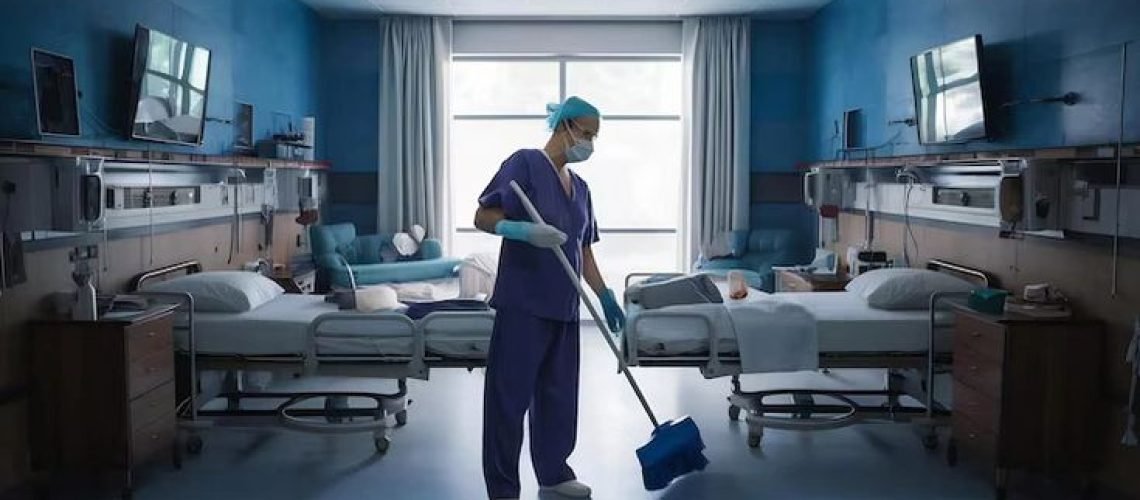
A clean clinic or pharmacy needs more than a pleasant smell, shiny floors and neatly arranged shelves.
These facilities handle patients, medicines, medical equipment and frequently touched surfaces throughout the day. Without a structured cleaning system, harmful microorganisms can spread between patients, healthcare workers, visitors and the surrounding environment.
Hospital-grade cleaning is a planned approach to environmental cleaning and disinfection. It combines trained personnel, appropriate products, risk-based cleaning schedules, safe work procedures and regular monitoring. For clinics and pharmacies in Nigeria, getting these elements right helps protect customers, support healthcare workers and maintain confidence in the facility.
However, hospital-grade cleaning does not mean spraying strong chemicals everywhere. Effective cleaning depends on choosing the correct product for each surface, following its instructions and ensuring that trained people complete and document the work.
What Does Hospital-Grade Cleaning Actually Mean?
Hospital-grade cleaning refers to a systematic process designed for healthcare environments. Unlike ordinary domestic cleaning, it considers the risk of contamination, the vulnerability of people using the facility and how frequently surfaces come into contact with patients or staff.
A clinic, for example, may have consultation rooms, waiting areas, treatment spaces, toilets, medicine storage areas and reception counters. Each space has different cleaning requirements.
A waiting-room floor may need routine cleaning, while a treatment couch, examination surface or frequently handled medical device may require cleaning and disinfection between patients, according to the facility’s infection-prevention procedures.
Pharmacies also have specific needs. Staff regularly handle medicine packages, payment terminals, counters, shelves and storage areas. Although these spaces may not have the same risks as a treatment room, they still require consistent hygiene practices.
The important distinction is that cleaning removes dirt and many germs, while disinfection uses an appropriate chemical product to kill specified microorganisms on a surface. One process does not automatically replace the other.
1. Start With a Proper Assessment of the Facility
Before a cleaning team begins work, someone should assess the premises and identify the areas that require attention.
The assessment should consider:
- The number of patients, customers and employees using each area.
- Surfaces that people touch frequently.
- Areas where blood, body fluids or other potentially infectious materials may be present.
- Equipment that staff share between patients.
- Toilets, handwashing stations and waste collection points.
- Surfaces that require special care because of their material or manufacturer instructions.
For example, a clinic’s reception counter may receive frequent contact from patients and staff. Door handles, chair arms, payment terminals and light switches also deserve attention because many people touch them throughout the day.
By contrast, a ceiling or high window may not require the same cleaning frequency as a treatment couch or examination table.
A risk-based assessment helps the facility avoid two common mistakes: overlooking important surfaces and wasting resources disinfecting every surface at the same frequency.
2. Use the Right Cleaning and Disinfection Products
The strength of a cleaning chemical does not determine how suitable it is for a healthcare facility. A product must be appropriate for the surface, the intended use and the microorganisms it claims to control.
A cleaning team should understand the difference between detergents, sanitising products and disinfectants. Detergents help remove dirt and organic material. Disinfectants are designed to kill specified microorganisms when used correctly. Some products combine cleaning and disinfecting functions, but staff must still follow the label instructions.
Before using a product, check:
- Whether it is suitable for the intended surface.
- The correct dilution, if dilution is required.
- The required contact time.
- Whether the product needs rinsing after use.
- Its storage instructions and expiry date.
- Any protective equipment required during application.
Never assume that a stronger mixture will produce better results. Incorrect dilution can damage surfaces, expose workers to harmful chemicals or reduce the product’s effectiveness.
Staff should also avoid mixing cleaning chemicals. Combining bleach with acids or ammonia-containing products, for instance, can release dangerous gases. Keep products in their original or properly labelled containers and store them away from medicines, food and public access.
3. Train Cleaning Staff in Healthcare Procedures
A cleaning team needs practical training before working in a clinic or pharmacy. Staff should know how to use equipment, handle chemicals, wear appropriate personal protective equipment and respond to spills.
Training should cover hand hygiene, safe removal of gloves, cleaning sequence, colour-coded cloth systems where used, waste handling and procedures for reporting hazards.
One particularly important principle is to work from cleaner areas towards dirtier areas. This reduces the chance of transferring contamination from toilets or visibly soiled surfaces to cleaner spaces.
Staff should also avoid reusing a cloth across multiple surfaces without the required cleaning or replacement process. Repeatedly dipping a dirty cloth into a shared cleaning solution can contaminate the solution and spread microorganisms.
A well-trained cleaner understands that completing a room quickly is not the same as cleaning it properly. Every task needs a defined method and enough time for the disinfectant to work.
4. Pay Particular Attention to High-Touch Surfaces
High-touch surfaces deserve more frequent attention because staff, patients and visitors handle them repeatedly.
In a clinic, these may include:
- Examination beds and patient chairs.
- Bed rails and bedside tables.
- Door handles and light switches.
- Reception counters.
- Handwashing taps and dispensers.
- Shared equipment handles.
- Frequently handled control panels and keyboards.
In a pharmacy, priority surfaces may include dispensing counters, payment terminals, door handles, staff workstations and other frequently touched areas.
The exact cleaning frequency should follow the facility’s risk assessment and infection-prevention policy. Surfaces that come into contact with patients or are contaminated during care may require cleaning and disinfection between uses.
Floors, walls and other lower-touch surfaces still need routine attention. However, disinfecting every square metre repeatedly is not necessarily the most effective use of time or resources.
5. Follow a Documented Cleaning Schedule
A cleaning schedule makes responsibilities clear and reduces the risk of missed tasks. It should identify the area, the surface, the cleaning method, the frequency and the person responsible.
A simple schedule might look like this:
| Area | Cleaning priority | Record required |
|---|---|---|
| Reception counter | Frequent cleaning based on use and visible soiling | Daily checklist |
| Consultation room | Patient-contact surfaces cleaned according to procedure | Between-patient and daily records |
| Shared equipment | Clean and disinfect according to manufacturer and facility instructions | Equipment log |
| Toilets | Frequent cleaning and disinfection, with checks throughout the day | Toilet inspection log |
| Pharmacy counters | Routine cleaning, with additional attention to high-touch areas | Daily checklist |
| Floors | Routine cleaning and prompt attention to spills | Cleaning log |
This is an example of how a facility can organise its work, not a universal frequency schedule. A clinic should adapt its procedures to its services, patient population, local requirements and infection-prevention advice.
For better accountability, supervisors should check completed tasks rather than relying only on verbal confirmation. A signed checklist, time record or digital log can show whether staff followed the agreed procedure.
6. Handle Medical Waste and Contaminated Materials Safely
Cleaning staff should never treat every waste item as ordinary rubbish. Healthcare facilities generate different types of waste, and each category requires handling under the facility’s waste-management procedures and applicable Nigerian requirements.
Sharps such as needles and blades must go into suitable puncture-resistant sharps containers. Staff should never pick up exposed needles with their hands or place them in ordinary waste bags.
Blood or body-fluid spills require a designated response procedure. Staff should use the appropriate protective equipment, follow the facility’s approved spill-cleaning method and dispose of contaminated materials correctly.
Used cloths, mop heads and other reusable cleaning equipment also need proper handling. They should not be left soaking in dirty buckets or carried from contaminated areas into clean spaces without the required reprocessing.
Where a spill exceeds the cleaner’s training or available equipment, the person should secure the area and notify the appropriate healthcare or infection-prevention personnel.
7. Protect Patients, Staff and Cleaning Personnel
A safe cleaning programme protects the people doing the cleaning as well as those receiving healthcare.
Depending on the task, protective equipment may include suitable gloves, aprons, eye protection and masks or respirators specified by the facility’s risk assessment. Staff need training on when to use each item and how to remove it safely.
Cleaning should also take place in a way that minimises disruption to patient care. Wet floors need warning signs, chemicals must remain away from patients and medicine products, and equipment should not block emergency routes.
Importantly, clinics and pharmacies should not rely on strong fragrances to create the impression of cleanliness. A pleasant smell does not demonstrate that a surface has been properly cleaned or disinfected.
8. Monitor Results and Improve the System
A cleaning programme needs regular supervision. Managers should inspect rooms, review checklists, confirm that supplies are available and address repeated problems.
Useful checks include:
- Whether staff followed the correct cleaning sequence.
- Whether the correct product was used.
- Whether the required contact time was observed.
- Whether high-touch surfaces were included.
- Whether cleaning equipment was properly maintained.
- Whether waste was separated and removed correctly.
Where appropriate, facilities can use objective monitoring methods, such as fluorescent markers or other approved assessment tools, to check whether surfaces were cleaned thoroughly.
Feedback should be practical. If staff repeatedly miss a particular area, managers should investigate whether the schedule is unclear, supplies are poorly positioned or workloads are unrealistic.
Choosing a Professional Cleaning Partner
Clinics and pharmacies that outsource cleaning should look beyond the lowest quotation. Ask prospective providers about staff training, supervision, product selection, equipment, documented procedures and experience working in healthcare environments.
A reliable provider should be willing to explain how it will protect patients, staff and visitors while maintaining consistent standards. The facility must also retain responsibility for its infection-prevention policies and ensure that cleaning arrangements meet its operational and regulatory obligations.
A Cleaner Facility Requires a System, Not Just Supplies
Hospital-grade cleaning is not achieved by buying expensive disinfectants or assigning someone to mop the floor every morning. It requires a clear understanding of risk, trained staff, suitable products, documented procedures and regular checks.
For clinics and pharmacies, these measures support a safer environment and a more professional patient experience. When cleaning becomes part of the facility’s daily safety culture, it stops being an occasional housekeeping task and becomes an essential part of quality healthcare.
