

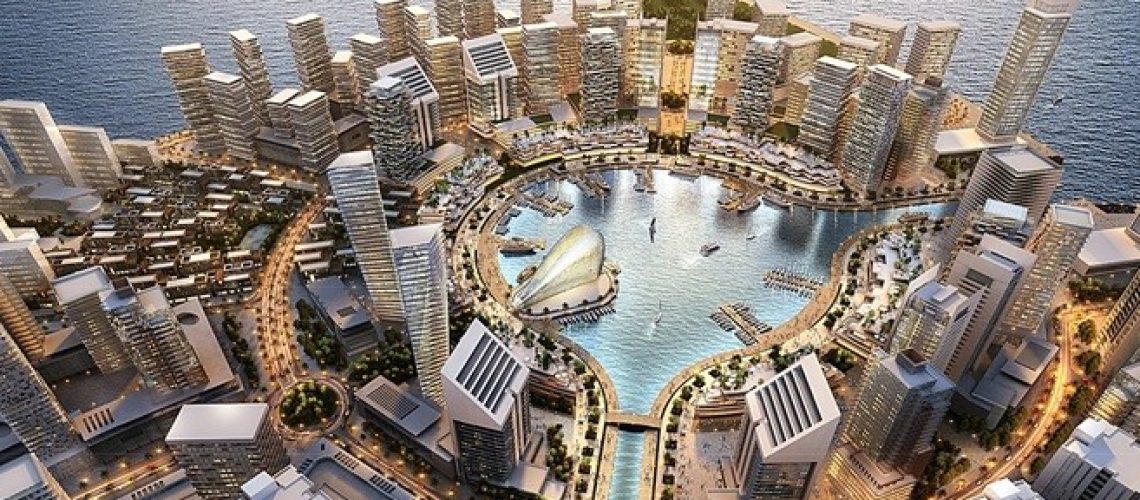
African cities are growing rapidly.
As populations increase, more people move into urban areas in search of jobs, education, business opportunities, and better services. This growth is changing how neighborhoods are designed and how people interact with their surroundings.
One of the most noticeable changes is the rise of mixed-use developments. Instead of separating homes, offices, shops, restaurants, entertainment venues, and public spaces into different areas, mixed-use developments bring several of these functions together.
From Lagos and Nairobi to Accra, Kigali, Johannesburg, and other growing African cities, this approach is gradually reshaping urban life.
What Are Mixed-Use Developments?
A mixed-use development combines different types of properties and services within the same building, complex, or neighborhood.
For example, a single development might include:
- Apartments or residential buildings
- Offices and co-working spaces
- Supermarkets and retail stores
- Restaurants and cafés
- Fitness centers
- Schools or childcare facilities
- Entertainment spaces
- Parking facilities
- Green areas and public gathering spaces
The idea is simple: bring more of the things people need closer to where they live and work.
This model can make neighborhoods more convenient while reducing the need for residents to travel long distances for everyday activities.
Reducing the Distance Between Home and Work
One of the biggest advantages of mixed-use developments is that they can bring residential and commercial activities closer together.
In many African cities, long commuting times have become a major challenge. Workers may spend hours travelling between residential neighborhoods and business districts because housing, offices, markets, and services are located far apart.
Mixed-use neighborhoods offer another approach.
A person could live in an apartment above a retail area, work in an office within the same development, and have access to restaurants, supermarkets, banks, or fitness facilities nearby.
This does not eliminate traffic, but it can reduce some unnecessary journeys and make daily routines more efficient.
Supporting Local Businesses
Mixed-use developments can also create opportunities for entrepreneurs and small businesses.
A neighborhood with hundreds or thousands of residents provides a built-in customer base for businesses such as:
- Restaurants
- Convenience stores
- Salons and barbershops
- Laundry services
- Pharmacies
- Fitness centers
- Cafés
- Childcare services
- Repair businesses
- Professional services
This creates an environment where businesses can benefit from regular foot traffic instead of depending entirely on customers travelling from distant neighborhoods.
For African entrepreneurs, this can create new opportunities to serve increasingly urban and digitally connected consumers.
Changing the Way People Experience Neighborhoods
Traditional urban planning often separates different activities. Residential areas may be far from shopping districts, while offices may be concentrated in central business districts.
Mixed-use developments encourage a different lifestyle.
People can walk from their homes to shops, restaurants, workplaces, and recreational spaces. This can make neighborhoods feel more active throughout the day.
A development that combines residential buildings with cafés, offices, shops, and public spaces may attract people in the morning for work, during the afternoon for shopping, and in the evening for dining and entertainment.
As a result, neighborhoods can become more socially active and economically vibrant.
Encouraging Walkable Communities
Walkability is becoming increasingly important as African cities search for ways to improve urban mobility.
When essential services are located close to homes, residents may have fewer reasons to use cars or public transportation for short trips.
Well-designed mixed-use communities can include sidewalks, pedestrian pathways, bicycle facilities, shaded areas, and public spaces.
This can make short-distance movement easier and encourage residents to spend more time within their neighborhoods.
However, walkability depends heavily on good design. A development may technically contain many different uses but still be difficult to navigate if it lacks safe pedestrian routes, adequate lighting, shade, or accessible entrances.
Creating New Social Spaces
Mixed-use developments are not only about buildings. They can also create spaces where people interact.
Public courtyards, parks, cafés, plazas, community centers, and entertainment areas can become meeting points for residents.
This is particularly important in rapidly growing cities where traditional community spaces may be disappearing because of urban expansion.
A thoughtfully designed neighborhood can provide opportunities for people to meet their neighbors, attend events, support local businesses, and build stronger social connections.
Improving Access to Everyday Services
Another major benefit is convenience. Residents do not necessarily have to travel across the city to access basic services. A mixed-use development may provide groceries, healthcare services, restaurants, banking facilities, fitness centers, and other necessities within a short distance.
This can be particularly valuable for busy professionals, families, older residents, and people who do not own private vehicles.
The convenience factor also reflects changing consumer expectations. Urban residents increasingly value experiences that save time and reduce unnecessary travel.
Supporting More Efficient Land Use
African cities face growing pressure to accommodate expanding populations while making efficient use of limited urban land.
Mixed-use development can help cities make better use of strategically located land.
Instead of having a large plot dedicated exclusively to offices or housing, developers can combine several uses within one area.
Vertical development can also contribute to this approach. Apartments, offices, shops, and entertainment spaces can occupy different floors of the same building.
When planned carefully, this can support higher-density urban environments without requiring cities to expand endlessly outward.
The Growth of Modern Urban Hubs
Some African cities are developing large lifestyle and business districts that combine residential, commercial, hospitality, and entertainment functions.
These developments are changing the meaning of a neighborhood. A neighborhood is no longer simply a collection of houses and streets. It can become an integrated ecosystem where people live, work, shop, relax, and socialize.
This trend is particularly visible in major economic centers where demand for modern housing, office space, retail experiences, and hospitality services continues to grow.
Technology Is Making Mixed-Use Neighborhoods Smarter
Technology is also becoming part of modern mixed-use developments.
Smart access systems, digital payments, security technologies, energy monitoring, delivery management, mobile applications, and intelligent parking systems can improve the resident experience.
Some developments are also incorporating smart energy systems, solar power, water-management technologies, and digital building-management platforms.
These technologies can make properties more efficient while giving residents greater control over everyday services.
For African cities facing infrastructure challenges, smart technology could become an important part of building more resilient urban communities.
Challenges That Need Attention
Despite their advantages, mixed-use developments are not automatically beneficial.
One major concern is affordability. High-end mixed-use developments may target wealthier residents and businesses while excluding lower-income households.
If this pattern becomes widespread, cities could experience greater inequality between communities with access to modern infrastructure and those without it.
There can also be concerns about traffic, overcrowding, rising property prices, inadequate public transport connections, and pressure on existing infrastructure.
Developers and city authorities therefore need to consider the broader community rather than focusing only on the development itself.
Making Mixed-Use Development More Inclusive
For mixed-use developments to contribute positively to African cities, affordability and accessibility should be part of the planning process.
Developments can include different housing options, affordable commercial spaces, public areas, accessible transportation connections, and community facilities.
City planners should also consider how new developments connect with surrounding neighborhoods.
A modern complex should not become an isolated island surrounded by poor roads and inadequate infrastructure. Instead, it should form part of a wider urban network.
What the Future Could Look Like
As African cities continue to grow, mixed-use development is likely to become an increasingly important part of urban planning.
Future neighborhoods may combine homes, workplaces, retail spaces, schools, healthcare services, entertainment, green spaces, public transportation, and digital infrastructure within interconnected communities.
The most successful developments will not simply focus on impressive buildings. They will focus on how people actually live.
They will prioritize convenience, accessibility, sustainability, affordability, safety, and community.
Conclusion
Mixed-use developments are changing African neighborhoods by bringing homes, businesses, services, entertainment, and public spaces closer together.
They can reduce unnecessary travel, support local businesses, encourage walkability, create social spaces, and make better use of urban land. At the same time, cities must address challenges around affordability, infrastructure, inclusion, and equitable access.
Africa’s urban future will require more than simply building bigger cities. It will require building better-connected communities.
When mixed-use developments are planned with residents at the center, they can help create African neighborhoods that are more convenient, vibrant, sustainable, and prepared for the future.
