

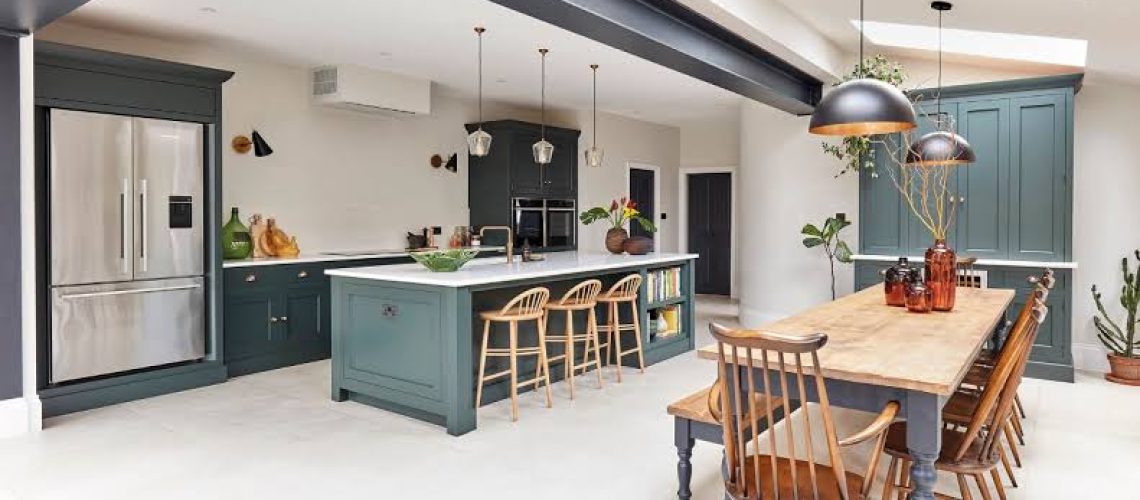
A family dining area should be more than a place where people sit down to eat.
It can become a comfortable space for conversations, homework, celebrations, and everyday family routines. Whether you have a large dining room or a small corner in an apartment, thoughtful planning can make the space more practical.
1. Choose the Right Table Size
Start with a table that fits both your family and your available space. A table that is too large can make movement difficult, while a very small one may become uncomfortable during family meals.
For smaller homes, consider:
- Extendable dining tables
- Round or oval tables
- Foldable tables
- Compact four-seater tables
Leave enough room around the table for people to pull out their chairs and move comfortably.
2. Prioritize Comfortable Seating
Dining chairs should provide enough support for adults and children. If family members spend a long time around the table, uncomfortable chairs can make the space less inviting.
You can also mix seating styles. For example, a bench can accommodate children while taking up less space than several individual chairs.
For families with young children, choose materials that are easy to wipe and clean.
3. Make Storage Easily Accessible
A functional dining area needs storage for items that are regularly used during meals.
Consider adding:
- A sideboard or cabinet
- Open shelves
- A small serving trolley
- Baskets for napkins and table linens
- Drawers for cutlery and serving utensils
Keeping these items close to the dining area reduces unnecessary trips to the kitchen.
4. Keep the Dining Table Practical
Avoid covering the table with too many decorative items. A large centrepiece may look attractive but can interfere with conversations and serving food.
Instead, use simple decorations such as a small vase, fruit bowl, or low centrepiece.
The goal is to keep most of the table surface available for food, plates, drinks, homework, or other family activities.
5. Improve Lighting
Good lighting can change the atmosphere of a dining area.
Use bright, comfortable lighting for everyday meals and softer lighting when you want a more relaxed atmosphere. Pendant lights can work particularly well above dining tables, while wall lights can provide additional illumination.
Make sure the light is positioned high enough that it does not obstruct people’s views across the table.
6. Create a Family-Friendly Layout
Think about how people actually use the space. Children should be able to move between the table and other parts of the home without constantly bumping into furniture.
Keep walkways clear and avoid placing unnecessary furniture around the dining table.
If your dining area connects directly to the kitchen, leave enough space for people to move between both areas while food is being prepared and served.
7. Use Easy-to-Clean Materials
Family dining areas experience spills, crumbs, stains, and everyday wear. Choose materials that can handle regular use.
Washable table runners, wipeable chairs, durable flooring, and easy-to-clean surfaces can reduce maintenance.
For families with children, practicality should usually come before delicate decoration.
8. Give Children Their Own Space
If children regularly eat, draw, or do homework at the dining table, create an environment that accommodates these activities.
You might keep a small storage basket nearby for:
- Children’s books
- Drawing materials
- Homework supplies
- Reusable water bottles
- Placemats
This helps prevent the dining table from becoming permanently cluttered.
9. Make the Space Multi-Purpose
A dining area does not have to serve only one function. In many African homes, especially where space is limited, the same table may serve several purposes throughout the day.
It can become a place for:
- Family meals
- Homework
- Remote work
- Weekend planning
- Games
- Family discussions
- Small celebrations
Choose furniture that can comfortably support these different activities.
10. Encourage Family Interaction
The arrangement of the dining area can influence how often family members interact.
Position seats so that people can easily see and speak to one another. During meals, try to keep phones and unrelated distractions away from the table when possible.
A comfortable dining space can encourage families to spend more time together and create regular opportunities for conversation.
11. Add Personal Touches
Finally, make the dining area feel like part of your home. Family photographs, artwork, locally made décor, colourful tableware, or traditional pieces can give the space personality.
You do not need expensive furniture to create an attractive dining area. A clean layout, suitable lighting, comfortable seating, and thoughtful organisation can make a significant difference.
Conclusion
Creating a functional family dining area is mainly about understanding how your household uses the space. Choose furniture that fits the room, provide practical storage, maintain clear walkways, and select materials that can handle everyday family life.
Most importantly, design the area around people rather than decoration. A good dining space should make it easy for family members to eat, talk, work, celebrate, and spend meaningful time together.
