

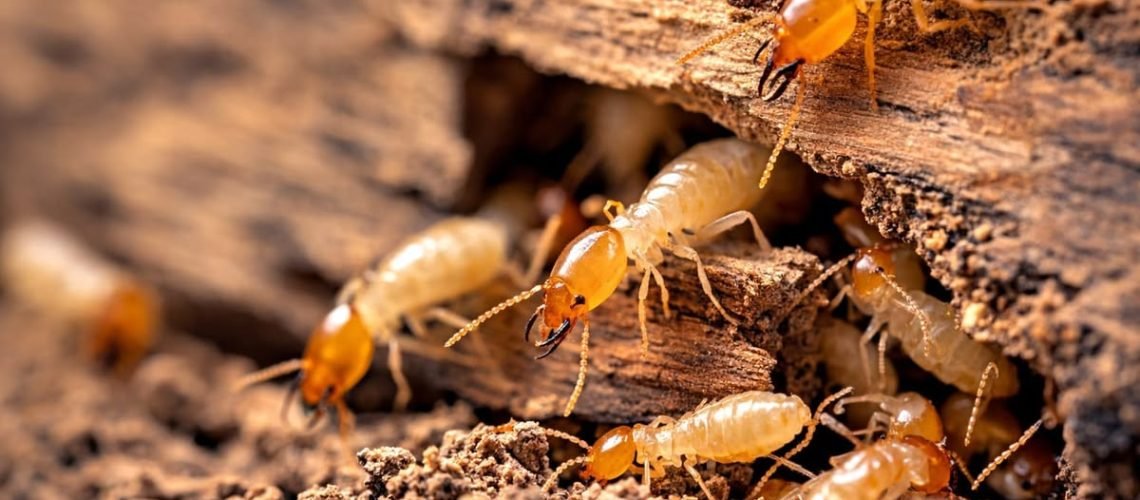
Termites can damage a home quietly for months before anyone notices.
They feed on materials containing cellulose, especially wood, paper and cardboard. By the time you see hollow doors, damaged furniture or mud tubes along a wall, the colony may already have spread.
In Nigeria, termites can become a serious problem in homes with untreated timber, damp areas, poor drainage and wooden fittings that touch the soil. The good news is that early detection, moisture control and professional treatment can help protect your property.
However, simply spraying insects you can see is rarely enough. Termites often live inside walls, underground or within wooden structures. To deal with an infestation properly, you need to identify the signs, understand where the termites are coming from and choose an appropriate treatment.
1. Learn to Recognise the Signs of Termites
Termites are not always easy to spot. Some species remain hidden inside wood, while others build visible mud tubes to travel between their nests and food sources.
Look out for these warning signs:
- Mud tubes: Narrow, brown tunnels running along foundations, walls, pipes or wooden structures. Termites use them to travel while protecting themselves from exposure.
- Hollow-sounding wood: Wooden doors, frames, cupboards and furniture may sound empty when tapped because termites have eaten the inside.
- Damaged timber: Look for blistering paint, weak wooden surfaces, sagging fittings or small holes.
- Discarded wings: Swarming termites may shed their wings after leaving a colony to establish new nests.
- Termite droppings: Some drywood termites leave tiny pellets that resemble grains of sand or sawdust.
- Damaged paper or cardboard: Stored cartons, books and documents can attract termites.
Do not assume that every pile of sawdust or damaged wooden surface means termites are present. Other insects and moisture-related decay can cause similar problems. If you are unsure, arrange an inspection.
2. Find the Source Before Treating the Problem
A common mistake is to kill the termites visible on the surface without investigating the colony.
Check areas where timber meets the ground, including door frames, wooden fence posts, garden structures and stored building materials. Inspect damp corners, leaking plumbing, bathrooms, kitchens and areas around external walls.
If you find mud tubes, do not immediately destroy every tube before an inspection. Their location can help a pest-control professional trace termite activity. You can photograph the tubes and mark where you found them.
Also inspect nearby trees, old stumps, wooden waste and cardboard stored against the building. These materials may provide food or shelter.
3. Remove Conditions That Attract Termites
Termites need food and moisture to thrive. You may not be able to eliminate every possible termite source around your property, but you can make your home less attractive.
Start with moisture control:
- Repair leaking taps and pipes.
- Fix damaged roof coverings and gutters.
- Clear blocked drainage channels.
- Improve ventilation in damp storage areas.
- Keep water from collecting around the foundation.
- Direct air-conditioner drainage away from the building.
Next, reduce access to food sources. Remove unnecessary cardboard, paper piles, fallen branches and untreated wood from around the house. Store firewood away from the building and raise it above the ground.
Avoid allowing wooden structures to sit directly on soil where possible. During construction or renovation, use suitable termite-resistant design details and professionally specified timber treatments.
4. Understand the Main Termite Treatment Options
The correct treatment depends on the termite species, location of the colony, extent of damage and construction of the property.
Common approaches include:
Liquid soil treatments: Pest-control professionals may apply approved termiticides to suitable soil areas around or beneath a building. The aim is to create a treated zone that helps prevent termites from reaching the structure.
Baiting systems: Termite bait stations use specially formulated products that worker termites carry back to the colony. The treatment may take time, so it requires monitoring and correct placement.
Wood treatments: Certain products can protect suitable timber or treat accessible infestations. They must be appropriate for the intended use and applied according to the label.
Structural repairs and replacement: Severely damaged wood may need replacement after the infestation has been controlled. Covering damaged timber with fresh paint does not solve the underlying problem.
Do not buy an agricultural chemical or household insect spray and assume it will work against termites. Some products only kill insects on contact and do not reach the colony.
5. When Should You Call a Professional?
A professional inspection is especially important when you notice several signs of activity, repeated infestations or damage to structural timber.
Contact a qualified pest-control provider if:
- Mud tubes appear in several parts of the building.
- Termites keep returning after treatment.
- Roof supports, floorboards or major wooden fittings appear damaged.
- You suspect termites inside walls or beneath floors.
- You are preparing to treat a newly built or renovated property.
- You cannot identify the insect causing the damage.
Ask the provider to inspect the property before recommending treatment. A reliable company should explain the suspected termite type, treatment method, preparation requirements, safety precautions and follow-up arrangements.
Request a written quotation. Check whether the price includes inspection, treatment, monitoring and any warranty. Be cautious of anyone who guarantees permanent protection without examining the property.
6. Protect Your Family During Treatment
Pest-control chemicals can pose risks when people apply them incorrectly. Children, pets and anyone with respiratory sensitivities may need additional precautions.
Before treatment, ask the provider:
- Which product will be used?
- Is it approved for the intended application?
- How should the family prepare the property?
- Must residents leave during application?
- When is it safe to return?
- How should treated areas be cleaned or maintained?
Follow the product label and the professional’s instructions. Never mix chemicals or increase the recommended concentration. Avoid using petrol, diesel, kerosene or other improvised substances to kill termites. These can create fire, poisoning and environmental hazards.
Keep children and pets away from treated areas until the provider confirms that access is safe.
7. Prevent Another Infestation
Once you have dealt with the termites, keep checking your property. Prevention is not a one-time activity, particularly in areas where termites are common.
Create a simple inspection routine:
| Area to inspect | What to look for |
|---|---|
| Door and window frames | Hollow wood, blistering or mud tubes |
| Kitchen and bathrooms | Leaks, damp cupboards and hidden timber damage |
| Roof and ceiling | Damaged supports, moisture and droppings |
| Store rooms | Cardboard piles, paper and untreated wood |
| Exterior walls | Mud tubes, poor drainage and soil contact |
| Garden and fence | Old stumps, wooden posts and fallen branches |
Inspect more frequently if your property has previously experienced termite activity. After heavy rainfall or plumbing repairs, check for new damp areas.
If you are building or renovating, discuss termite protection with your architect, builder or pest-control specialist before covering foundations and other hard-to-access areas.
8. Do Not Ignore Structural Damage
Termites can weaken wooden doors, furniture, roof components and other parts of a building. If you suspect damage to a load-bearing component, do not attempt to assess its safety by tapping it alone.
Ask a qualified building professional or structural engineer to inspect serious damage. Treating the termites does not automatically restore the strength of timber that has already been eaten.
You may need to replace damaged wood, repair affected fittings or reinforce parts of the structure. Complete these repairs after the pest-control provider has addressed the infestation and advised on the appropriate timing.
Protect Your Home Before the Damage Spreads
Termites are easier to manage when you identify them early. Watch for mud tubes, hollow wood and discarded wings. Keep the property dry, remove unnecessary wood and cardboard, and arrange professional treatment when the infestation goes beyond a minor, identifiable issue.
Most importantly, do not confuse killing the visible termites with eliminating the source. A proper inspection and suitable treatment can protect your home far more effectively than repeated spraying.
Frequently Asked Questions
1. What is the fastest way to get rid of termites?
The fastest appropriate method depends on the termite species and where the colony is located. A qualified pest-control professional can inspect the property and recommend suitable treatment. Surface spraying alone may not eliminate a hidden colony.
2. Can termites destroy a house in Nigeria?
Termites can seriously damage wooden components, furniture, doors, roof supports and other cellulose-based materials. The extent of damage depends on the species, infestation size, building materials and how long the colony remains undetected.
3. Does diesel kill termites?
Diesel may kill some termites on contact, but it is not a safe or reliable colony-control method. It can create fire, health and environmental hazards. Use approved treatments applied according to their labels by qualified professionals.
4. How can I prevent termites in my home?
Control leaks and dampness, improve drainage, remove unnecessary cardboard and untreated wood, keep timber away from soil where practical, and inspect vulnerable areas regularly.
5. Should I replace wood damaged by termites?
Severely damaged timber may need replacement, especially if it supports part of the building. Have a qualified professional assess structural damage and complete repairs after the infestation has been properly treated.
