

Carpets and rugs make a home feel warmer, more comfortable and inviting.
They also collect dust, trap dirt and absorb spills from everyday activities. A dropped cup of coffee, a splash of cooking oil or muddy footprints can quickly turn a beautiful carpet into an eyesore.
The good news is that many stubborn stains can be removed without expensive equipment. However, success depends on using the right cleaning method, acting promptly and avoiding products that could damage the fabric.
For Nigerian households, where carpets face everything from muddy shoes during the rainy season to food spills during family gatherings, practical stain removal skills can save money and extend the life of floor coverings.
Here is how to remove tough stains from carpets and rugs safely and effectively.
1. Identify the Stain Before Cleaning
Before reaching for a cleaning product, determine what caused the stain. Different substances require different treatments. Water-based spills, oily marks and protein-based stains do not respond equally to every cleaning solution.
For example, coffee and soft drinks often respond to gentle detergent solutions. Cooking oil requires a method that helps lift grease, while blood and other protein-based stains generally need cold water rather than hot water.
You should also identify the carpet material. Wool, cotton, synthetic fibres and delicate handmade rugs have different cleaning requirements. Some natural dyes may bleed when exposed to moisture.
Check the manufacturer’s care instructions before proceeding. When the material is unknown or particularly valuable, consult a professional cleaner rather than risk permanent damage.
2. Blot Fresh Spills Immediately
Time matters when dealing with carpet stains. The longer a spill remains, the deeper it may penetrate the fibres and backing.
Start by removing any solid material with a spoon or blunt edge. Work carefully to avoid pushing the substance further into the carpet.
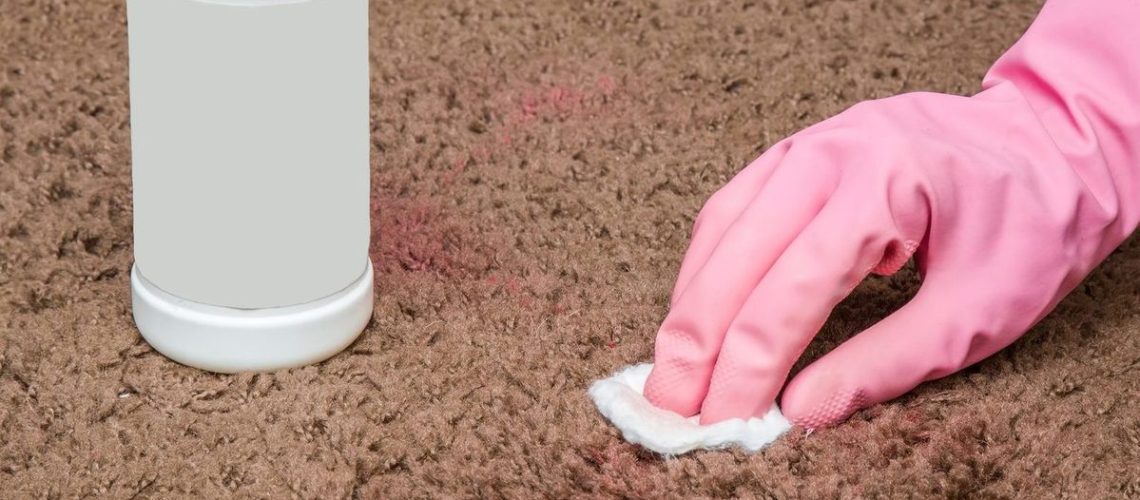
Next, use a clean, white cloth or paper towel to blot the affected area. Press gently to absorb the liquid, working from the outside towards the centre. This approach helps prevent the stain from spreading.
Avoid rubbing aggressively. Scrubbing can damage carpet fibres and force the stain deeper into the material.
Continue blotting with a clean section of the cloth until little or no additional liquid transfers. Then use the appropriate treatment for the particular stain.
3. Remove Coffee and Tea Stains
Coffee and tea spills are common in homes and offices. These drinks can leave noticeable brown marks, especially when they contain milk or sugar.
First, blot the spill to absorb as much liquid as possible. Mix a small amount of mild, clear dishwashing detergent with cool or lukewarm water. Test the solution on a hidden area before applying it to the stain.
Dampen a clean cloth with the solution and gently blot the affected area. Avoid soaking the carpet, as excess moisture can encourage odours and damage the backing.
Use another cloth dampened with clean water to remove detergent residue. Finally, press a dry towel against the area and allow it to air-dry completely.
If the coffee contained milk, clean the area thoroughly to reduce the risk of lingering smells. Persistent stains may require a carpet-safe commercial cleaner.
4. Tackle Grease and Cooking Oil
Cooking oil, butter and greasy food can leave stubborn marks on carpets. These stains are particularly challenging because oil does not mix easily with water.
Begin by lifting away any solid food without spreading it. Sprinkle a small amount of baking soda or another suitable absorbent powder over the oily patch, provided the carpet manufacturer permits it.
Allow the powder to sit briefly so it can absorb some of the grease. Vacuum it up carefully, ensuring the powder is suitable for your vacuum cleaner.
Next, apply a small amount of diluted, clear dishwashing detergent to a cloth. Blot the stain gently, then remove the soap with a separate cloth dampened with clean water.
Repeat if necessary, but avoid flooding the carpet. If the grease remains, use a carpet-safe degreasing product according to its instructions.
5. Clean Mud and Dirt Marks
Mud often enters homes through shoes, children’s play and pets. Attempting to clean wet mud immediately can spread it across a larger area.
Instead, allow the mud to dry where practical. Once dry, gently break up the material and vacuum the loose dirt.
Mix a little mild detergent with water and test it on an inconspicuous section. Blot the remaining mark with a damp cloth, working from the outer edge towards the centre.
Use a second cloth with clean water to remove residue. Then blot with a dry towel and allow the carpet to dry fully.
To reduce future mud stains, place sturdy doormats at entrances and encourage family members to remove dirty footwear before walking across carpeted areas.
6. Deal With Blood and Other Protein-Based Stains
Blood, egg and similar protein-based spills need careful handling. Hot water can cause proteins to set into fibres, making the stain harder to remove.
Use a clean cloth dampened with cold water to blot the affected area. Never rub aggressively, as this may spread the stain.
For washable, colourfast carpets, apply a small amount of mild detergent diluted in cold water. Blot gently, then remove the solution with a clean, damp cloth.
Repeat until the mark fades. Afterwards, use a dry towel to absorb excess moisture.
For valuable wool rugs, delicate fabrics or persistent blood stains, professional cleaning is often the safer option. If the stain involves bodily fluids, wear disposable gloves and follow appropriate hygiene precautions.
7. Remove Ink and Paint Stains Carefully
Ink and paint can be difficult to remove because their ingredients vary. Water-based paint may respond to careful blotting with water, while permanent ink and oil-based paint often require specialised treatment.
For a fresh water-based paint spill, remove excess material without rubbing it into the fibres. Blot gently with a cloth dampened with water, provided the carpet is compatible with this treatment.
For ink, begin by checking the manufacturer’s cleaning recommendations. Use only a carpet-safe product specifically intended for the type of ink involved.
Never pour nail polish remover, bleach, petrol or an untested solvent directly onto a carpet. These substances may damage fibres, strip colour or create hazardous fumes.
If the stain persists, contact a professional carpet cleaner before experimenting with stronger chemicals.
8. Prevent Stains From Returning
Removing the visible mark is only part of the job. Cleaning residue can attract dirt, causing a previously treated area to become dirty again.
After cleaning, remove detergent residue with a lightly dampened cloth, provided the carpet’s care instructions allow it. Blot away excess moisture and let the area dry completely.
Keep people and pets away until the carpet is dry. Open windows or use a fan to improve ventilation when appropriate.
Avoid soaking the carpet, especially if it sits on a wooden floor or has a moisture-sensitive backing. Excess water can encourage mould growth and create unpleasant odours.
Regular vacuuming, prompt spill treatment and periodic deep cleaning can help carpets stay fresh for longer.
9. Know When to Call a Professional
Some stains require more than household cleaning methods. Large spills, old stains, persistent odours and marks on delicate rugs may need specialised equipment and professional expertise.
Professional cleaners can assess the material, select suitable treatments and extract embedded dirt more effectively than basic surface cleaning.
This option is particularly useful for expensive rugs, wool carpets and items with sentimental value. It can also prevent repeated DIY attempts from causing permanent damage.
When choosing a cleaning service, ask about its experience with your carpet type, cleaning products and drying procedures. A reliable provider should explain the proposed treatment and any risks before beginning work.
Conclusion
Knowing how to remove tough stains from carpets and rugs can save money, reduce waste and keep your home looking its best. The key is to identify the stain, blot spills quickly and choose a cleaning method that suits the carpet material.
Coffee, grease, mud and everyday food spills often respond to simple treatments when handled correctly. However, ink, paint, old stains and delicate fabrics may require specialised care.
Most importantly, avoid aggressive scrubbing, excessive moisture and harsh chemicals that could make the problem worse. Test cleaning solutions on hidden areas first, follow the manufacturer’s instructions and allow cleaned sections to dry thoroughly.
With consistent care and the right techniques, you can keep your carpets and rugs cleaner, fresher and more inviting without replacing them every time an accident happens.
