

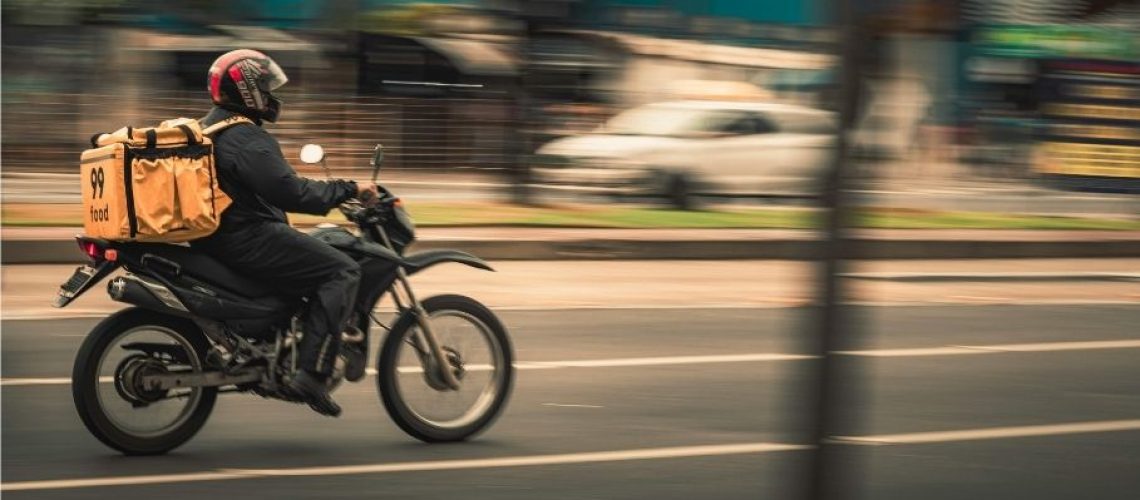
Across many African cities and towns, motorcycles have become an important part of everyday commerce.
They move food, parcels, documents, medicines, groceries, and other goods from businesses to customers. As e-commerce continues to develop across the continent, businesses increasingly need delivery systems that can navigate busy roads, narrow streets, traffic congestion, and areas with limited transport infrastructure. Motorcycles often provide a practical solution.
From Lagos and Accra to Nairobi and Kampala, motorcycle delivery services now support restaurants, online retailers, pharmacies, supermarkets, small businesses, and logistics companies.
But what makes motorcycles so useful for last-mile commerce in Africa?
What Is Last-Mile Commerce?
Last-mile commerce refers to the final stage of moving a product from a business or distribution point to the customer. For example, imagine a customer ordering groceries through an online platform. A retailer prepares the order and sends it to a nearby delivery hub. From there, a motorcycle rider takes the package to the customer’s home.
That final journey represents the last mile.
Although the distance may seem short, businesses often face their greatest delivery challenges during this stage. Traffic, poor road conditions, unclear addresses, parking limitations, and changing customer locations can all slow down deliveries.
Therefore, businesses need flexible transportation options. Motorcycles can help fill that gap.
Why Motorcycles Work Well for African Cities
African cities often experience heavy traffic, rapid population growth, and expanding commercial activity. Consequently, delivery companies must find ways to move goods efficiently through crowded urban environments.
Motorcycles offer several practical advantages.
First, they can navigate traffic more easily than larger vehicles. Riders can often use smaller roads and reach locations that may prove difficult for vans and trucks.
Second, motorcycles generally consume less fuel than larger delivery vehicles. This can help businesses manage transportation costs, especially when fuel prices increase.
Third, motorcycles require less parking space. A rider can often complete a delivery without searching for a large parking area.
As a result, motorcycles can provide businesses with a flexible option for short-distance deliveries.
Supporting Small Businesses
Small businesses play a major role in African commerce. Many operate with limited resources and cannot maintain their own fleet of cars or vans.
Motorcycle delivery services can give these businesses access to transportation without requiring them to purchase and maintain delivery vehicles.
For instance, a small fashion retailer can accept online orders while outsourcing delivery to a logistics company. Similarly, a home-based baker can send cakes and pastries to customers through motorcycle riders.
This arrangement allows entrepreneurs to focus on production, sales, customer service, and marketing.
Furthermore, delivery partnerships can help small businesses reach customers outside their immediate neighbourhoods.
Motorcycles and Food Delivery
Food delivery has become one of the most visible applications of motorcycles in African cities. Restaurants, fast-food businesses, bakeries, supermarkets, and independent food vendors increasingly depend on riders to move orders.
Speed matters greatly in food delivery. Customers generally expect meals to arrive within a reasonable period, while restaurants need to protect food quality during transportation.
Motorcycles can therefore help restaurants manage short-distance orders efficiently.
In addition, riders can serve several nearby customers during busy periods. This can help restaurants handle demand without maintaining a large delivery fleet.
Supporting E-Commerce Growth
Africa’s digital commerce sector continues to create new delivery opportunities. As more consumers use smartphones and digital platforms to discover and purchase products, businesses need reliable ways to fulfil those orders.
However, selling a product online represents only part of the process. The seller must still move the product from its storage location to the customer.
This is where last-mile logistics becomes important.
Motorcycles can connect online businesses with customers across urban and peri-urban communities. Therefore, they can support the wider growth of e-commerce by making physical delivery more accessible.
Reaching Difficult Locations
African cities do not always have simple road networks. Some neighbourhoods contain narrow streets, unpaved roads, informal settlements, crowded markets, or areas where larger vehicles face difficulties.
Motorcycles can often operate in these environments more easily than larger vehicles.
For example, a rider delivering a small parcel may reach a customer through a narrow road that a delivery van cannot enter.
Additionally, motorcycles can serve customers in areas where formal addressing systems remain limited. Riders often rely on phone calls, landmarks, digital maps, and local knowledge to locate customers.
This flexibility can prove valuable in rapidly developing urban areas.
The Role of Technology
Technology has transformed motorcycle delivery operations. Today, logistics companies can use mobile applications, GPS tracking, digital payments, customer notifications, and route-planning tools to manage deliveries.
A customer may receive a notification when a rider collects an order. The system can then provide an estimated arrival time and allow the customer to track the delivery.
Meanwhile, businesses can monitor orders and communicate with riders.
Route optimisation can also help riders identify efficient routes. Consequently, technology can improve coordination between customers, businesses, riders, and logistics companies.
Creating Employment Opportunities
The growth of motorcycle delivery has also created income opportunities for riders. Young people and other workers can use motorcycles to provide delivery services for restaurants, retailers, logistics platforms, and independent businesses.
However, income opportunities depend on several factors, including delivery demand, fuel costs, maintenance expenses, platform fees, and working conditions.
Therefore, the growth of the sector requires attention to both business efficiency and rider welfare.
Safety Remains a Major Concern
Despite their advantages, motorcycles also create important safety challenges. Riders often operate in busy traffic alongside cars, buses, trucks, pedestrians, and other motorcycles. Poor road conditions can create additional risks.
For this reason, delivery companies need strong safety policies.
Riders should receive appropriate training and use helmets and other protective equipment. Companies should also maintain motorcycles regularly and establish clear procedures for dealing with accidents and emergencies.
Customers and businesses also have a role to play. Pressure to complete deliveries extremely quickly can encourage unsafe riding.
Therefore, businesses should balance delivery speed with rider safety.
Regulations and Urban Planning
Governments across Africa have introduced different rules for commercial motorcycles. Some cities restrict motorcycle operations in certain areas, while others regulate licensing, safety requirements, parking, and commercial delivery activities.
These policies can directly affect last-mile commerce.
For example, restrictions on motorcycle movement can increase delivery times or force logistics companies to redesign their routes. On the other hand, clear regulations can create a more predictable operating environment.
As African cities continue to grow, governments will need to consider how transportation policies affect both mobility and commerce.
Motorcycles and Sustainable Delivery
Motorcycles can also contribute to more efficient urban delivery systems. Because they generally require fewer resources to operate than larger vehicles, they can help businesses move smaller packages without deploying a full-sized vehicle.
Electric motorcycles could expand this opportunity further. As battery technology, charging infrastructure, and electric mobility services develop, businesses may increasingly explore electric two-wheelers for urban deliveries.
However, adoption will depend on factors such as purchase costs, charging access, battery life, electricity reliability, and local regulations.
Improving Motorcycle-Based Logistics
Businesses can make motorcycle delivery more effective by combining transportation with better planning.
First, companies should organise orders by location whenever possible. Grouping nearby deliveries can reduce unnecessary travel.
Second, businesses should provide accurate customer information. Clear phone numbers, landmarks, delivery instructions, and digital location details can reduce delays.
Third, companies should maintain their motorcycles regularly. Preventive maintenance can reduce breakdowns and protect delivery schedules.
Finally, businesses should use data to understand delivery patterns. Information about peak hours, popular routes, failed deliveries, and customer demand can help companies improve operations.
The Future of Motorcycle Delivery in Africa
Motorcycles are likely to remain an important part of African last-mile commerce as cities become more connected and e-commerce expands.
However, the sector will continue to evolve.
Technology will improve route planning and delivery tracking. Digital payments will simplify transactions. Electric motorcycles may become more common. Meanwhile, logistics companies will continue developing services for retailers, restaurants, manufacturers, pharmacies, and individual customers.
The future may also involve greater integration between motorcycles and other forms of transportation. A parcel could travel from a warehouse by truck, reach an urban distribution centre, and then continue to the customer’s home on a motorcycle.
Such systems can combine the strengths of different transportation methods.
Conclusion
Motorcycles have become more than a means of personal transportation in many African markets. They now play an important role in connecting businesses with customers.
They help small businesses deliver products, support food commerce, expand e-commerce, and reach locations that larger vehicles may struggle to access.
At the same time, the sector faces challenges involving road safety, regulation, rider welfare, infrastructure, and operating costs.
Nevertheless, with better planning, appropriate regulation, improved technology, and stronger safety standards, motorcycle-based delivery can continue to support Africa’s growing commercial ecosystem.
As African cities expand and consumers increasingly expect convenient delivery services, the humble motorcycle will remain an important link between the seller and the buyer.
