

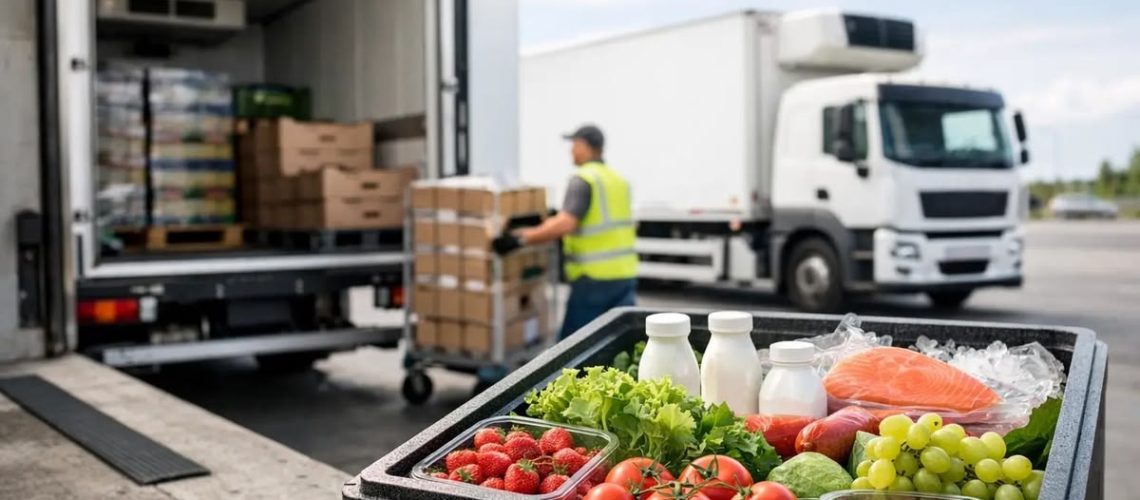
Cold chain logistics is the process of storing, handling and transporting temperature-sensitive products within the conditions they need to remain safe and usable.
It connects refrigeration, insulated packaging, cold rooms, refrigerated vehicles, temperature monitoring and careful handling from the point of origin to the final customer. For food businesses in Nigeria, a reliable cold chain can help protect quality, reduce avoidable spoilage and make deliveries more dependable.
Cold chain logistics is not simply putting food in a freezer. Different products require different temperatures, and the correct conditions must be maintained throughout the journey.
What products need a cold chain?
A cold chain is important for products that can deteriorate or become unsafe when exposed to unsuitable temperatures. These include fresh and frozen fish, meat, poultry, dairy products, some fruit and vegetables, and certain medicines and biological products.
Not every perishable item should be frozen. Some produce requires cool storage rather than freezing, while other foods need specific humidity and ventilation conditions. A system designed for frozen meat may not be suitable for fresh tomatoes or leafy vegetables.
Businesses should identify the products they handle and follow the relevant food-safety guidance and manufacturer requirements. Guessing the temperature can damage quality or create a safety risk.
How the cold chain works
A cold chain usually includes several connected stages.
| Stage | What happens | Common risk |
|---|---|---|
| Preparation | Products are cooled or frozen as required | Goods enter storage too warm |
| Storage | Products are held under suitable conditions | Equipment failure or incorrect settings |
| Loading | Goods move from storage to transport | Exposure to ambient heat |
| Transport | Temperature is maintained during the journey | Door openings, breakdowns or power loss |
| Receiving | The buyer checks condition and records | Delayed unloading or poor inspection |
| Final storage | Products move into the receiver’s suitable facility | Cold chain breaks after delivery |
A failure at any stage can affect the shipment. For example, a refrigerated truck cannot fully compensate for food that was already mishandled before loading. Likewise, a well-maintained cold room offers limited protection if goods remain outside it for too long during unloading.
Why cold chain logistics matters in Nigeria
Nigeria’s food supply chains connect farms, fishing communities, processors, markets, restaurants, retailers and households. These links can involve long journeys, changing weather conditions, traffic delays and differences in available infrastructure.
Where refrigeration is unreliable, food businesses may face higher spoilage risk, product losses and unpredictable operating costs. The effect can be especially serious for smaller traders who cannot easily absorb the loss of a shipment.
A reliable cold chain can help businesses plan deliveries, protect product quality and meet customer expectations. However, refrigeration alone does not solve every food-loss problem. Good packaging, hygienic handling, suitable roads, clear records and efficient market coordination also matter.
The equipment used in cold chain logistics
The equipment depends on the product, storage volume and distance travelled.
Cold rooms: These provide temperature-controlled storage for businesses handling larger volumes of chilled or frozen goods. Their performance depends on suitable insulation, correctly sized refrigeration equipment, maintenance and a reliable power plan.
Refrigerated vehicles: These help maintain the required conditions while goods are in transit. The vehicle must be suitable for the load, and the refrigeration unit must be capable of maintaining the required temperature throughout the journey.
Insulated containers: These can help limit temperature changes during shorter transfers or where a full refrigerated vehicle is not necessary. Their performance depends on the container design, the starting temperature of the product, journey duration and handling conditions.
Temperature monitoring devices: Thermometers, data loggers and monitoring systems can help record conditions during storage and transport. A temperature reading at the end of the journey may not reveal every problem that occurred along the way, so records can be valuable.
Backup power: Cold rooms and refrigeration equipment need a plan for outages. Depending on the installation, this may involve a generator, suitable battery storage, solar-supported power or another properly designed backup arrangement.
Equipment should be selected with guidance from qualified suppliers and technicians. A low purchase price is not enough if the system cannot maintain the required conditions or is difficult to repair.
How businesses can protect perishable goods
1. Know the correct temperature requirements
Do not use one temperature setting for every product. Check the applicable food-safety guidance, product specifications and storage instructions. Train staff to recognise the difference between chilled, frozen and temperature-sensitive goods.
2. Pre-cool products where required
Products should reach the appropriate storage condition before being loaded into a vehicle when the process requires it. A refrigerated vehicle is designed to maintain suitable conditions, not necessarily to cool a large quantity of warm food rapidly.
3. Minimise loading and unloading delays
Plan deliveries, prepare documentation and organise staff before opening the cold room or vehicle doors. Reduce unnecessary door openings and move goods into suitable storage promptly.
4. Monitor and record temperatures
Check equipment at suitable intervals and keep records of readings, alarms, repairs and corrective actions. If the temperature falls outside the permitted range, follow a written procedure rather than assuming the goods remain safe.
5. Maintain equipment
Clean and inspect refrigeration equipment according to the manufacturer’s instructions. Arrange preventive maintenance and ensure staff know whom to contact when an alarm, leak, unusual noise or power failure occurs.
6. Train everyone who handles the goods
Drivers, warehouse staff, dispatchers and receiving teams all influence cold chain performance. They should understand loading procedures, hygiene, temperature limits, documentation and what to do when something goes wrong.
What should customers ask a cold chain provider?
Before booking, ask the provider what products it can handle, the temperature range it can maintain and how it monitors conditions. Confirm whether the service includes collection, loading, delivery, unloading and any waiting time.
For food businesses, also ask how the provider handles power failure, vehicle breakdowns, delayed deliveries and temperature excursions. Find out whether temperature records are available and what information the customer receives after delivery.
The contract should clarify responsibility for packaging, product condition at collection, storage, transit, insurance and claims. Do not assume that a provider accepts responsibility for every form of spoilage without checking its terms.
Common cold chain mistakes to avoid
One common mistake is treating a refrigerator or insulated vehicle as a guarantee of safety. Temperature control is only one part of food safety; hygiene, handling and product condition also matter.
Another mistake is overloading a cold room or packing a vehicle in a way that blocks airflow. Equipment needs to be used within its designed capacity, with appropriate space for circulation.
Businesses may also fail to plan for electricity interruptions. A cold room without a practical backup procedure can place valuable stock at risk during an outage.
Finally, poor records make it harder to identify where a problem occurred. Keep clear information about when goods were received, how they were stored, which vehicle transported them and when they were delivered.
Build reliability into every delivery
Cold chain logistics helps protect food and other perishables by connecting suitable storage, transport, monitoring and handling practices. For Nigerian businesses, the priority is to design the process around the product, plan for power and transport disruptions, and train everyone who handles the shipment.
A dependable cold chain is built through consistent procedures rather than equipment alone. When businesses monitor conditions, maintain their systems and communicate clearly, they are better placed to protect goods and serve customers reliably.
For a food distributor, restaurant or retailer, the practical first step is to map the journey from supplier to customer and identify where temperature control could fail. Improving those weak points can help reduce losses and strengthen trust.
Frequently Asked Questions
1. What is cold chain logistics?
Cold chain logistics is the temperature-controlled storage, handling and transportation of products that need specific conditions to preserve quality or safety. It can include cold rooms, refrigerated vehicles, insulated packaging and temperature monitoring.
2. Which foods require cold chain logistics?
Depending on the product, cold chain handling may be needed for fish, meat, poultry, dairy products, some fresh produce and frozen foods. Each item has its own storage requirements, so businesses should follow the relevant guidance.
3. Why is temperature monitoring important?
Monitoring helps businesses identify conditions that may damage products or make them unsafe. Records can also help determine when a problem occurred and what corrective action is needed.
4. Does a refrigerated truck guarantee that food will stay safe?
No. The truck must be suitable, correctly operated and maintained, and the goods must be handled properly before loading and after delivery. Temperature control does not replace hygiene and other food-safety practices.
5. How can a small food business improve its cold chain?
Start by identifying the correct storage requirements, minimising delays, using suitable packaging, monitoring temperatures and creating a plan for power or equipment failures. Choose a provider that can explain its procedures and responsibilities clearly.
