

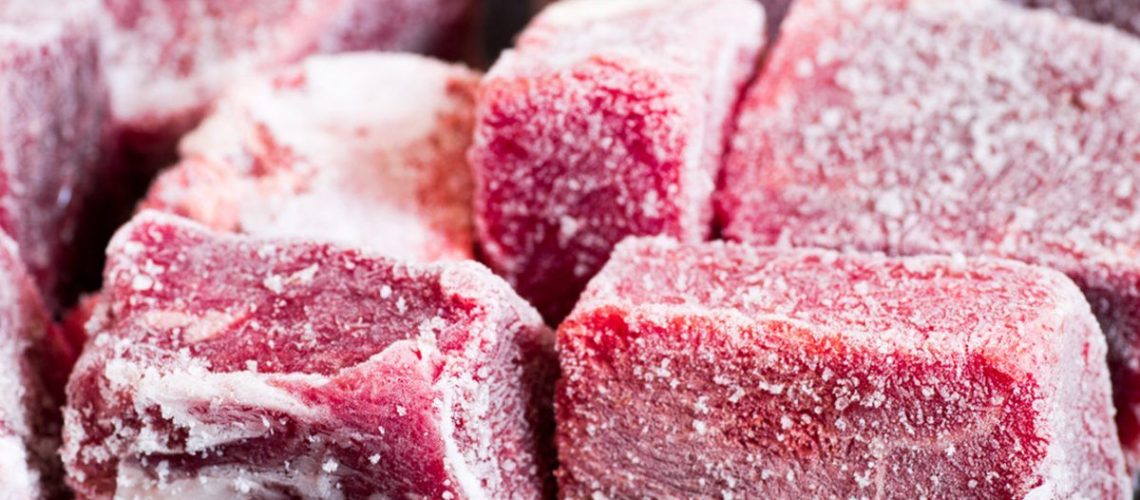
To defrost meat safely, thaw it in the refrigerator, in a leakproof package submerged in cold water, or in a microwave using its defrost setting.
Never leave frozen meat on the kitchen counter or put it in hot water to speed up thawing. These methods can allow the outer layers to warm while the centre remains frozen, creating conditions in which harmful bacteria can multiply.
If dinner is approaching and you forgot to remove the meat from the freezer, you still have options. The right method depends on how much time you have, the size of the meat and whether you can cook it immediately afterwards.
The three safe ways to defrost meat
| Method | Best for | Important rule |
|---|---|---|
| Refrigerator | Planned meals and larger cuts | Allow enough time for the meat to thaw while staying cold |
| Cold water | Smaller cuts when time is limited | Use leakproof packaging and change the water every 30 minutes |
| Microwave | Urgent meals | Cook the meat immediately after defrosting |
These methods apply to common meats such as beef, chicken and pork, as well as many fish products, although packaging instructions and product-specific guidance should always be followed.
1. Defrost meat in the refrigerator
The refrigerator is usually the easiest method to manage safely because the meat stays cold while thawing.
Place the frozen meat in a clean, leakproof container or on a tray that can catch juices. Keep it on a low shelf so raw meat juices cannot drip onto ready-to-eat foods, cooked meals or fresh produce.
Small portions may thaw within a day, while large roasts, whole birds and thick bone-in cuts can take considerably longer. Do not assume that every package will be ready after the same number of hours.
Once the meat has thawed, follow recognised food-safety guidance for refrigerated storage and cooking. Ground meat and poultry generally have shorter recommended refrigerated storage periods than many whole cuts of beef. If you do not plan to cook the meat soon, check the appropriate storage guidance for that product.
Best for Nigerian meal planning: If you intend to prepare beef stew, chicken pepper soup or a large pot of soup the next day, move the required portion from the freezer to the refrigerator ahead of time.
2. Use cold water when you need meat sooner
Cold-water thawing can help when you have forgotten to plan ahead. However, it requires more attention than refrigerator thawing.
First, make sure the meat is in a leakproof bag or package. If water can enter the package, it may contaminate the food and affect its quality.
Submerge the sealed package in a clean container of cold water. Change the water every 30 minutes so it remains cold as the meat thaws. Smaller packages may thaw relatively quickly, while thick cuts take longer.
Once the meat has thawed using this method, cook it immediately. Do not leave it on the counter while you prepare other ingredients or postpone cooking until the following day.
Example: If you need chicken for an evening stew, cold-water thawing may be more practical than waiting for a thick frozen package to thaw in the refrigerator. Still, allow enough time for the full package to thaw and keep the water cold throughout the process.
3. Use a microwave for urgent meals
A microwave can defrost meat quickly, but it may warm or partially cook some areas while others remain frozen. That is why meat thawed in a microwave should be cooked immediately.
Remove packaging that is not labelled as microwave-safe. Place the meat in a suitable container, use the defrost setting and follow the appliance instructions. Turn or separate pieces when the manual recommends it so they thaw more evenly.
Check the meat frequently. If some edges begin to cook while the centre remains frozen, stop and follow the appliance’s instructions before continuing.
Once the defrosting cycle is complete, proceed with cooking. Do not return the meat to the refrigerator to cook another day unless you have followed appropriate food-safety guidance for the situation.
Can you cook meat straight from frozen?
Sometimes. Some meat can be cooked directly from frozen, although the cooking time may be longer and the method must be suitable for the particular product.
Check the packaging instructions and use a reliable cooking method that heats the meat thoroughly. Large frozen cuts may cook unevenly, so defrosting first may produce a more predictable result.
For soups and stews, avoid assuming that meat is safe simply because the liquid is boiling. The thickest pieces must also reach a safe internal temperature. A food thermometer is more reliable than colour alone when checking doneness.
If you are cooking chicken, ground meat or a large frozen portion, follow product-specific food-safety guidance rather than guessing.
Why you should never defrost meat on the counter
Leaving meat at room temperature may seem convenient, especially when you are in a hurry. However, the outside can become warm enough for bacteria to multiply before the centre has thawed.
The same problem can occur when you place meat in hot water or leave it outdoors. The fact that the meat still feels cold in the middle does not prove that the outer layers have remained safe.
Do not rely on smell, colour or appearance to decide whether meat is safe. Harmful bacteria may be present without creating an obvious change in the food.
If meat has been left out for an unsafe period or you are unsure whether it has been temperature-abused, do not try to make it safe simply by washing it, seasoning it or cooking it longer. Follow recognised food-safety guidance and discard it when necessary.
How to defrost meat without losing its texture
Food safety comes first, but the way you thaw meat can also affect the final dish.
Avoid unnecessary temperature changes. Move meat from the freezer into the refrigerator when you can plan ahead. Repeated warming and refreezing can affect quality and may create safety risks if the meat is mishandled.
Keep the packaging intact. A leakproof package helps prevent moisture loss and stops raw juices from contaminating other foods.
Do not wash raw meat to remove thawing juices. Washing can splash contaminated droplets around the sink and nearby surfaces. Instead, dispose of packaging carefully and clean surfaces and utensils that come into contact with raw meat.
Season at the right time. If the recipe requires marinating, do it in the refrigerator rather than leaving raw meat on the counter. This helps keep the food at a safe temperature.
Cut the meat after it is manageable. If a large block is frozen together, avoid forcing a knife through it. Thaw it enough to separate the portions safely, then continue using an appropriate method.
What if the meat has already thawed?
If meat has thawed in the refrigerator and remained at a safe temperature, it may be possible to refreeze it without cooking, although quality can decline. Follow the specific guidance for the meat and how it has been handled.
Meat thawed using the cold-water or microwave method should be cooked immediately. If you want to preserve it for another meal, cook it first and then cool and store it safely according to food-safety guidance.
Do not refreeze meat simply because it still feels cold. Consider how it was thawed, how long it has been outside controlled refrigeration and whether its handling conditions are known.
Plan ahead to make dinner easier
One of the simplest ways to avoid last-minute stress is to plan meat portions when you shop. Divide large purchases into meal-sized packages before freezing, label them with the contents and date, and store them so you can remove only what you need.
For example, you might separate beef for stew, chicken for pepper soup and fish for a weekend meal. Smaller portions generally thaw more quickly than one large frozen block, which makes weeknight cooking easier to organise.
If you buy food in bulk with family members or neighbours, agree on portion sizes and ensure that meat remains properly chilled or frozen during transport and distribution. Buying in larger quantities does not remove the need for safe handling.
For more help organising household food purchases, explore Easer’s Bulk Food Share service.
Make safe defrosting part of your cooking routine
The safest method is to thaw meat in the refrigerator whenever you have enough time. If dinner is approaching, use cold water with leakproof packaging and regular water changes, or use the microwave and cook immediately afterwards.
Never use the kitchen counter or hot water as shortcuts. Keep raw meat separate from ready-to-eat foods, clean contaminated surfaces and make sure the meat is cooked thoroughly.
A little planning protects both your dinner and the people eating it. More importantly, it lets you prepare meals with confidence rather than relying on risky shortcuts when time is short.
Frequently Asked Questions
1. Can I defrost meat on the kitchen counter?
No. Room-temperature thawing can allow bacteria to multiply on the outer layers while the centre remains frozen. Use the refrigerator, cold water in a leakproof package or a microwave instead.
2. How can I defrost meat quickly and safely?
Use cold-water thawing or the microwave’s defrost setting. With cold water, keep the meat in leakproof packaging and change the water every 30 minutes. Cook meat immediately after thawing by either of these methods.
3. Can I cook frozen meat without defrosting it first?
Some meat can be cooked from frozen if the cooking method is suitable and the food reaches a safe internal temperature. Check the package instructions and allow for a longer cooking time where necessary.
4. Can I refreeze meat after defrosting it?
It depends on how it was thawed and how it was stored. Meat thawed safely in the refrigerator may generally be refrozen, although quality can decline. Meat thawed using cold water or a microwave should be cooked immediately before any later freezing.
5. How do I know if defrosted meat is unsafe?
Smell and appearance cannot reliably establish whether meat is safe. Consider how long it has been outside controlled refrigeration and whether safe handling conditions were maintained. If it has been left at room temperature too long or its safety is uncertain, follow recognised food-safety guidance rather than taking a risk.
