

A clean mattress can make a significant difference to your sleep quality, comfort and overall bedroom hygiene.
However, many people wash their bedsheets regularly while forgetting the mattress underneath. Over time, mattresses collect sweat, dead skin cells, dust, body oils and unpleasant odours. These can leave your sleeping space feeling less fresh, even when your bedding looks spotless. Fortunately, you do not need expensive equipment or professional cleaning services to maintain a cleaner mattress. With a few household supplies and the right techniques, you can refresh your bed and enjoy a more comfortable night’s sleep.
Why Cleaning Your Mattress Matters
Every night, your body releases moisture and sheds dead skin cells. These materials gradually accumulate inside your mattress, particularly when you sleep in a warm room or perspire heavily. Dust can also settle into the fabric, while accidental spills may leave stains that become harder to remove over time.
Regular mattress cleaning helps control unpleasant smells, reduce surface dust and maintain a fresher sleeping environment. It also allows you to notice problems such as mould, persistent dampness or pest activity before they become more serious. Although cleaning cannot eliminate every allergen or guarantee better sleep, maintaining a hygienic bed can improve your overall comfort.
For households in Nigeria, where warm weather and humidity can make mattresses retain moisture, proper drying is especially important. A mattress that remains damp after cleaning may develop mould and mildew, creating a bigger problem than the original stain.
Step 1: Remove Everything From the Bed
Start by removing your bedsheets, pillowcases, blankets and mattress protectors. Wash these items according to their care labels, using an appropriate detergent and the recommended water temperature.
Next, check the mattress manufacturer’s cleaning instructions. Different materials require different approaches. Memory foam, latex and traditional spring mattresses may react differently to moisture and cleaning products. Some manufacturers advise against using water or steam cleaners on certain materials.
If your mattress has a removable cover, confirm whether it is machine-washable before taking it off. Avoid assuming that every mattress cover can go into a washing machine.
Once the bed is completely bare, open the windows where possible to improve ventilation. A well-ventilated room helps the mattress dry faster and prevents moisture from lingering during cleaning.
Step 2: Vacuum the Mattress Thoroughly
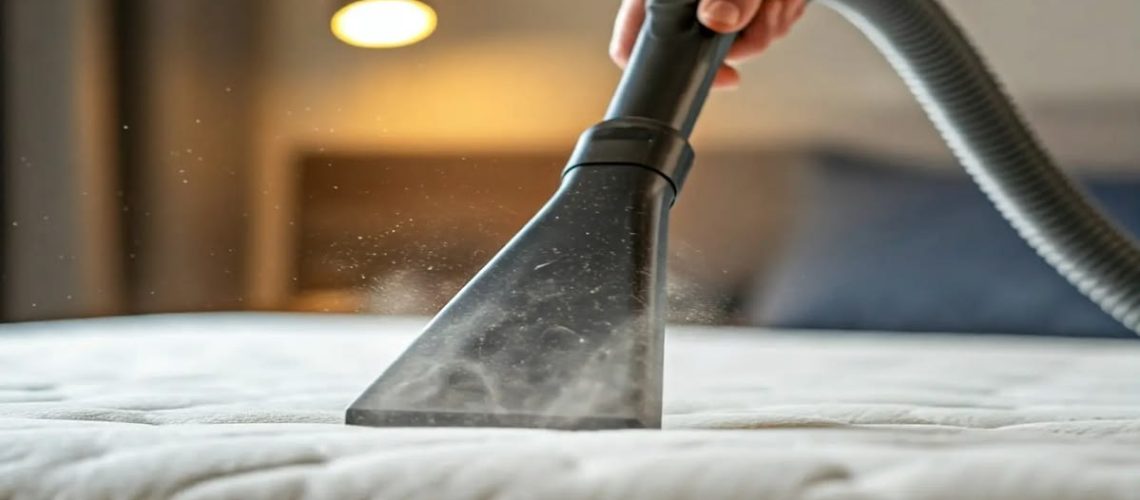
Vacuuming is one of the simplest and most effective ways to refresh a mattress. Use an upholstery attachment to remove loose dust, dead skin cells, hair and other debris from the surface.
Work slowly across the entire mattress, paying particular attention to seams, edges, stitched patterns and corners. These areas can trap dust that ordinary sweeping will not remove. If your vacuum has adjustable suction, choose a suitable setting for the mattress material.
Do not forget the sides of the mattress. If it is designed to be turned or rotated, follow the manufacturer’s recommendations and clean the accessible surfaces. Some modern mattresses have a designated sleeping side and should not be flipped.
Vacuuming regularly can help reduce surface dust and keep the mattress fresher between deeper cleans. For best results, make it part of your bedding routine rather than waiting until visible dirt appears.
Step 3: Remove Stains Without Soaking the Mattress
Mattress stains can come from sweat, drinks, food, urine and other accidental spills. The key to removing them is to act quickly and use as little liquid as possible.
For a fresh spill, press a clean, dry cloth against the affected area to absorb the moisture. Avoid rubbing aggressively, as this can spread the stain and push liquid deeper into the mattress.
For a general stain, mix a small amount of mild detergent with cool water. Dampen a clean cloth with the solution and gently blot the affected area. Then use another cloth lightly dampened with clean water to remove detergent residue.
Always test your cleaning solution on a small, hidden area first. Never pour water directly onto the mattress, and avoid harsh chemicals that may damage its fabric or internal materials.
For blood or protein-based stains, cool water is generally preferable because hot water can set the stain. Urine stains may require an appropriate enzyme cleaner, provided the mattress manufacturer permits its use. Follow the product instructions carefully.
Remember that not every stain will disappear completely, especially if it has been present for a long time. The priority is to clean the area safely without saturating the mattress.
Step 4: Use Baking Soda to Freshen the Surface
If your mattress has a mild, unpleasant smell, baking soda can help absorb some surface moisture and odours.
Sprinkle a thin, even layer over the dry mattress surface. Allow it to sit for several hours, or longer if you have enough time and the room is well ventilated. During this period, keep the bed uncovered and prevent children or pets from disturbing the powder.
Afterwards, vacuum the mattress thoroughly to remove all the baking soda. Check seams and corners to ensure no residue remains.
However, baking soda is not a disinfectant and will not reliably eliminate mould, dust mites or deep-seated contamination. It works best as a simple deodorising step after removing visible dirt and addressing stains.
If your mattress smells musty, investigate the cause instead of masking the odour. Persistent dampness, visible mould or a smell that returns quickly may indicate a moisture problem requiring further attention.
Step 5: Let the Mattress Dry Completely
Drying is one of the most important parts of mattress cleaning. Even a small amount of trapped moisture can encourage mould growth, particularly in humid environments.
After spot-cleaning, leave the mattress uncovered in a room with good airflow. Open windows when outdoor conditions permit, use a fan to circulate air and allow sufficient time for the cleaned areas to dry completely.
If you have access to a dry, well-ventilated outdoor space, indirect sunlight may help freshen the mattress. However, avoid leaving it exposed to rain, excessive humidity or intense sunlight that could damage the material. Follow the manufacturer’s advice about sunlight and heat.
Do not replace your sheets while the mattress still feels damp. If you need to sleep soon, avoid rushing the drying process. A damp mattress can encourage mould and create an uncomfortable sleeping environment.
Step 6: Make Your Bed Fresh for Tonight
Once the mattress is completely dry, add a clean mattress protector and freshly washed sheets. A breathable, washable protector creates a barrier against sweat, spills and everyday dirt, making future cleaning easier.
Wash your pillowcases and bedding regularly, especially during hot weather when perspiration may increase. Keep the bedroom reasonably ventilated, and avoid placing wet towels, damp clothes or other moisture sources on the bed.
If you notice that your mattress is consistently uncomfortable, cleaning alone may not solve the problem. Sagging, damaged springs or deteriorating foam can affect sleep comfort and may indicate that replacement is necessary.
How Often Should You Clean Your Mattress?
A practical routine is to vacuum your mattress every one to three months, depending on your household and sleeping conditions. Spot-clean spills as soon as possible, and wash your bedding according to your usual laundry schedule.
Consider cleaning more frequently if you have pets that sleep on the bed, suffer from dust allergies or perspire heavily at night. Always follow the mattress manufacturer’s care instructions.
Use a mattress protector to reduce the amount of dirt and moisture reaching the mattress. Also, rotate your mattress when recommended by the manufacturer to encourage more even wear.
If you discover widespread mould, a persistent musty smell or evidence of bedbugs, ordinary household cleaning may not be sufficient. Seek appropriate professional advice, and consider replacing a mattress that has been deeply contaminated or cannot be dried safely.
Conclusion
Cleaning your mattress does not have to be an exhausting weekend project. By removing the bedding, vacuuming thoroughly, treating stains carefully, using baking soda when appropriate and allowing the mattress to dry completely, you can create a fresher place to sleep.
For tonight, focus on the essentials: remove dust, address any small stains, improve ventilation and prepare clean bedding. Then build mattress care into your regular household routine. A clean sleeping surface will not solve every sleep problem, but it can make your bedroom more inviting and help you settle into the night feeling comfortable and refreshed.
