

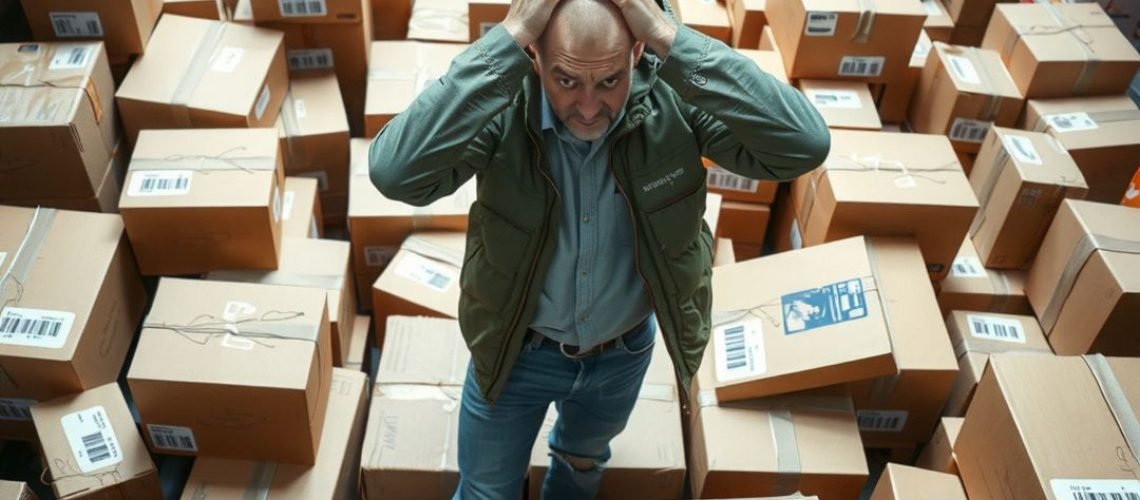
Logistics problems can quietly drain a business’s money.
A delayed delivery may lead to a refund, an incorrect address can trigger another delivery attempt, poor inventory planning can leave products sitting in storage, and weak shipment tracking can turn a manageable problem into an expensive customer complaint.
For Nigerian businesses, these challenges can become more difficult when fuel costs, traffic congestion, changing delivery conditions and unreliable shipment information affect daily operations. However, many logistics losses do not come from unavoidable circumstances. They result from poor planning, weak communication and processes that businesses can improve.
Whether you operate an online store, restaurant, supermarket, manufacturing company or distribution business, avoiding these seven mistakes can help reduce unnecessary expenses and improve customer satisfaction.
The Seven Logistics Mistakes at a Glance
| Mistake | How it wastes money | What to do instead |
|---|---|---|
| Poor inventory planning | Overstocking, stockouts and emergency purchases | Forecast demand and monitor stock |
| Choosing a provider on price alone | Delays, damage and repeated deliveries | Compare total service value |
| Incorrect delivery information | Failed attempts and extra transport costs | Verify addresses and contacts |
| Weak shipment tracking | Late responses and unresolved problems | Monitor deliveries consistently |
| Poor packaging | Damaged goods, returns and replacements | Match packaging to the product |
| Ignoring route and dispatch planning | Excess fuel, time and vehicle costs | Group deliveries and plan routes |
| Failing to measure logistics costs | Hidden losses and unprofitable orders | Track cost per successful delivery |
1. Poor Inventory Planning
Inventory mistakes affect both sides of a business. Ordering too much stock ties up money that could support other operations. Ordering too little can leave customers waiting while the business rushes to find replacement stock.
Imagine a Lagos-based fashion retailer preparing for a festive shopping period. The business orders large quantities of unpopular styles but runs out of common sizes in its best-selling products. It now has money trapped in slow-moving stock while losing sales on items customers actually want.
This problem often begins with purchasing decisions based on guesswork rather than sales information.
Review your sales history and identify products that sell quickly, items that move slowly and stock that takes a long time to replace. Consider seasonality, promotions, supplier lead times and current customer demand before placing orders.
Set reorder levels for important products. A simple stock spreadsheet can help a small business monitor quantities received, sales, remaining stock and replenishment dates. Larger businesses may benefit from inventory software that connects sales, purchasing and warehouse records.
Also conduct regular physical stock counts. Your records may show that 50 units remain, but damaged products, unrecorded sales or picking mistakes could leave fewer items available.
How to avoid the mistake: Forecast demand, monitor fast-moving products, establish reorder points and compare physical stock with your records. Do not buy large quantities simply because a supplier offers a discount.
2. Choosing a Logistics Provider Based Only on Price
A low delivery quote can look attractive, particularly when a business is trying to protect its profit margin. However, the cheapest provider may become more expensive if the service produces repeated delays, damaged goods, poor communication or failed deliveries.
For example, a retailer may choose a courier because it charges less per parcel. If the courier regularly misses delivery windows, the retailer may spend additional money handling complaints, arranging redelivery and replacing damaged products.
The problem is not that affordable logistics providers are necessarily unreliable. It is that businesses often compare prices without comparing the service included.
Before selecting a provider, examine:
- Delivery coverage and service areas.
- Expected transit times.
- Shipment tracking availability.
- Proof-of-delivery procedures.
- Handling of fragile or valuable goods.
- Claims and compensation policies.
- Customer support and escalation channels.
- Additional charges, including remote-area or redelivery fees.
Ask for a written quotation and clarify whether the price includes collection, packaging, insurance, returns or other services. A provider’s standard rate may not cover every destination or delivery requirement.
For recurring shipments, run a small trial before transferring all your deliveries to a new provider. Measure the results rather than relying entirely on sales promises.
How to avoid the mistake: Compare the total cost of reliable delivery, not just the advertised rate. Consider performance, communication, coverage and the financial impact of failed shipments.
3. Using Incorrect or Incomplete Delivery Information
An incomplete address can turn a straightforward delivery into a frustrating search. The courier may call repeatedly, ask for directions, travel to the wrong location or return the parcel to the dispatch point.
This is particularly relevant in cities where street names, building numbers, estate access rules and landmarks can complicate navigation. A customer may write only “Lekki” or “Ikeja” without providing enough information to identify the actual destination.
Every order should capture the information a delivery partner needs to complete the job.
Ask customers to provide:
- Full recipient name.
- Active phone number.
- Complete delivery address.
- Estate, building or office name where applicable.
- Useful nearby landmark.
- Preferred delivery time or availability, where relevant.
- Special access instructions.
For high-value or urgent orders, confirm unclear details before dispatch. A short phone call or message may prevent a failed delivery attempt.
Businesses should also avoid copying old customer addresses into new orders without confirmation. People move, offices relocate and phone numbers change.
If your business uses online forms, make important fields compulsory and explain what customers should enter. You can also provide a clear example of a complete address.
How to avoid the mistake: Validate delivery information at the point of order. Confirm unclear addresses before a parcel leaves your premises, and keep customer contact details updated.
4. Failing to Track Shipments Properly
A parcel that leaves your warehouse is not automatically a completed order. Until it reaches the correct recipient, your business still has a delivery responsibility to manage.
Without shipment tracking, staff may not know whether a parcel has been collected, reached a sorting facility, gone out for delivery or encountered a problem. Customers then have to chase the business for updates.
This creates unnecessary work for customer-service teams and can damage trust.
Use a tracking system that records important delivery stages. At a minimum, staff should be able to identify:
- Order confirmed.
- Parcel prepared and checked.
- Shipment collected.
- Parcel in transit.
- Out for delivery.
- Successfully delivered or marked as an exception.
Where a logistics provider offers tracking, use its reference numbers and delivery updates. For businesses managing several providers, a central spreadsheet or order-management system can help bring shipment information together.
Do not wait until a customer complains before investigating a delayed order. Set a process for checking shipments that remain at the same status beyond the expected period.
Also request proof of delivery where the service supports it. A clear record can help resolve disputes about whether a parcel arrived and who received it.
How to avoid the mistake: Monitor shipments from collection to delivery, investigate unusual delays early and keep customers informed with accurate updates.
5. Using Poor Packaging
Packaging protects products during storage, handling, loading and transportation. When businesses use unsuitable packaging, goods may arrive broken, wet, crushed, leaking or incomplete.
A clothing seller may place several items in a thin bag that tears during transit. A food business may use containers that leak when riders carry orders on uneven roads. An electronics retailer may send a fragile product in a box with insufficient internal protection.
The resulting costs go beyond replacing the damaged item. The business may also pay for another delivery, handle a refund, lose the customer’s confidence and spend time investigating the incident.
Choose packaging according to the product’s size, weight, fragility and exposure risks. Use suitable cushioning for fragile goods, secure liquids against leakage and make sure boxes can withstand ordinary handling.
For food deliveries, use food-safe packaging that protects the meal and maintains suitable handling conditions. Do not use packaging that allows sauces or liquids to spill onto other parcels.
Check every parcel before dispatch. Confirm that the correct product is inside, seals are secure and shipping labels are readable.
For expensive or fragile items, ask the logistics provider about handling requirements and available insurance or declared-value options.
How to avoid the mistake: Test packaging under realistic handling conditions, train staff to pack correctly and inspect parcels before dispatch. The cheapest packaging is not necessarily the most economical.
6. Ignoring Route Planning and Dispatch Efficiency
Poor route planning can increase fuel consumption, vehicle use, staff time and delivery delays. When drivers or riders travel across a city without an organised sequence, they may cover unnecessary distance or repeatedly enter congested areas.
Consider a business with several deliveries around Ikeja, Yaba and Surulere. Sending a rider to complete them in a random order may create unnecessary backtracking. Grouping deliveries by area and considering traffic conditions can improve efficiency.
Route planning should account for more than distance. Consider expected travel time, delivery deadlines, vehicle capacity, road restrictions, customer availability and collection requirements.
Businesses that handle regular deliveries can use mapping and route-planning tools to organise stops. Smaller operations can begin by grouping orders by location and assigning sensible delivery windows.
Dispatch timing also matters. A parcel that is ready early but remains at the warehouse until late afternoon may face heavier traffic and miss the expected delivery window.
Review route performance regularly. Compare planned travel time with actual results and identify recurring problem areas.
However, do not overload a driver with an unrealistic route simply to reduce the number of trips. Rushed deliveries can increase mistakes, safety risks and failed attempts.
How to avoid the mistake: Group nearby deliveries, plan dispatch times, use route-planning tools where appropriate and review actual delivery performance.
7. Failing to Measure the True Cost of Logistics
Many businesses know how much they pay a courier, but they do not know how much it costs to complete an order successfully.
The total logistics cost may include packaging, storage, picking and packing labour, transport, failed attempts, returns, damaged products, customer support and administrative work.
If these costs are not recorded, a business may accept orders or delivery contracts that generate sales but produce little profit.
For example, a retailer may charge customers ₦2,000 for delivery while paying a courier ₦1,800. On paper, the business appears to make ₦200 from each delivery. But if it also spends money on packaging, dispatch labour and customer support, the actual result may be a loss.
Start by tracking these measures:
| Metric | What it tells you |
|---|---|
| Cost per successful delivery | How much it costs to complete each delivery |
| First-attempt delivery rate | How often deliveries succeed without another attempt |
| Average delivery time | How long orders take to reach customers |
| Damage and loss rate | How frequently goods arrive damaged or go missing |
| Return rate | How often customers send orders back |
| Fulfilment cost per order | The total operational cost of preparing and sending an order |
| On-time delivery rate | How consistently the business meets its delivery promises |
A useful calculation is:
Cost per successful delivery = Total delivery-related costs ÷ Number of successfully completed deliveries.
Use the same cost categories consistently when comparing periods or providers. If you leave out failed attempts one month and include them the next, the comparison will be misleading.
Review these numbers regularly. A small increase in cost per order may be manageable, but repeated increases can weaken profit margins over time.
How to avoid the mistake: Track logistics costs beyond the courier invoice. Review unit economics, delivery success and returns before changing prices or expanding service coverage.
How to Build a More Efficient Logistics System
Avoiding these mistakes requires a system that connects purchasing, inventory, order processing, packaging, dispatch and customer communication.
Start with a simple review of your current operations. Follow an order from the moment a customer pays until the parcel reaches its destination. Identify every point where staff wait, repeat tasks, enter incorrect information or depend on manual follow-up.
Then improve the weakest areas first. A business that frequently loses money through incorrect addresses should fix its order form before investing in sophisticated route-planning software. Another business that struggles with stockouts may need better inventory records before hiring more delivery staff.
For businesses that need help coordinating storage, fulfilment, transportation or distribution, a third-party logistics provider may offer useful support. However, outsourcing does not remove the need to monitor performance. Agree on service expectations, reporting, responsibilities and escalation procedures before signing a contract.
Easer Lifestyle Africa’s 3PL and 4PL logistics services provide a relevant starting point for businesses exploring outsourced logistics support.
Stop Small Logistics Problems From Becoming Major Expenses
Logistics losses rarely come from one dramatic mistake alone. They often build up through small, repeated failures: an incorrect address here, a damaged parcel there, unnecessary trips, poor stock records and delivery charges that do not reflect actual costs.
The solution is to make every stage measurable. Forecast stock properly, select providers carefully, verify customer information, track shipments, protect products and review the cost of successful deliveries.
When businesses understand where their logistics money goes, they can make better decisions about pricing, suppliers, staffing and delivery methods. More importantly, they can create a fulfilment process that supports customer loyalty instead of undermining it.
Frequently Asked Questions
1. What is the most expensive logistics mistake for a small business?
There is no single mistake that affects every business equally. Poor inventory planning, repeated failed deliveries, damaged products and unmeasured fulfilment costs can all create substantial losses. Review your own records to identify the largest source of waste.
2. How can a Nigerian business reduce delivery costs?
Improve address collection, group deliveries by location, negotiate clear provider rates, use suitable packaging and track the cost of successful deliveries. Review fuel-related charges and service coverage regularly rather than relying on outdated quotations.
3. Is the cheapest logistics company always the best option?
No. Compare reliability, delivery coverage, tracking, damage rates, customer support and extra charges. A provider with a slightly higher price may cost less overall if it completes deliveries more consistently.
4. How can businesses prevent failed deliveries?
Collect complete addresses, confirm active phone numbers, provide realistic delivery windows and communicate with customers before dispatch where necessary. Use tracking and investigate shipments that do not progress as expected.
5. What is cost per successful delivery?
It is the total delivery-related cost divided by the number of successfully completed deliveries. It helps businesses understand the real expense of fulfilling an order rather than looking only at the courier’s advertised rate.
