

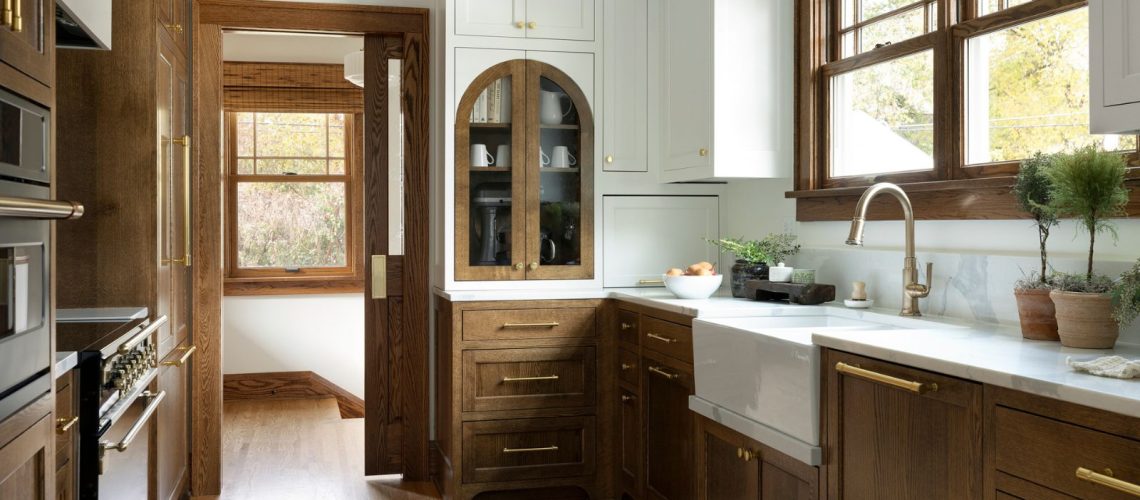
A small kitchen can become challenging when several people depend on it every day.
Limited counter space, crowded cabinets, and too many cooking supplies can make meal preparation stressful. However, a small kitchen does not have to feel inadequate for a large household.
With thoughtful organization and practical routines, families can make better use of every available space. The goal is not simply to fit more items into the kitchen. It is to create a kitchen that supports cooking, storage, cleaning, and family life without unnecessary stress.
Use Vertical Space
When floor and counter space are limited, look upward. Walls can provide valuable storage for cooking utensils, pots, cutting boards, and other frequently used items.
Wall-mounted shelves, hooks, rails, and compact racks can help keep everyday items accessible without taking over the work surface. The space above cabinets can also be useful for storing items that are rarely needed.
Vertical storage works best when frequently used items remain within easy reach while less-used items are placed higher.
Keep Countertops Clear
A crowded countertop can make a small kitchen feel even smaller. Try to keep only the appliances and items that are used regularly on the counter.
Small appliances that are used occasionally can be stored in cabinets or designated storage areas. Even creating one clear section of countertop can make food preparation much easier.
For large households, clear work surfaces are especially important because several cooking tasks may need to happen at the same time.
Organize Cabinets by Function
Instead of placing items wherever there is space, organize cabinets according to their purpose. Keep pots and pans together, group baking supplies, and store everyday dishes in an easily accessible location.
Frequently used ingredients should also be easy to find. Clear containers can help families see what they have and reduce the time spent searching through crowded cupboards.
A well-organized cabinet can effectively create more usable space without adding new furniture.
Make Better Use of Corners
Kitchen corners are often overlooked. Corner shelves, rotating organizers, and narrow storage units can turn awkward spaces into useful storage areas.
Even a small gap beside a refrigerator or cabinet may be suitable for a slim rolling cart. Such spaces can hold spices, cooking oils, cleaning supplies, or packaged foods.
Before buying additional storage furniture, look carefully at unused gaps throughout the kitchen.
Plan Meals Around Available Space
Large households often prepare food in significant quantities. Meal planning can make this process easier because it reduces unnecessary cooking and helps families organize ingredients before preparation begins.
Cooking certain foods in batches can also reduce the number of times the kitchen becomes crowded. For example, grains, sauces, vegetables, or other frequently eaten foods can sometimes be prepared in larger quantities and stored properly for later meals.
Planning ahead also makes it easier to determine which ingredients need to remain in the kitchen and which can be stored elsewhere.
Create a Household Kitchen Routine
A small kitchen can become difficult to manage when everyone uses it without a shared system. Simple household rules can make a major difference.
Family members can agree on where commonly used items belong, who handles cleanup, and how groceries should be stored after shopping.
Children can also take part in age-appropriate tasks such as putting away dishes, wiping surfaces, or organizing pantry items. This reduces the workload on one person and helps everyone respect the available space.
Reduce Duplicate Items
Large households often accumulate multiple versions of the same kitchen item. Several frying pans, serving bowls, storage containers, and utensils may occupy valuable space without being used regularly.
Review kitchen supplies periodically and remove items that are broken, rarely used, or unnecessary duplicates.
This does not mean getting rid of everything. It means keeping the items that genuinely support the household’s daily needs.
Use Multi-Purpose Kitchen Items
When space is limited, items that serve more than one purpose can be particularly useful. A chopping board that fits over a sink, stackable containers, nesting bowls, or collapsible kitchen tools can provide flexibility without requiring additional storage space.
Multi-purpose products should still be chosen carefully. An item is only useful if it performs its functions well and actually saves space.
Improve Food Storage
Food storage can quickly become a major challenge in a small kitchen. Families can make better use of limited refrigerator and pantry space by grouping similar foods and using appropriately sized containers.
Labeling containers can also help prevent forgotten food from accumulating at the back of shelves. Older items should be placed where they can be seen and used first.
For households that buy food in bulk, it may be practical to divide large quantities into smaller portions and store only the amount needed in the kitchen. Additional supplies can be kept in another suitable storage area when available.
Create a Simple Cleaning System
A small kitchen can look messy quickly, especially when several people cook throughout the day. A simple cleaning routine can prevent small messes from becoming overwhelming.
Instead of waiting until the end of the day, household members can clean as they go. Used utensils can be washed or placed in their designated area, spills can be handled immediately, and counters can be cleared after each cooking session.
This keeps the kitchen ready for the next person.
Think Beyond the Kitchen
A small kitchen does not have to hold every household supply. If there is suitable storage elsewhere in the home, some less frequently used items can be moved outside the kitchen.
Extra drinks, bulk food supplies, serving equipment, or occasional-use appliances may be stored in another clean and accessible location.
The kitchen should primarily support everyday cooking and food preparation rather than serve as the storage area for everything in the household.
Make Small Spaces Work Harder
Making a small kitchen work for a large household is less about size and more about organization. Vertical storage, clear countertops, functional cabinets, meal planning, shared routines, and careful food storage can significantly improve the experience.
A well-managed small kitchen can support a busy family without feeling constantly crowded. The key is to make every space purposeful, reduce unnecessary clutter, and create routines that allow everyone in the household to contribute.
When organization becomes part of everyday family life, even a modest kitchen can become an efficient, comfortable, and welcoming part of the home.
