

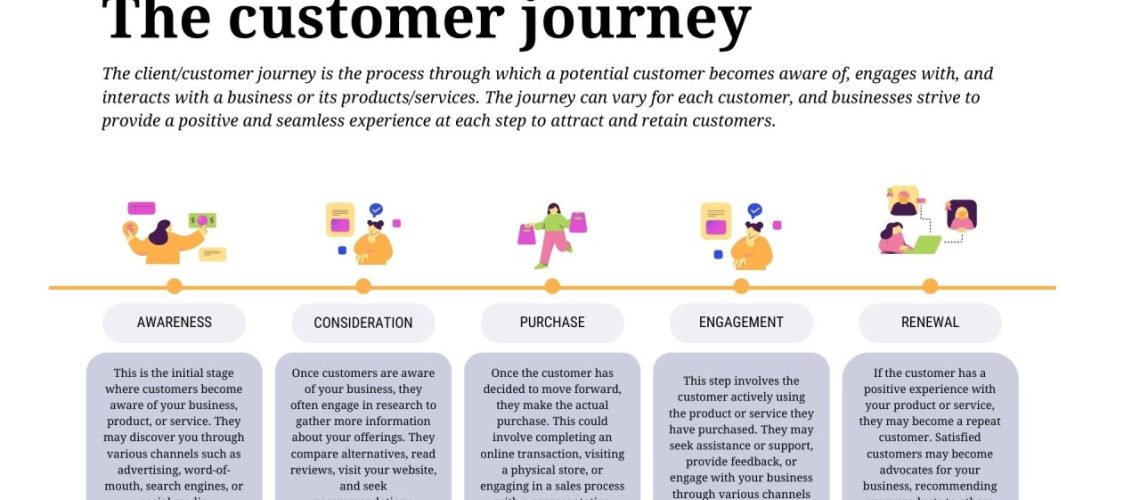
A customer’s experience with a business does not begin when they make a purchase.
It starts much earlier, often when they first hear about a brand, search for information, compare alternatives, or ask someone for a recommendation.
This series of interactions is known as the customer journey. Understanding it can help businesses identify what customers need, where they experience difficulties, and what influences their purchasing decisions.
For businesses of all sizes, studying the customer journey can improve service, strengthen customer relationships, and support long-term growth.
What Is the Customer Journey?
The customer journey describes the different stages a person goes through when interacting with a business. These stages can include discovering a brand, researching its products or services, making a purchase, receiving the product, using it, and deciding whether to return.
The journey may be simple or complex depending on the type of business. A customer buying food from a neighborhood shop may make a decision within minutes, while someone purchasing insurance, furniture, or business services may spend weeks comparing options.
Understanding these stages helps businesses see the experience from the customer’s perspective.
It Reveals What Customers Actually Need
Businesses sometimes make decisions based on what they assume customers want. However, assumptions can be different from reality.
Studying the customer journey provides useful insight into customer behavior. Businesses can identify common questions, frequently requested services, confusing processes, and factors that influence buying decisions.
For example, if customers repeatedly contact a business to ask about delivery fees, the company may need to make its delivery information easier to find.
Small improvements based on real customer behavior can have a significant impact.
It Helps Identify Problems
Every customer journey has potential points of frustration. Customers may struggle to find information, complete an order, make a payment, contact support, or receive their purchases.
These problems may seem minor from the company’s perspective but can strongly influence whether customers return.
By examining each stage of the journey, businesses can identify where customers are dropping off or becoming dissatisfied. They can then focus on fixing the most important problems instead of making random changes.
It Improves Customer Service
Customer service becomes more effective when businesses understand what customers experience before they contact support. A customer who has already spent time searching for information may become frustrated if they have to explain everything again to a support representative. Similarly, customers may become dissatisfied when different departments provide conflicting information.
Understanding the full journey encourages businesses to create more connected service experiences.
Employees can also be trained to recognize common customer concerns and respond more effectively.
It Makes Marketing More Relevant
Customer journey research can improve marketing strategies. Different customers may need different types of information depending on where they are in the buying process.
Someone discovering a business for the first time may need educational content. Another customer who is already comparing products may want pricing, reviews, or detailed specifications.
By understanding these differences, businesses can create content and campaigns that address customers’ actual needs rather than sending the same message to everyone.
It Can Increase Sales
A complicated buying process can cause customers to abandon their purchases. Businesses that study the journey can identify unnecessary steps and make purchasing easier.
This might involve simplifying an online checkout process, providing clearer pricing, offering more payment options, or improving communication about delivery.
When customers can move from interest to purchase with fewer obstacles, businesses may see better conversion rates.
It Encourages Customer Retention
Getting a new customer is only part of business growth. Encouraging existing customers to return can be equally important. Studying the customer journey helps businesses understand what happens after a purchase. Customers may need instructions, follow-up communication, technical support, maintenance services, or opportunities to provide feedback.
A positive post-purchase experience can strengthen trust and encourage repeat business.
It Helps Businesses Understand Different Customer Groups
Not every customer follows the same journey. A student, parent, professional, or business owner may have different expectations and priorities. Businesses can study different customer groups to understand how their journeys vary. This can support better segmentation and more targeted services.
For example, some customers may prioritize speed, while others care more about price, convenience, product quality, or personalized assistance.
Understanding these differences allows businesses to serve customers more effectively.
It Supports Better Business Decisions
Customer journey research can provide valuable information for decision-making. Instead of relying entirely on opinions, businesses can use customer feedback, sales data, website behavior, support requests, and other information to understand what is happening.
This can help companies decide where to invest their time and resources.
If customers consistently struggle with one part of the experience, improving that area may be more valuable than introducing an entirely new feature or service.
It Builds Stronger Customer Relationships
Customers are more likely to trust businesses that make their interactions simple, clear, and reliable. Studying the customer journey encourages businesses to think beyond individual transactions. It shifts attention toward the complete relationship between the customer and the brand.
Over time, this can create stronger connections and improve the company’s reputation.
How Businesses Can Study the Customer Journey
Businesses do not always need expensive research to understand their customers better. They can start with simple methods such as:
- Asking customers for feedback.
- Reviewing common complaints and support requests.
- Tracking frequently asked questions.
- Observing how customers navigate websites or stores.
- Studying purchasing patterns.
- Speaking directly with frontline employees.
- Monitoring customer reviews.
- Identifying where customers abandon purchases.
The information collected should then be used to make practical improvements.
Turning Customer Insights Into Action
Studying the customer journey is valuable only when businesses act on what they discover. Companies should prioritize problems based on their frequency, impact, and cost to customers.
Some solutions may be simple, such as clearer signs, better product descriptions, or improved communication. Others may require changes to technology, staffing, logistics, or internal processes.
The goal is continuous improvement rather than trying to create a perfect customer journey overnight.
Conclusion
Every customer interaction provides information about how a business is performing. By studying the customer journey, businesses can understand customer expectations, identify problems, improve marketing, strengthen service, and create smoother purchasing experiences.
In competitive markets, customers have many choices. A business that understands the journey customers take, and continuously improves it, has a better opportunity to earn trust, encourage repeat purchases, and build lasting relationships.
Ultimately, studying the customer journey is not simply about selling more. It is about understanding people better and designing a business experience that genuinely works for them.
